

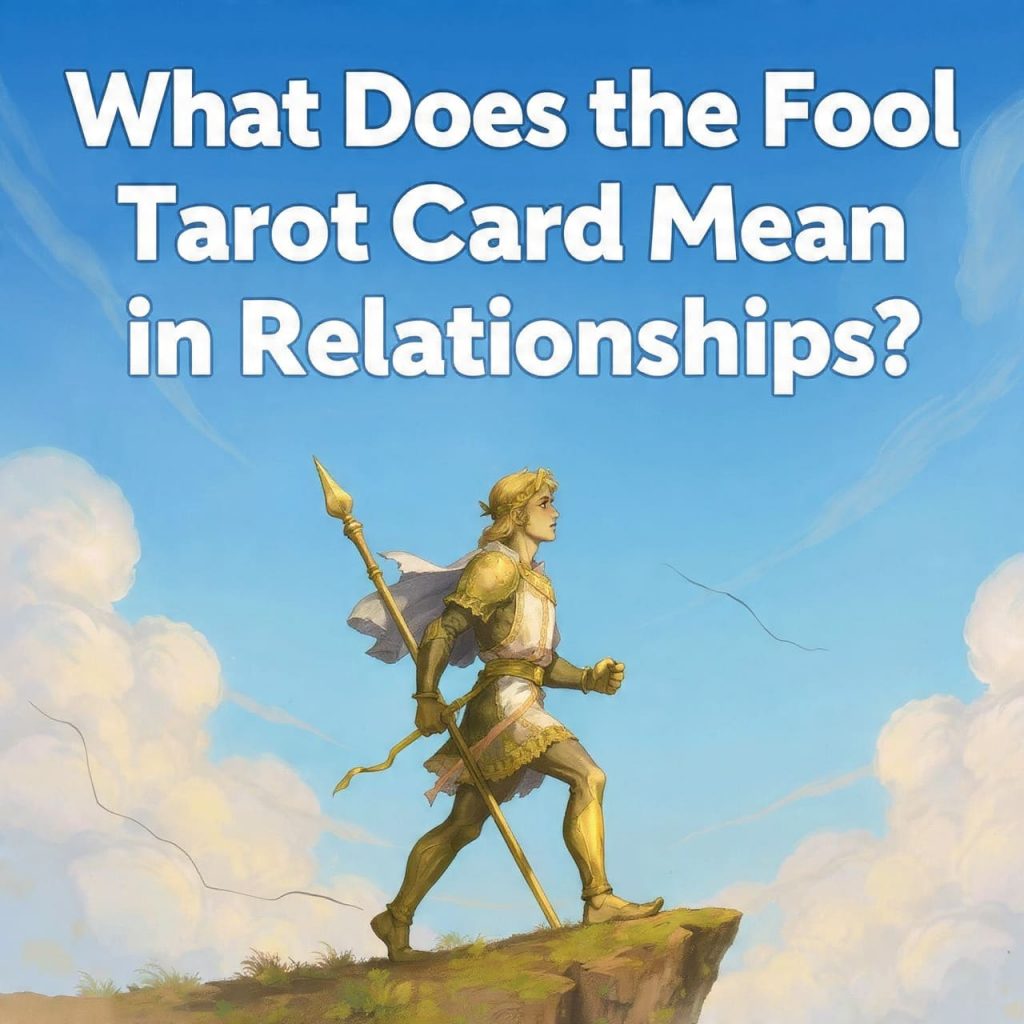
Relationships often involve uncertainty, emotional risk, and moments where logic alone cannot provide reassurance. When people turn to tarot to explore relationship dynamics, they are usually seeking perspective rather than prediction. The Fool tarot card frequently stands out in these readings because of its association with beginnings, openness, and the willingness to step into the unknown. Yet its meaning in relationships is often misunderstood as either naïve optimism or emotional irresponsibility.

💜 Need a clear answer right now?
CONSULT THE YES OR NO TAROT Free · No registration · Instant resultMany practitioners suggest that the Fool is best understood as a card of mindset rather than outcome. In relationship readings, it often reflects how individuals approach connection, vulnerability, and emotional risk.
Using interpretive strategies commonly outlined in analytical resources such as cards meanings, readers typically examine the Fool’s symbolism first, then apply it to emotional context and relational patterns.
This article provides a comprehensive explanation of what the Fool tarot card may signify in relationships, while maintaining a balanced, reflective perspective.
The Core Symbolism of the Fool in Relationships
New Beginnings and Emotional Freshness
The Fool is traditionally numbered zero, representing a state before expectations and definitions take shape. In relationships, many believe this symbolizes emotional freshness—a willingness to engage without carrying excessive assumptions from the past.
This does not necessarily mean a new relationship. Practitioners often interpret it as a new emotional phase, perspective, or approach within an existing connection.
Trust, Vulnerability, and Emotional Risk
Another central theme of the Fool is trust. The figure steps forward without guarantees, suggesting openness to experience. In relationships, this often reflects emotional vulnerability and the courage to be authentic.
Many readers note that the Fool highlights willingness rather than certainty, emphasizing the importance of emotional honesty over control.
The Journey Over the Destination
The Fool is frequently associated with journeys rather than destinations. In relational contexts, this suggests that connection is evolving rather than fixed.
Practitioners often view this as a reminder that relationships grow through experience, not rigid expectations.
Upright Fool: Relationship Meanings Explained
Openness to Connection
When the Fool appears upright in relationship readings, many interpret it as openness—either to forming a new connection or to experiencing an existing relationship differently.
This openness may involve curiosity, playfulness, or a renewed sense of emotional possibility.
Letting Go of Past Baggage
The upright Fool often suggests releasing emotional baggage. Practitioners believe it may appear when individuals are ready to stop projecting past disappointments onto current relationships.
This interpretation emphasizes presence rather than emotional comparison.
Healthy Emotional Independence
Contrary to assumptions, the Fool is not always about recklessness. Many readers interpret it as emotional independence—the ability to engage deeply without losing one’s sense of self.
This balance is often seen as a foundation for healthy relationships.
Reversed Fool: Relationship Challenges and Cautions
Fear of Emotional Risk
When reversed, the Fool is often interpreted as hesitation. In relationships, this may reflect fear of vulnerability or reluctance to trust after previous hurt.
Practitioners frequently suggest examining what feels unsafe rather than pushing forward.
Repeating Old Patterns
A reversed Fool can also indicate unexamined patterns. Many believe it appears when individuals are unconsciously replaying relational behaviors rather than learning from experience.
This interpretation often invites reflection before emotional investment.
Avoidance of Responsibility
In some cases, the reversed Fool may suggest avoidance of emotional responsibility. This can manifest as inconsistency, mixed signals, or reluctance to define the relationship.
Relationship Contexts Where the Fool Commonly Appears
New Relationships and Early Stages
The Fool frequently appears in readings about new relationships. Many practitioners see it as highlighting excitement, curiosity, and exploration rather than immediate commitment.
It often encourages enjoying the process without rushing outcomes.
Renewing Existing Relationships
In established relationships, the Fool may suggest the need for renewal. This can involve reintroducing playfulness, curiosity, or openness where routine has taken over.
Practitioners often interpret this as emotional reset rather than restart.
Emotional Growth Through Experience
The Fool is also associated with experiential learning. In relationships, this reflects growth through lived experience rather than theoretical understanding.
Seeking Insight and Ethical Interpretation
When Relationship Readings Feel Unclear
Relationship questions can feel deeply personal. Some individuals choose to consult qualified professionals who approach tarot interpretation ethically, focusing on self-awareness rather than definitive claims.
Such guidance often helps frame the Fool’s message as reflective rather than prescriptive.
Emotional Curiosity in Romantic Readings
The Fool often appears in love tarot readings when emotional curiosity is strong but certainty is not yet present. Practitioners frequently interpret this as an invitation to explore feelings honestly without forcing labels.
Practical Relationship Guidance Inspired by the Fool
Steps Often Suggested by Practitioners
When the Fool appears in relationship readings, readers often recommend mindful actions:
- Approaching conversations with curiosity rather than assumptions
- Allowing emotional experiences to unfold naturally
- Checking in with personal boundaries and needs
Benefits of a Fool-Inspired Relationship Approach
Many believe this mindset offers meaningful benefits:
- Reduced pressure on outcomes
- Increased emotional authenticity
- Greater adaptability within relationships
Choosing Reflective Support
Because the Fool can be misinterpreted as carelessness, practitioners often suggest seeking insight from reliable readers who emphasize emotional responsibility alongside openness.
Modern Relationship Readings and Accessibility
Digital Relationship Tarot Options
With the growth of online tarot sessions, relationship-focused readings are more accessible than ever. These formats allow individuals to explore emotional questions privately and at their own pace.
Many practitioners note that digital readings are well-suited for reflection rather than urgent decisions.
Visual and Voice-Based Formats
Some people prefer video readings for conversational depth, while others choose phone readings when privacy feels important during emotional discussions.
The chosen format can influence how openly individuals engage with relationship themes.
Relationship Timing, Cycles, and Emotional Flow
The Fool and Emotional Timing
The Fool is rarely associated with precise timing. Practitioners often interpret its appearance as a reminder that emotional readiness matters more than schedules or milestones.
This perspective encourages patience and openness rather than pressure.
Integrating Broader Emotional Cycles
Some readers contextualize relationship readings alongside horoscope insights to reflect broader emotional cycles influencing openness or withdrawal.
In reflective practice, many also revisit symbolic interpretations using cards meanings to assess how relational understanding evolves over time.
Frequently Asked Questions
Is the Fool tarot card positive for relationships?
Many believe it is positive when openness and emotional curiosity are healthy, though context matters.
Does the Fool mean commitment is unlikely?
Not necessarily. It often reflects approach and mindset rather than commitment level.
Can the Fool indicate immaturity?
It can, especially when reversed, but upright it often reflects emotional freshness rather than irresponsibility.
Is the Fool about new relationships only?
No. It can also indicate renewal or new perspectives within existing relationships.
Should caution be taken when the Fool appears?
Practitioners often suggest awareness rather than fear, especially regarding boundaries.
How often should relationship tarot readings be revisited?
Many recommend revisiting only when emotional circumstances change.
Conclusion
The Fool tarot card carries a nuanced message in relationship readings. Rather than predicting outcomes, it highlights how individuals approach connection, vulnerability, and emotional risk.
Many believe the Fool encourages openness, curiosity, and presence while reminding individuals to remain mindful of boundaries and self-awareness.
When interpreted thoughtfully, the Fool serves as a powerful symbol of relational growth—inviting people to engage with relationships not from fear or expectation, but from authentic experience and conscious choice.
