

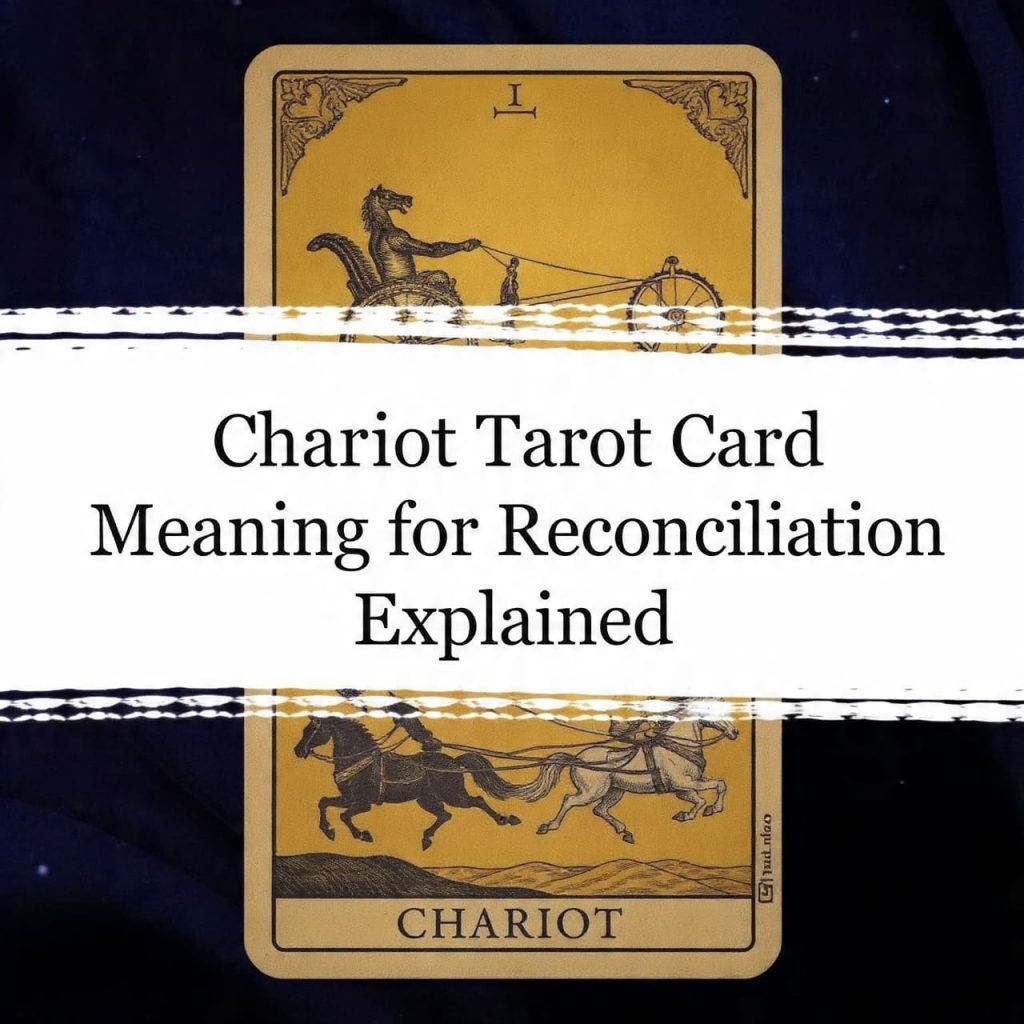
When the Chariot tarot card appears in reconciliation readings, it often sparks mixed interpretations. Some see it as a sign of victory and forward motion, while others wonder whether its strong emphasis on willpower and control could indicate emotional distance rather than reunion. In reconciliation contexts, many practitioners believe the Chariot does not promise an automatic return, but instead highlights intentional movement, emotional discipline, and conscious effort. It suggests that reconciliation, if it happens, will not be passive or accidental. Understanding this card fully requires symbolic layering and contextual interpretation, approaches commonly discussed in frameworks such as those outlined in cards meanings.

💜 Need a clear answer right now?
CONSULT THE YES OR NO TAROT Free · No registration · Instant resultThis article explains the Chariot tarot card meaning for reconciliation in a balanced and informative way. It explores symbolism, upright and reversed interpretations, emotional readiness, timing considerations, and ethical reading practices, focusing on clarity rather than guarantees.
Core Symbolism of the Chariot in Reconciliation Readings
Movement With Purpose
The Chariot is fundamentally about movement, but not movement driven by chance. Many practitioners believe it represents directional progress, where effort and intention determine the outcome. In reconciliation readings, this suggests that emotional movement is possible, but only when guided consciously.
Reconciliation under the Chariot rarely happens by “waiting it out.” It requires engagement and emotional responsibility.
Readers trained by qualified professionals often emphasize that the Chariot rewards clarity of intent rather than emotional pressure.
The Charioteer and Emotional Self-Control
At the center of the card stands the charioteer, calm despite opposing forces. Spiritually and emotionally, this reflects self-control. In reconciliation, this symbolism often points to managing emotions constructively rather than reacting from hurt or ego.
The card suggests that reconciliation becomes possible when emotional extremes are regulated.
Opposing Forces and Inner Conflict
The two sphinxes or horses pulling the chariot typically face different directions. Many believe they represent conflicting emotions such as hope versus resentment, desire versus fear, or love versus pride.
The Chariot implies that reconciliation depends on aligning these internal conflicts rather than ignoring them.
Is the Chariot a Positive Sign for Reconciliation?
Redefining Positivity in Reconciliation
Whether the Chariot is “positive” depends on how positivity is defined. Many practitioners suggest it is constructive rather than comforting. It signals potential progress, but only through effort and accountability.
In reconciliation readings, positivity often means forward movement toward clarity, not necessarily reunion.
Action Over Waiting
Unlike passive cards, the Chariot emphasizes action. This does not mean chasing or forcing outcomes, but it does suggest that reconciliation requires initiative.
In emotionally focused love tarot readings, the Chariot is often interpreted as a sign that one or both individuals are ready to engage consciously rather than remain stuck in emotional stalemate.
Emotional Maturity as the Gateway
Many believe the Chariot supports reconciliation only when emotional maturity is present. If old patterns of control, defensiveness, or power struggle remain unresolved, the card may indicate movement away rather than back together.
Upright Chariot Tarot Card Meaning for Reconciliation
Upright Meaning: Intentional Progress
When upright, the Chariot is commonly interpreted as intentional progress. In reconciliation, this may indicate renewed communication, willingness to address past issues, or deliberate steps toward understanding.
Progress under this card is rarely accidental; it is chosen.
Overcoming Past Obstacles
The upright Chariot often appears when obstacles that once blocked reconciliation can now be navigated. These obstacles may include pride, fear, or emotional reactivity.
Practitioners suggest the card reflects confidence gained through experience rather than denial of past pain.
Signs of Upright Chariot Energy in Reconciliation
Readers frequently associate upright Chariot reconciliation with:
- Clear and direct communication
- Emotional self-regulation
- Willingness to confront issues without escalation
Reversed Chariot Tarot Card and Reconciliation Challenges
Loss of Direction
Reversed, the Chariot often reflects confusion or lack of direction. In reconciliation readings, this may indicate mixed signals, inconsistent effort, or internal conflict that prevents progress.
The desire for reconciliation may exist, but clarity about how to proceed is missing.
Power Struggles and Control Issues
Another reversed interpretation involves power struggles. One or both individuals may be trying to control the outcome rather than engage collaboratively.
Consulting reliable readers can help clarify whether stagnation comes from fear, pride, or unresolved emotional imbalance.
Reversal as a Call to Recenter
Rather than signaling failure, reversed Chariot energy often invites recalibration. Slowing down, reassessing motives, and restoring emotional balance can reopen the path to reconciliation.
Emotional Responsibility and the Chariot
Ownership of Past Actions
The Chariot emphasizes personal responsibility. In reconciliation contexts, this often means acknowledging one’s role in the separation without deflection.
This ownership is empowering rather than punitive.
Reconciliation Without Ego Battles
The card strongly discourages ego-driven reconciliation. Winning an argument or proving a point undermines the emotional harmony the Chariot requires.
Many practitioners believe reconciliation succeeds under this card only when cooperation replaces competition.
Boundaries as Emotional Strength
The Chariot supports boundaries rooted in self-respect. Reconciliation does not require surrendering values or tolerating unhealthy dynamics.
Timing and the Chariot in Reconciliation
Timing as Readiness to Act
The Chariot is not primarily a timing card, but many practitioners associate it with readiness. Reconciliation progresses when emotional readiness aligns with willingness to act.
This approach aligns with reflective practices often emphasized in online tarot sessions, where awareness precedes outcome.
Momentum Builds After Commitment
Once commitment to change is present, reconciliation momentum under the Chariot often builds steadily. Hesitation tends to delay progress more than external obstacles.
Indicators Timing Is Aligned
Rather than dates, practitioners often look for:
- Reduced emotional reactivity
- Clear intention to resolve issues
- Willingness to follow through on actions
The Chariot and Communication in Reconciliation
Direct but Controlled Expression
The Chariot encourages direct communication, but with restraint. Emotional honesty is balanced with composure.
This approach reduces defensiveness and supports productive dialogue.
Addressing Conflict Without Escalation
Past conflicts often resurface during reconciliation. The Chariot suggests addressing them firmly but calmly, without repeating destructive patterns.
Listening as Active Participation
Reconciliation under the Chariot involves listening as much as speaking. Control over impulse creates space for understanding.
Practical Reading Formats for Reconciliation Insight
Common Tarot Formats Used
Different formats influence how reconciliation messages are received. The table below outlines commonly used options.
| Format | Depth of Insight | Interaction Style | Best For |
|---|---|---|---|
| Video | High | Visual and conversational | Complex reconciliation dynamics |
| Phone | Medium to high | Voice-focused | Privacy and emotional safety |
| Written | Moderate | Reflective | Reviewing emotional patterns |
Many seekers find video readings helpful when interpreting action-oriented cards like the Chariot, as visual explanation clarifies movement and direction.
Ethical Interpretation in Reconciliation
Practitioners emphasize that the Chariot should never be used to pressure reconciliation. Ethical readings focus on empowerment, clarity, and mutual consent rather than outcome fixation.
Pricing and Duration Expectations
While costs vary, general expectations for reconciliation-focused readings are outlined below.
| Session Length | Typical Cost Range | Focus |
|---|---|---|
| 20–30 minutes | Lower range | Immediate emotional direction |
| 45–60 minutes | Mid range | Reconciliation strategy and clarity |
| Extended sessions | Higher range | Long-term relationship dynamics |
Spiritual Growth and Reconciliation Under the Chariot
Reconciliation as a Growth Process
Spiritually, many believe reconciliation under the Chariot is a growth process rather than a return to the past. Old dynamics must be transformed, not revived.
Courage to Face Discomfort
The Chariot often requires confronting uncomfortable truths. Avoiding these truths stalls progress, while facing them strengthens emotional resilience.
Moving Forward Regardless of Outcome
Importantly, the Chariot supports forward movement even if reconciliation does not occur. Clarity gained through effort is considered success in itself.
Integrating Broader Perspective
Emotional Cycles and Relationship Momentum
The Chariot often appears during transitional phases. Some practitioners integrate its message with broader emotional cycles, sometimes considering themes alongside horoscope insights to add context without deterministic claims.
Structured Interpretation for Clarity
Using structured strategies such as symbolic layering and situational context discussed in cards meanings helps ensure the Chariot is understood as conscious direction rather than forceful pursuit.
Accessibility, Boundaries, and Emotional Safety
Emotional Readiness for Reconciliation Readings
Chariot-related reconciliation readings require emotional honesty. Practitioners recommend approaching them with responsibility rather than desperation.
Maintaining Healthy Boundaries
Repeated readings can fuel anxiety. The Chariot encourages trust in one’s capacity to act rather than constant reassurance.
Accessible Support Options
For those seeking discretion and clarity, phone readings are often considered accessible and supportive when discussing reconciliation decisions.
Frequently Asked Questions
Is the Chariot a good sign for reconciliation?
Many practitioners believe it is constructive, as it reflects potential progress through effort and emotional discipline.
Does the Chariot guarantee reunion?
No. It highlights movement and clarity, not guaranteed outcomes.
Can the Chariot indicate one-sided effort?
It can, especially if reversed, suggesting imbalance or control issues.
Is the Chariot about control or cooperation?
It emphasizes self-control and cooperation rather than dominance.
How long does Chariot energy last in reconciliation?
Its influence continues as long as effort and alignment are maintained.
What format works best for Chariot reconciliation readings?
Interactive formats often help clarify direction and responsibility.
Conclusion
The Chariot tarot card meaning for reconciliation centers on intention, emotional discipline, and conscious movement forward. Rather than promising effortless reunion, many practitioners believe it reflects the possibility of reconciliation through clarity, responsibility, and aligned action.
Whether reconciliation occurs or not, the Chariot supports growth through engagement rather than avoidance. When interpreted thoughtfully and ethically, it reframes reconciliation as a process of empowerment—where progress itself becomes the true measure of success.
