

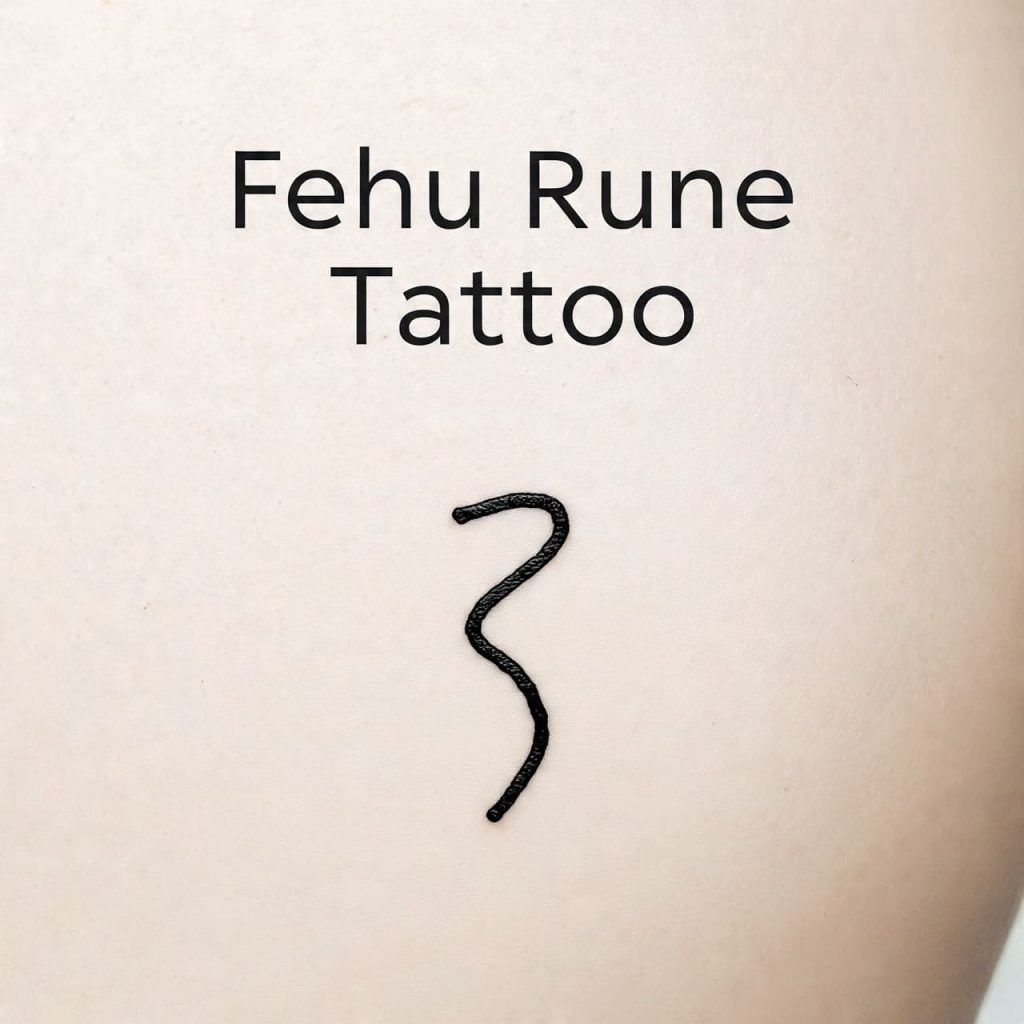
Choosing a Fehu rune tattoo is difficult because it is not a decorative symbol. It is a sign that communicates movement, exchange, and outward expression, and once placed on the body, it does so continuously. The hesitation people feel rarely comes from uncertainty about the design itself. It comes from questioning whether they want to permanently embody what the rune represents.

💜 Need a clear answer right now?
CONSULT THE YES OR NO TAROT Free · No registration · Instant resultA tattoo fixes a decision in physical form. Unlike interest in runes as ideas, a tattoo removes distance. The symbol becomes visible, repeatable, and tied to identity. This is why the decision feels heavier than expected. It is not about liking Fehu; it is about whether identifying with it long-term feels honest.
Decision-focused frameworks discussed in astroideal emphasize resolving permanence-based decisions by stripping away aesthetic debate and returning to one core question: whether the symbol should become part of your visible identity. Some people also consult qualified professionals to avoid making the choice from impulse or symbolic fascination alone.
Why a Yes or No Tarot Helps Here
Tattoo decisions tend to stall because they invite infinite adjustment. Placement, line weight, size, orientation, and style become substitutes for the real decision. A yes-or-no tarot format works because it refuses to engage with customization and addresses commitment directly.
Clarity matters because delay does not neutralize the decision. The longer the idea remains open, the more mental space it occupies. A binary approach forces closure by answering one question only: should this tattoo exist on your body at all.
This structure is especially useful for rune tattoos, which carry meaning beyond aesthetics. Some people turn to love tarot readings not because the topic is emotional, but because the format enforces decisiveness and prevents symbolic overanalysis.
What the Fehu Rune Represents When Marked on the Body
In a tattoo context, Fehu represents active presence. It is associated with visibility, engagement, and exchange rather than withdrawal or neutrality. This matters because tattoos themselves are outward-facing. They are not private thoughts; they are signals.
Choosing Fehu as a tattoo aligns your body with a symbol of motion and participation. That does not mean success, ambition, or gain. It means being visibly associated with forward energy rather than stillness.
This is where hesitation often appears. Some people admire Fehu conceptually but are unsure about wearing a symbol that suggests openness and involvement at all times. Unlike abstract shapes, rune tattoos often invite interpretation, which adds social permanence to the decision.
The question becomes practical: are you comfortable being identified with this energy, regardless of how others interpret it?
Encouraging One Clear Tattoo Question
Tattoo decisions collapse when the question becomes fragmented. People ask whether the symbol will age well, whether it might lose meaning, or whether another rune would be safer. These questions delay commitment rather than inform it.
The most effective approach is to ask one question that addresses permanence and identity directly, without decoration.
Clear question formats include:
- “Is getting a Fehu rune tattoo the right decision for me now?”
- “Should I permanently mark my body with this symbol, yes or no?”
- “Is committing to the Fehu rune as a tattoo appropriate at this stage?”
Some people consult reliable readers to ensure the question stays focused on commitment instead of drifting into justification or reassurance.
Why Rune Tattoos Create More Resistance Than Other Designs
Rune tattoos differ from illustrative tattoos because they carry fixed cultural associations. You are not only choosing a shape; you are choosing a known symbol with established meaning.
This creates resistance because the tattoo does not adapt to your mood or personal reinterpretation. It remains what it is. The Fehu rune tattoo continues to signify movement and exchange even if your relationship to those ideas changes.
The decision difficulty comes from this rigidity. You are not asking whether you like the symbol today. You are asking whether you can live with its message without needing to revise or explain it later.
This is why endless research rarely resolves the decision. Understanding the rune does not answer whether it belongs on your body.
Approaching the Decision Without Symbolic Pressure
Calm decision-making here means removing the idea that the tattoo must represent a perfect or permanent truth. A Fehu rune tattoo does not need to define your entire identity. It only needs to feel acceptable as a visible marker.
Practically, this involves asking whether the symbol would feel intrusive or stable if it were already there. Not exciting, not meaningful, but simply present.
This perspective reduces emotional pressure and reframes the decision as one of tolerance and alignment rather than passion. Some people prefer online tarot sessions because the neutral structure supports this grounded evaluation.
Why Overthinking Keeps the Tattoo Idea Alive
Overthinking does not prevent regret; it extends indecision. With rune tattoos, overthinking often masquerades as respect for meaning. In reality, it delays commitment.
The yes-or-no structure interrupts this cycle by refusing to engage with interpretive perfection. It does not ask whether Fehu is the “best” rune. It asks whether it is acceptable to carry.
For some individuals, video readings help make the decision feel tangible rather than theoretical, reinforcing closure instead of analysis.
Accepting the Answer Without Redesign
Once clarity is reached, the most common mistake is reopening the decision through design changes. Adjusting placement or size can become a way to avoid accepting the underlying answer.
Acceptance here means allowing the decision to stand without modification. Whether the answer is yes or no, the purpose is to stop revisiting the same choice.
People who prefer direct communication sometimes choose phone readings because the simplicity discourages reinterpretation and reinforces finality.
Permanence as a Neutral Fact
Fear around tattoos often exaggerates permanence as risk. In reality, permanence is neutral. The real issue is whether the symbol will cause friction with your self-image.
A Fehu rune tattoo represents visible engagement. Choosing it means accepting that others may associate you with that energy, regardless of your explanation.
Decision models aligned with astroideal emphasize that readiness is about comfort, not certainty. You do not need to predict future feelings. You need to know whether the symbol feels intrusive or stable now.
Some people use horoscope insights as a reflection habit, not for guidance, but to support thoughtful decision-making around permanent choices.
Frequently Asked Questions
Is a Fehu rune tattoo mainly symbolic or decorative?
It is symbolic first, decorative second.
Why does this decision feel heavier than other tattoo ideas?
Because runes carry fixed meaning and cultural recognition.
Is a yes-or-no approach too simplistic for a tattoo?
No. Simplicity prevents endless reconsideration.
Can I change my mind later?
Only before the tattoo is done. Afterward, acceptance matters more than analysis.
Does liking the rune mean I should tattoo it?
No. Liking and committing are separate decisions.
Is external input necessary?
It can help maintain objectivity, but the choice remains personal.
How do I know the decision is complete?
When the question no longer needs rephrasing.
Call to Action
If the idea of a Fehu rune tattoo continues to return but hesitation remains, this is the moment to get a clear yes or no answer by focusing on commitment rather than symbolism. A disciplined one question tarot approach allows you to decide cleanly and stop carrying the decision unfinished.
