

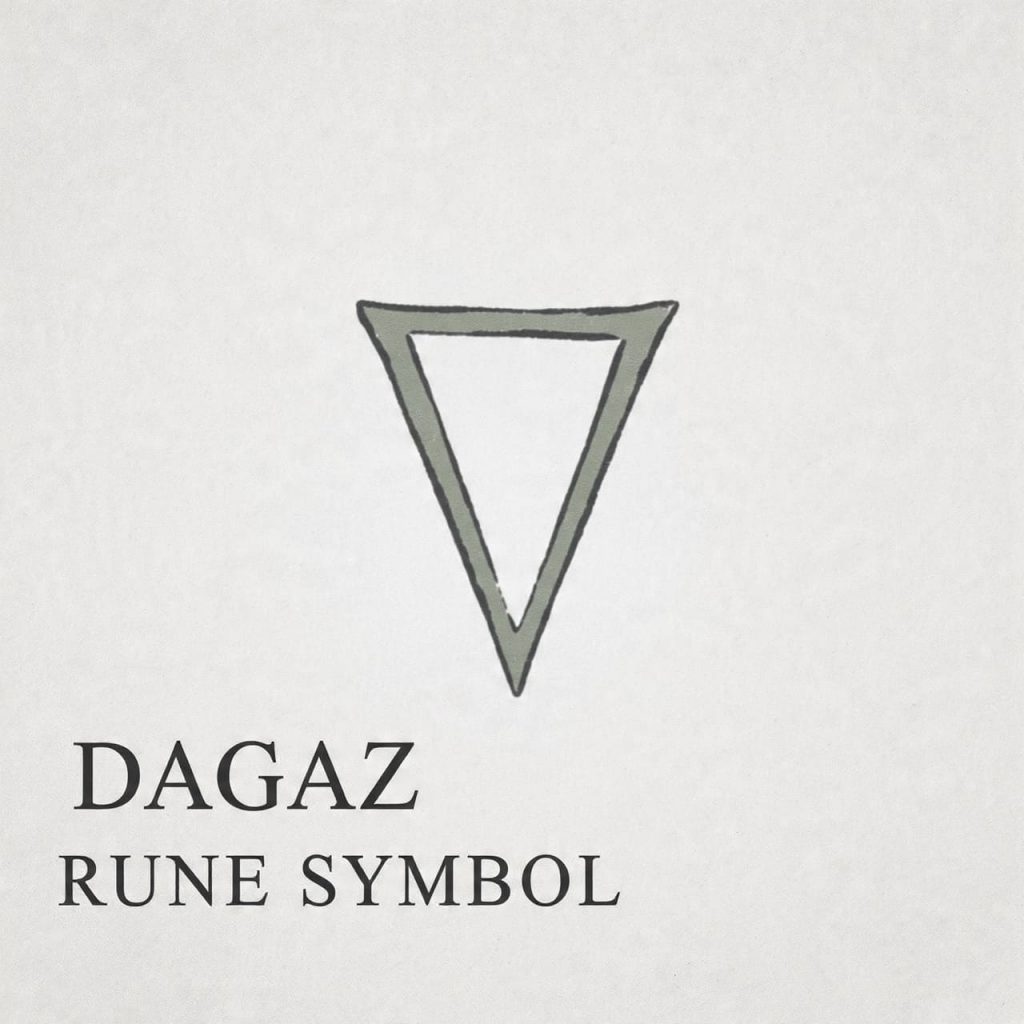
The Dagaz rune is frequently described as a “symbol” representing abstract ideas such as change, balance, or illumination. This description is widespread in modern explanations but historically uncertain. The misunderstanding arises from treating an ancient writing character as if it were designed to function primarily as a symbolic emblem rather than as part of a writing system. The uncertainty surrounding Dagaz is therefore factual and historical, not interpretive or intuitive.

💜 Need a clear answer right now?
CONSULT THE YES OR NO TAROT Free · No registration · Instant resultModern explanatory material, including summaries found on astroideal, often places runes within symbolic or thematic frameworks and may refer readers to qualified professionals for interpretation. However, such associations do not establish historical usage. The central question addressed here is precise: did the Dagaz rune historically function as a symbol in its own right, or was it primarily a phonetic character?
Defining “Symbol” in Historical Terms
To evaluate the claim, the term “symbol” must be defined carefully. In historical analysis, a symbol is a sign whose primary function is to represent an idea or concept beyond its literal form. For Dagaz to qualify historically as a symbol, contemporaneous sources would need to demonstrate that it conveyed a conceptual meaning independent of language.
Runes, by contrast, are graphemes—characters representing sounds. While symbols can exist within writing systems, their symbolic function must be explicitly documented. Without such documentation, treating Dagaz as a symbol reflects modern interpretive habits rather than historical evidence, a distinction often blurred in explanations provided by reliable readers.
Dagaz Within the Elder Futhark System
Dagaz is the twenty-third rune of the Elder Futhark, the earliest known runic alphabet, used roughly between the second and eighth centuries CE. Its established function was phonetic, representing the /d/ sound. The name Dagaz is a modern scholarly reconstruction derived from a Proto-Germanic word meaning “day.”
The Elder Futhark operated as a writing system. Its structure, ordering, and usage are consistent with alphabetic literacy rather than symbolic coding. Inscriptions from this period do not classify runes by conceptual domains or symbolic roles. This sharply contrasts with later interpretive systems, such as those presented in online tarot sessions, where symbols are explicitly designed to carry abstract meanings.
Archaeological Evidence and Rune Usage
Archaeological evidence provides the most direct insight into how runes functioned. Dagaz appears on a limited number of artifacts, including stones, metal objects, and tools. In all cases where inscriptions are interpretable, Dagaz functions as part of a written sequence.
There is no artifact where Dagaz is isolated, highlighted, or paired with explanatory imagery indicating symbolic intent. Archaeologists do not interpret its presence as emblematic or conceptual. Orientation, placement, and repetition vary according to practical carving constraints, not symbolic emphasis. Claims that Dagaz served as a symbol resemble modern interpretive practices more than archaeological conclusions, comparable in structure to interpretive formats seen in video readings.
Textual Sources and Rune Poems
Textual evidence related to runes primarily comes from medieval manuscripts, particularly rune poems composed centuries after the Elder Futhark fell out of use. The Anglo-Saxon rune poem includes a stanza for dæg, linguistically related to Dagaz, describing “day” in a poetic manner.
However, this description does not establish that Dagaz functioned symbolically during its historical period of use. The poem serves a mnemonic and literary purpose, not a documentary one. Scandinavian rune poems omit Dagaz entirely. No medieval text describes runes as abstract symbols detached from language. Interpreting poetic description as evidence of symbolic function mirrors interpretive logic closer to phone readings than to historical methodology.
What the Historical Record Does Not Demonstrate
A comprehensive review of inscriptions, manuscripts, and linguistic reconstructions shows no evidence that Dagaz was intended as a standalone symbol. Scholars have catalogued runic material extensively, and symbolic usage is identifiable where it exists. Dagaz does not appear in ritual contexts, iconographic programs, or explanatory texts.
This absence is meaningful. Early Germanic cultures expressed symbolism clearly in other media, such as art, burial practices, and mythic narratives. The lack of symbolic framing for Dagaz indicates that its primary role was functional rather than emblematic. Assigning it symbolic status reflects modern categorization habits similar to those used in horoscope insights rather than documented historical practice.
The Emergence of Dagaz as a “Symbol” in Modern Thought
The idea of Dagaz as a symbol emerges in the nineteenth and twentieth centuries, particularly within Romantic nationalism, occult revival movements, and later New Age literature. In these contexts, runes were reimagined as carriers of abstract meaning and integrated into symbolic systems inspired by tarot and astrology.
This transformation is historically traceable. It reflects modern cultural interests rather than new archaeological discoveries. Dagaz’s symmetry and visual simplicity made it attractive as a symbolic form, encouraging its reinterpretation as an emblem rather than a letter. These meanings are often presented alongside thematic interpretations comparable to love tarot readings and are discussed using analytical frameworks described on astroideal.
Evaluating the Core Claim with Evidence
The claim examined here is specific: did the Dagaz rune historically function as a symbol rather than merely a phonetic character?
Based on archaeological inscriptions, medieval textual evidence, and linguistic analysis, the answer is no. Dagaz functioned as a rune representing sound within the Elder Futhark writing system. There is no historical evidence that it was designed or used primarily as a symbol conveying abstract concepts.
Modern symbolic interpretations are later cultural overlays. While they may be meaningful in contemporary contexts, they do not reflect historical usage. From an evidence-based perspective, Dagaz was a letter, not a symbol in the abstract sense.
Frequently Asked Questions
Was Dagaz designed as a symbol or a letter?
It was designed as a letter representing sound.
Do any inscriptions treat Dagaz symbolically?
No known inscriptions do so.
Do rune poems define Dagaz as a symbol?
No. They provide poetic descriptions, not symbolic definitions.
When did Dagaz become viewed as a symbol?
In modern interpretive literature.
Is there scholarly consensus on this issue?
Yes. Scholars agree Dagaz was phonetic in function.
Are other runes treated similarly today?
Yes. Many runes have acquired modern symbolic meanings.
Call to Action
To assess claims about rune symbolism responsibly, consult inscriptions, manuscripts, and dating directly to get a clear yes or no answer, distinguishing documented historical usage from later interpretive systems or one question tarot–style frameworks.
