

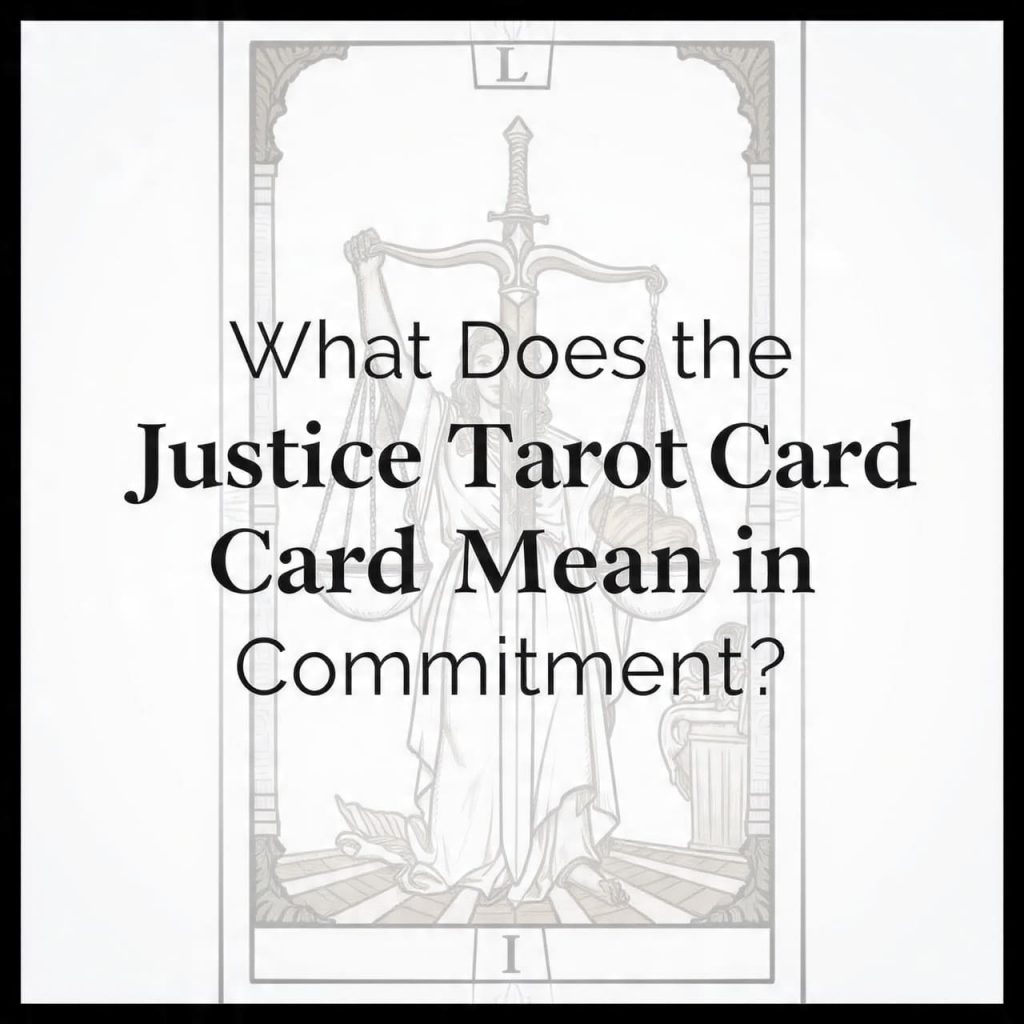
Commitment is often viewed through the lens of emotion—love, loyalty, and desire to build a future together. Yet lasting commitment also rests on less romantic but equally important foundations: honesty, fairness, accountability, and shared responsibility. When people turn to tarot for insight into commitment, they are frequently seeking clarity about balance and long-term integrity rather than reassurance alone. In this context, the Justice tarot card carries particular weight.

💜 Need a clear answer right now?
CONSULT THE YES OR NO TAROT Free · No registration · Instant resultMany practitioners believe Justice reframes commitment as an ethical agreement rather than a purely emotional bond. It asks whether both individuals are acting in alignment with truth, fairness, and mutual respect.
Using interpretive approaches commonly discussed in analytical resources such as cards meanings, readers often explore how commitment becomes sustainable only when actions and intentions are balanced.
This article explains what the Justice tarot card may mean in commitment-focused readings, offering a grounded, credible perspective without guarantees or absolute claims.
Core Symbolism of Justice in Commitment
Truth as the Foundation of Commitment
Justice is closely associated with truth. In commitment readings, many practitioners interpret this as the need for honesty—both with oneself and with a partner.
Commitment under Justice cannot thrive on avoidance, half-truths, or unspoken expectations.
Balance and Mutual Responsibility
Another central theme of Justice is balance. Commitment here is not one-sided sacrifice, but shared responsibility and effort.
Practitioners often emphasize that Justice highlights whether emotional, practical, and ethical contributions are equitable.
Cause and Effect in Relationships
Justice also reflects cause and effect. In commitment contexts, this suggests that present circumstances are shaped by past choices, communication, and behavior.
Rather than punishment, this symbolism emphasizes learning and accountability.
Upright Justice: Commitment Meanings Explained
Commitment Based on Honesty and Clarity
When Justice appears upright in commitment readings, many practitioners interpret it as a sign that commitment is grounded in honesty. Conversations may be direct, expectations clarified, and intentions expressed openly.
This transparency often strengthens trust.
Fair Agreements and Clear Boundaries
The upright Justice frequently points to clear agreements. Commitment may involve defined roles, boundaries, or long-term plans that feel fair to both parties.
Practitioners often view this as a strong indicator of stability.
Decisions Made With Integrity
Another key interpretation involves integrity. Commitment decisions are made thoughtfully, weighing emotional desire against practical and ethical considerations.
This balance supports longevity rather than impulse-driven promises.
Reversed Justice: Commitment Challenges and Imbalance
Avoidance of Truth
When reversed, Justice is often interpreted as avoidance. In commitment readings, this may reflect reluctance to address difficult conversations or acknowledge misalignment.
Practitioners often see this as a warning sign rather than a final outcome.
Perceived Unfairness or Unequal Effort
A reversed Justice can also indicate imbalance. One partner may feel they are giving more, compromising more, or carrying greater responsibility.
This imbalance can strain commitment if left unaddressed.
Inner Conflict About Commitment Decisions
Sometimes the reversed card reflects internal conflict—knowing what is fair or necessary, but struggling to act on it.
Practitioners often encourage reflection before proceeding further.
Commitment Scenarios Where Justice Commonly Appears
Long-Term Commitments and Formal Agreements
Justice often appears in readings about long-term or formal commitment, such as cohabitation, marriage, or shared financial responsibilities.
In these contexts, the card emphasizes clarity and fairness.
Commitment After Conflict or Repair
The card may surface after periods of conflict, highlighting the need to address accountability before recommitting.
Practitioners often view this as an opportunity to rebuild on stronger foundations.
Evaluating Whether Commitment Is Balanced
Justice frequently appears when individuals are questioning whether commitment feels mutual and fair.
It encourages honest assessment rather than emotional rationalization.
Ethical Reflection and Commitment Readiness
When Commitment Decisions Feel Serious
Commitment choices can feel weighty under Justice energy. Some individuals seek perspective from qualified professionals who interpret tarot ethically, helping frame commitment as a conscious agreement rather than an emotional obligation.
Such guidance often emphasizes clarity over reassurance.
Emotional Bonds and Honest Evaluation
Justice may also appear in love tarot readings when emotional attachment exists but practical or ethical questions remain unresolved.
Practitioners often stress that love alone does not replace fairness.
Practical Guidance When Justice Appears for Commitment
Reflective Actions Commonly Suggested
When Justice arises in commitment readings, practitioners often recommend deliberate reflection:
- Clarifying expectations and boundaries explicitly
- Reviewing whether effort and responsibility are balanced
- Addressing unresolved issues honestly
Benefits of Justice-Based Commitment
Many believe this approach offers meaningful benefits:
- Stronger trust through transparency
- Reduced resentment over time
- Commitment grounded in mutual respect
Choosing Balanced Interpretive Support
Because Justice can feel emotionally neutral, practitioners often suggest consulting reliable readers who balance honesty with empathy rather than moral judgment.
Commitment Styles Compared Through Justice
| Commitment Dynamic | Justice Influence | Likely Outcome |
|---|---|---|
| Avoidant or unclear | Low | Ongoing tension |
| Unequal effort | Imbalanced | Resentment |
| Transparent and fair | High | Sustainable commitment |
Modern Commitment Readings and Accessibility
Digital Tarot for Commitment Clarity
With access to online tarot sessions, individuals exploring commitment questions can reflect privately and thoughtfully, allowing space for honest self-assessment.
These formats often support careful decision-making.
Visual and Voice-Based Commitment Exploration
Some people prefer video readings for nuanced discussion of shared responsibility, while others choose phone readings when privacy feels important during sensitive conversations.
Selecting a comfortable format can support openness.
Timing, Cycles, and Commitment Decisions
Justice and Commitment Timing
Justice is not associated with haste. Practitioners often interpret its appearance as a reminder to take time before committing, ensuring decisions are well-considered.
Rushed commitments under this card may later require correction.
Broader Cycles Influencing Fairness and Choice
Some readers contextualize Justice-related commitment insights alongside horoscope insights to reflect broader cycles influencing decision-making, balance, and ethical awareness.
As clarity deepens, practitioners often revisit symbolic frameworks using cards meanings to reassess alignment between values and action.
Frequently Asked Questions
Is the Justice tarot card positive for commitment?
Many believe it is positive when commitment is based on honesty and fairness.
Does Justice mean commitment must be formal?
Not necessarily. It emphasizes clarity and balance, whether formal or informal.
What does reversed Justice mean for commitment?
It often suggests imbalance, avoidance, or unresolved truth.
Can Justice indicate long-term partnership?
Yes, especially when both individuals act with integrity and accountability.
Is Justice about emotion or logic?
It integrates both, emphasizing ethical balance alongside feeling.
Should commitment decisions be delayed with this card?
Most practitioners suggest careful consideration rather than rushing.
Conclusion
The Justice tarot card offers a thoughtful and grounded perspective on commitment. Rather than focusing solely on emotion or desire, it emphasizes truth, balance, and shared responsibility as the pillars of lasting connection.
Many practitioners believe Justice reminds individuals that commitment is not just a promise—it is an agreement shaped by honesty, accountability, and mutual respect.
When interpreted thoughtfully, the Justice card affirms that the strongest commitments are those built not on illusion or pressure, but on clarity, fairness, and conscious choice.
