

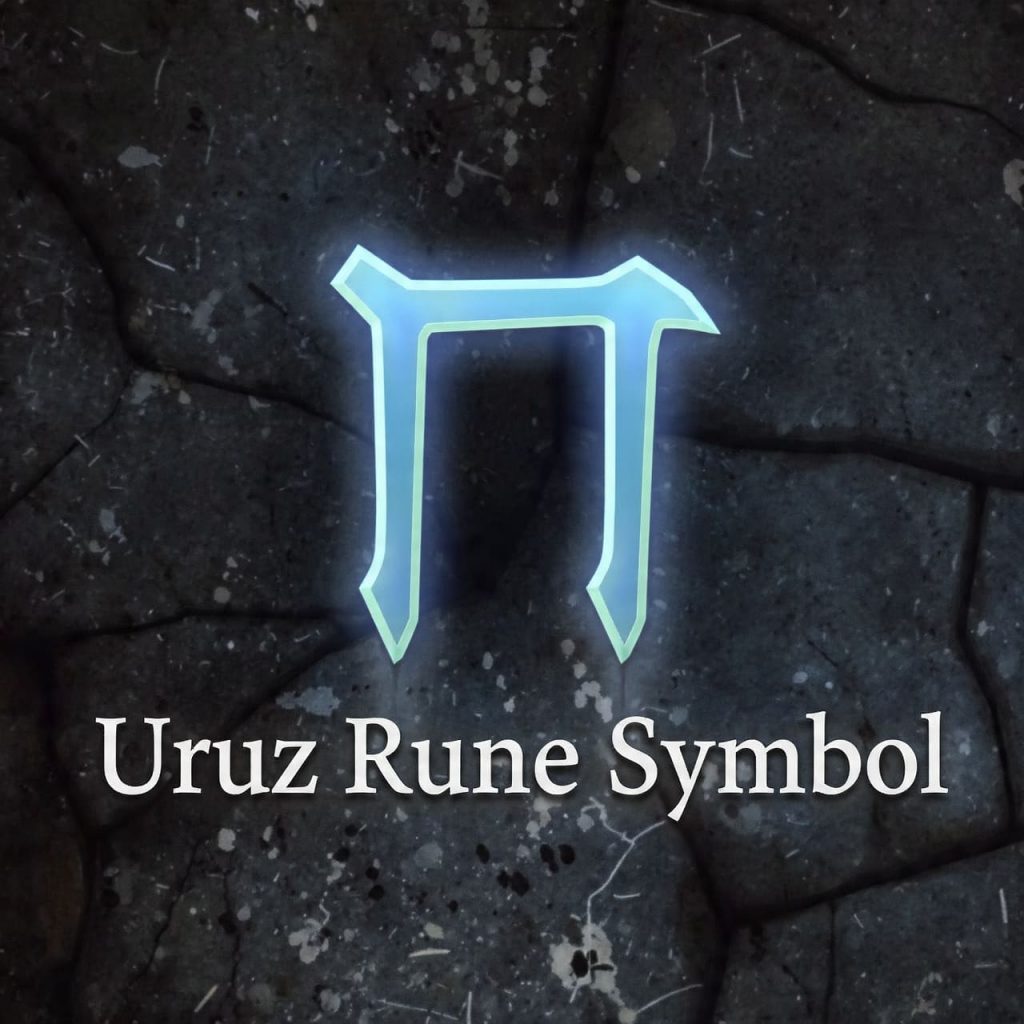
The Uruz rune symbol is often encountered early in rune study, yet it is frequently misunderstood. Its shape is simple, its name short, and its associations appear direct, which can give the impression that it is easy to grasp. In reality, Uruz represents one of the most fundamental concepts in the Elder Futhark: raw, untamed force as it exists in the natural world.

💜 Need a clear answer right now?
CONSULT THE YES OR NO TAROT Free · No registration · Instant resultWhat makes the Uruz rune symbol difficult is not ambiguity, but weight. Unlike symbols that represent balance, order, or protection, Uruz reflects power that exists independently of human control. This raises a practical question for anyone studying or referencing runes: does understanding this symbol add clarity, or does it introduce unnecessary intensity?
Frameworks discussed in astroideal approach symbols like Uruz as conceptual tools rather than emotional anchors, emphasizing understanding over attachment. When people seek outside perspectives on historically rooted symbols, they sometimes consult qualified professionals to separate cultural meaning from modern projection.
Why a Yes or No Tarot Helps Here
When studying rune symbols, uncertainty often comes from trying to hold multiple interpretations at once. With Uruz, this usually leads to over-analysis rather than insight. People read about strength, endurance, vitality, and force, but struggle to decide whether the symbol itself is relevant to their understanding or work.
A yes-or-no tarot format is useful in this context because it limits scope. The question is not “What does Uruz mean in every possible sense?” but “Is the Uruz rune symbol relevant to what I am studying or exploring right now, yes or no?”
This decision-first approach does not replace historical study. It prevents conceptual overload. Some readers prefer structured formats such as love tarot readings specifically because they enforce focus rather than interpretation drift.
Historical Origin of the Uruz Rune
Uruz is the second rune of the Elder Futhark, the earliest known runic alphabet, used between approximately the 2nd and 8th centuries CE. As with other runes, it functioned first as a letter, representing the “u” sound, before acquiring symbolic associations.
The name “Uruz” is linguistically connected to the Proto-Germanic word ūruz, meaning aurochs. The aurochs was a massive wild bovine, now extinct, that once roamed Europe and parts of Asia. It was significantly larger and more dangerous than domesticated cattle.
This association is critical. Unlike Fehu, which represents managed wealth, Uruz represents unmanaged power. The aurochs was not owned, controlled, or cultivated. It embodied strength that existed regardless of human intention.
The Aurochs as a Cultural Symbol
In early Germanic societies, the aurochs represented more than physical strength. It symbolized:
- Survival in harsh environments
- Physical dominance without domestication
- Vitality that could not be negotiated with
Archaeological evidence shows that aurochs were hunted, not herded. Encounters with them were dangerous and decisive. This context informs the meaning of the Uruz rune symbol far more accurately than modern abstractions about “inner strength.”
Uruz does not represent motivation or empowerment. It represents force as a fact of reality.
Visual Structure of the Uruz Rune Symbol
The Uruz rune symbol is angular and open, resembling an inverted “U” or a structure leaning forward. Unlike enclosed symbols, it does not suggest containment or protection.
Its shape implies:
- Exposure rather than shelter
- Upward movement without support
- Readiness rather than completion
This visual language aligns with its meaning. Uruz does not hold energy; it expresses it. There is no suggestion of balance or equilibrium in the symbol’s form.
Uruz in Rune Poems and Early Texts
Later rune poems, such as the Anglo-Saxon Rune Poem, describe Uruz in terms of strength and hardship. The poem emphasizes the aurochs’ fierceness and the difficulty of confronting it, reinforcing the idea that Uruz represents demanding conditions rather than comfort.
Importantly, these poems do not romanticize Uruz. They describe it as dangerous and challenging. This reinforces the interpretation of Uruz as necessary force, not desirable ease.
Common Modern Misinterpretations
One of the most widespread modern errors is treating the Uruz rune symbol as a generic emblem of empowerment. This strips it of historical specificity.
Uruz is not about feeling strong. It is about needing to be strong because circumstances demand it. This distinction is often lost in contemporary summaries.
Another mistake is assuming Uruz represents protection. Historically, the aurochs was not protective; it was something to be faced or avoided.
Encouraging One Clear Symbol Question
Confusion around Uruz often comes from asking symbolic questions without boundaries. A clearer, historically grounded question is:
- “Does the Uruz rune symbol accurately represent unmanaged force, yes or no?”
This keeps interpretation anchored in origin rather than preference. Some people consult reliable readers when refining questions like this to avoid drifting into personal symbolism that contradicts historical meaning.
Scholarly Versus Experiential Understanding
It is possible to understand the Uruz rune symbol academically without integrating it experientially. This distinction matters.
Scholarly understanding involves history, linguistics, and archaeology. Experiential engagement involves deciding whether the concept of raw force is relevant to one’s framework of thought.
The yes-or-no decision applies only to engagement, not to knowledge. Learning does not require adoption.
Reconciling Decision-First Thinking With Evolving Meaning
There is no contradiction between deciding whether to engage with a symbol and acknowledging that understanding evolves. The decision is about use, not about interpretive finality.
You may decide not to engage with Uruz now and revisit it later with deeper context. The decision is situational, not permanent.
This is why decision-first frameworks do not prevent growth; they prevent overload.
When the Uruz Symbol Adds Clarity
The Uruz rune symbol adds clarity when studying:
- Early Germanic concepts of power
- Distinctions between managed and unmanaged force
- Survival-based symbolism rather than moral symbolism
In these contexts, Uruz functions as a precise conceptual marker.
Some learners explore this through online tarot sessions or structured discussions where symbolic boundaries are maintained.
When the Symbol Adds Noise
Uruz becomes distracting when:
- Used as a motivational emblem
- Treated as protective or balancing
- Removed from its historical context
In these cases, setting it aside improves clarity.
Acceptance Without Projection
Once clarity is reached, acceptance means not reshaping the symbol to fit preference. If Uruz feels irrelevant or heavy, that response is informational.
Some people prefer video readings or phone readings when they want confirmation without interpretive expansion.
Broader Context Within the Rune Row
As the second rune, Uruz follows Fehu intentionally. Where Fehu represents managed resources, Uruz represents unmanaged force. Together, they establish an early contrast in the rune row.
Understanding Uruz in isolation misses this structural role. It exists to define what lies beyond control.
Integrating Historical Insight
Decision frameworks referenced by astroideal emphasize grounding interpretation in origin before personal meaning is considered. Some learners also use horoscope insights reflectively to observe how archetypal force is framed across systems, without conflating them.
Frequently Asked Questions
Is the Uruz rune symbol historically about strength?
Yes, specifically unmanaged physical force.
Does Uruz represent protection?
No. It represents challenge and vitality.
Is it meant to be empowering?
It reflects necessity, not encouragement.
Can the symbol feel heavy?
Yes, because its meaning is demanding.
Is modern usage different from historical meaning?
Often, and not always accurately.
Is outside guidance necessary?
Not required, but useful for grounding.
How do I know if I understand Uruz correctly?
When its meaning remains consistent without embellishment.
Call to Action
If you are studying the Uruz rune symbol and feel unsure whether its historical meaning adds clarity or confusion, it may be time to get a clear yes or no answer about whether to engage with it further. A focused one question tarot approach can help you decide whether this symbol of unmanaged force belongs in your current framework of understanding.
