

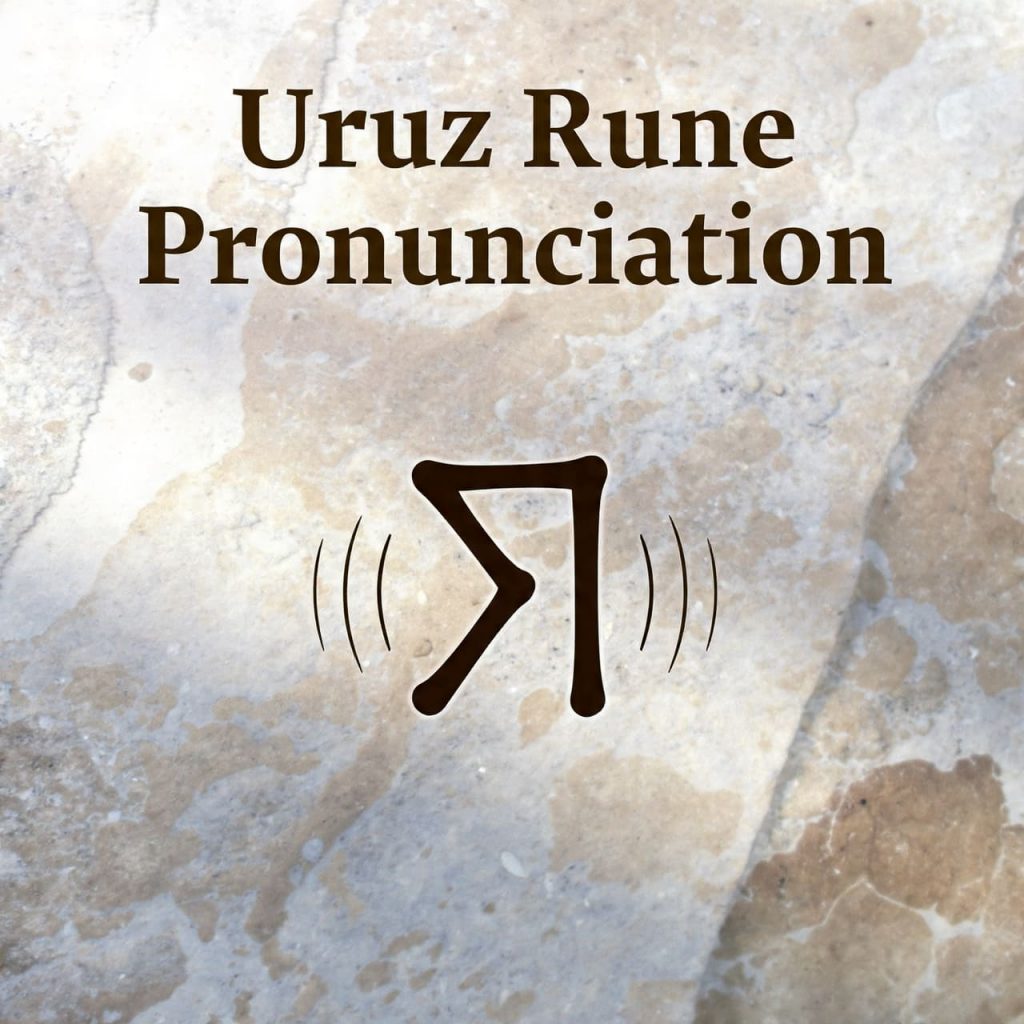
Uruz rune pronunciation often feels confusing because most modern explanations oversimplify it. Many sources present a single sound without context, leaving beginners unsure whether they are saying it correctly or merely repeating a modern approximation. The difficulty is not lack of information, but lack of clarity about which pronunciation is historically accurate and which are later interpretations.

💜 Need a clear answer right now?
CONSULT THE YES OR NO TAROT Free · No registration · Instant resultPronunciation matters because runes originated as a writing system tied to spoken language. Mispronouncing a rune does not invalidate learning, but understanding how the sound developed provides clarity and removes unnecessary doubt. The real question becomes whether to follow historical pronunciation closely or accept modern usage.
Learning frameworks discussed in astroideal emphasize accuracy before interpretation, especially for foundational elements like sound. Some learners also consult qualified professionals to ensure pronunciation understanding is grounded in linguistic reality rather than internet shorthand.
Why a Yes or No Tarot Helps Here
Pronunciation questions often linger because learners search for “the perfect sound” instead of deciding on a correct and usable one. With Uruz, this is common because different sources give different answers.
A yes-or-no tarot format helps clarify a single decision: should you use the historically reconstructed pronunciation, yes or no? This avoids endless comparison between sources.
Some learners use structured formats such as love tarot readings not for emotional reasons, but because binary framing helps stop overthinking and supports practical learning.
The Linguistic Origin of the Name “Uruz”
The name Uruz comes from Proto-Germanic ūruz, meaning aurochs, a large wild bovine that once inhabited Europe. This linguistic root is well-documented and forms the basis of correct pronunciation.
Proto-Germanic was a spoken language, not a standardized written one. Therefore, pronunciation is reconstructed based on comparative linguistics, not preserved audio. This explains why some variation exists.
What matters is staying within historically supported sound patterns.
The Historically Reconstructed Pronunciation
The most widely accepted scholarly pronunciation of Uruz is:
OO-rooz
Key points:
- The first vowel is a long “u”, similar to “oo” in moon
- The second syllable uses a short, voiced “z”
- Stress is typically on the first syllable
This pronunciation aligns with Proto-Germanic phonetics and early Germanic language patterns.
Why “You-ruz” Is Incorrect
A common beginner mistake is pronouncing Uruz as “you-ruz.” This error comes from applying modern English spelling rules rather than historical phonetics.
In Elder Futhark, the rune represents the ū sound, not a “yoo” sound. English pronunciation habits distort this distinction.
Understanding this prevents the most frequent pronunciation error beginners make.
Pronunciation in Old Norse and Related Languages
Although Uruz predates Old Norse, later Germanic languages retained similar vowel sounds. In Old Norse, the long “u” sound remained deep and rounded, reinforcing the OO-rooz pronunciation.
This consistency across linguistic evolution supports the reconstructed sound and reduces uncertainty.
Encouraging One Clear Pronunciation Question
Learners often ask whether slight variation makes pronunciation “wrong.” A clearer question is:
- “Am I using the long ‘u’ sound, yes or no?”
If the answer is yes, the pronunciation is functionally correct. Minor accent differences do not change accuracy.
Some learners consult reliable readers to confirm pronunciation confidence rather than repeatedly questioning themselves.
How Pronunciation Was Used Historically
Runes were not chanted or ritualized in early use. They were spoken as part of language — names, markings, and references.
This means pronunciation was practical, not ceremonial. There was no “sacred tone” or altered voice. Uruz was spoken plainly, like any other word.
Understanding this removes pressure to perform pronunciation rather than simply say it.
Modern Variations and Why They Exist
Modern variations exist because:
- English spelling habits influence sound
- Some sources simplify for accessibility
- Others mix Old Norse and Proto-Germanic sounds
While these variations are understandable, they are not equally accurate.
Choosing one correct pronunciation prevents confusion.
How to Practice Uruz Pronunciation
Practical pronunciation practice involves:
- Saying the long “oo” sound clearly
- Keeping the word short and firm
- Avoiding added syllables
Practice does not require repetition beyond familiarity. Over-practice can create artificial tension.
Some learners prefer online tarot sessions or spoken learning formats because hearing pronunciation reinforces understanding more effectively than reading alone.
Pronunciation Versus Meaning
Pronouncing Uruz correctly does not activate or change its meaning. Pronunciation is about linguistic accuracy, not symbolic function.
This distinction is important. Knowing how to say the rune correctly improves learning confidence, not outcome or interpretation.
When Pronunciation Precision Matters
Precision matters most when:
- Teaching others
- Studying historical sources
- Comparing runes linguistically
In casual learning contexts, consistency matters more than perfection.
When Pronunciation Precision Does Not Matter
Precision does not matter when:
- Reading privately
- Learning runes visually
- Studying concepts rather than language
Understanding this prevents unnecessary anxiety.
Accepting a Practical Standard
Once a historically supported pronunciation is chosen, it should be accepted without constant revision. Re-checking pronunciation repeatedly usually signals doubt rather than error.
Some learners prefer phone readings or video readings when they want spoken confirmation without added interpretation.
Relationship Between Pronunciation and Learning Confidence
Correct pronunciation often increases confidence because it removes one layer of uncertainty. Confidence supports clearer learning progression.
However, pronunciation alone does not deepen understanding. It supports it.
How Pronunciation Fits Into Beginner Learning
For beginners, pronunciation is a starting point, not a destination. Learning the sound of Uruz provides a stable anchor for later study without overwhelming complexity.
Decision-based learning models discussed in astroideal emphasize mastering fundamentals before expanding. Some learners also use horoscope insights comparatively to observe how sound symbolism varies across systems without conflating meanings.
Frequently Asked Questions
Is “OO-rooz” the only correct pronunciation?
It is the most widely accepted historical reconstruction.
Is pronunciation critical for understanding?
No, but it improves clarity.
Can accents change the sound slightly?
Yes, without affecting correctness.
Is chanting required?
No. Runes were spoken normally.
Can beginners mispronounce Uruz?
Yes, but correction is simple.
Does pronunciation affect meaning?
No. Meaning is conceptual, not phonetic.
How do I know I’m pronouncing it right?
If the first vowel is a long “oo,” you are correct.
Call to Action
If you are learning the Uruz rune and feel uncertain about its pronunciation, it may be time to get a clear yes or no answer about whether your understanding is correct. A focused one question tarot approach can help you stop second-guessing and move forward with confidence.
