

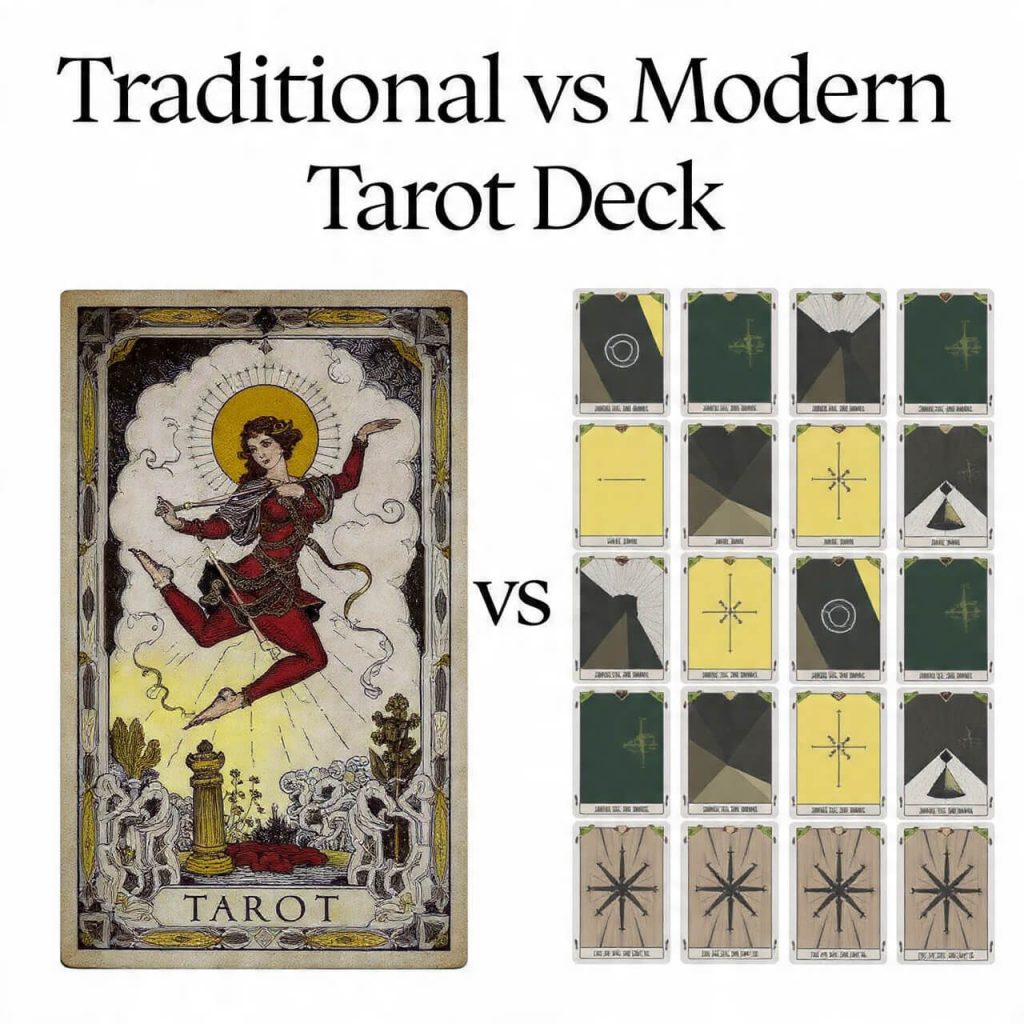
Tarot decks have evolved considerably over the centuries, giving rise to two main categories: traditional decks and modern decks. Each offers unique advantages, symbolism, and approaches to divination, self-reflection, and spiritual guidance. Many practitioners believe that understanding the differences between traditional and modern tarot decks is essential for selecting the right tool for your needs.

💜 Need a clear answer right now?
CONSULT THE YES OR NO TAROT Free · No registration · Instant resultThis guide explores the distinctions, symbolism, uses, reading techniques, formats, and practical tips for both traditional and modern tarot decks. It also includes tables, bullet points, and examples, along with references to strategies explained in local tarot options for crafting clearer questions and improving reading accuracy.
What Is a Traditional Tarot Deck?
Traditional tarot decks, such as the Rider Waite or Marseille decks, follow historical designs with established symbolism and structure. They generally consist of 78 cards, divided into the Major Arcana (22 cards) and Minor Arcana (56 cards).
The Major Arcana cards depict archetypal figures and life lessons, from The Fool to The World, providing a roadmap of personal growth and spiritual development. Many believe that these cards reflect universal experiences and can offer insight into long-term patterns and decisions.
The Minor Arcana is divided into four suits—Cups, Wands, Pentacles, and Swords—each representing specific areas of life such as emotions, creativity, material matters, and intellect. The consistent symbolism and traditional imagery make these decks ideal for beginners and readers who prefer structure and classical guidance.
For those seeking expert guidance in traditional readings, visiting qualified professionals can provide clarity and support in interpreting complex spreads.
What Is a Modern Tarot Deck?
Modern tarot decks reinterpret traditional symbolism with contemporary aesthetics, inclusive imagery, and diverse themes. While most maintain the 78-card structure, modern decks often include abstract illustrations, culturally diverse figures, or thematic variations.
Many practitioners suggest that modern decks emphasize intuitive reading, emotional resonance, and personal empowerment. For example, some decks focus on mindfulness, spiritual growth, or love, while others incorporate multicultural and gender-neutral representation.
Modern decks are often preferred by creative readers or those exploring contemporary life challenges. For love-focused readings, many suggest consulting love tarot readings to understand how modern decks can enhance relationship insights.
Symbolism: Traditional vs Modern
Traditional Decks
Traditional decks use established symbols and archetypes. Colors, numbers, and imagery convey layered meanings:
- Cups: Emotions and relationships
- Wands: Creativity and action
- Pentacles: Material and practical matters
- Swords: Challenges, intellect, and decision-making
Court cards often represent individuals or personality traits, and the Major Arcana conveys life lessons and spiritual evolution. Many practitioners recommend combining intuitive impressions with traditional symbolism for accurate interpretation.
Modern Decks
Modern decks often reinterpret symbols to resonate with contemporary life.
- Cups: Highlight personal emotions, empathy, and intimacy
- Wands: Represent creative ambition and personal growth
- Pentacles: Focus on financial, career, and wellness matters
- Swords: Depict problem-solving, decision-making, and communication
Court cards in modern decks may feature diverse age ranges, genders, and cultural contexts, providing a more inclusive perspective. Many readers suggest using strategies from local tarot options to frame questions clearly when working with these reinterpretations.
Uses and Applications
Traditional Decks
Traditional decks excel in structured readings, educational purposes, and exploring classical symbolism. They are ideal for:
- Self-discovery and spiritual growth
- Relationship analysis using standard archetypes
- Career and life guidance with structured spreads
Many readers find that traditional decks are particularly helpful when learning foundational tarot skills or analyzing long-term life patterns.
Modern Decks
Modern decks are effective for intuitive, emotional, and thematic readings. Their uses include:
- Mindfulness and personal empowerment exercises
- Relationship readings emphasizing emotional clarity
- Creative or spiritual exploration with diverse perspectives
For remote or flexible readings, platforms offering online tarot sessions allow users to work with modern decks conveniently, regardless of location.
Formats for Tarot Readings
In-Person Readings
Face-to-face sessions provide tactile interaction with the cards, which many believe enhances intuitive understanding. Working with reliable readers ensures accurate and empathetic guidance, whether using traditional or modern decks.
Online Tarot Sessions
Online tarot sessions are ideal for modern users seeking convenience. These sessions allow detailed exploration of personal and relational dynamics without the constraints of location.
Phone and Video Readings
Phone readings offer privacy and focused guidance, with phone readings providing conversational depth.
Video readings give visual engagement with the cards, which can improve clarity, emotional understanding, and intuitive interpretation. Many readers recommend video readings for love-focused or emotionally nuanced readings.
Pricing and Deck Options
Understanding the costs and available deck types is essential for planning readings.
Table 1: Average Prices for Tarot Readings
| Format | Price Range | Duration |
|---|---|---|
| Online chat | $10–$30 | 10–20 min |
| Video call | $25–$60 | 20–40 min |
| Phone reading | $15–$45 | 15–30 min |
| In-person session | $40–$80 | 30–60 min |
Table 2: Deck Options
| Type | Features | Best For |
|---|---|---|
| Traditional Decks | Classic symbolism, structured spreads | Beginners & educational readings |
| Modern Decks | Contemporary art, inclusive imagery | Intuitive & thematic readings |
| Hybrid Decks | Blend traditional and modern styles | Versatile applications |
| Specialty Editions | Thematic or culturally focused | Experienced readers & niche applications |
Many practitioners note that session costs reflect the deck type, reading length, and the reader’s experience.
Practical Tips for Using Both Deck Types
- Shuffle with intention to focus on the reading.
- Keep a tarot journal to track interpretations and patterns.
- Start with simpler spreads before attempting complex layouts.
- Combine intuition with symbolism for richer insights.
- Ask precise and clear questions for actionable guidance.
For relational readings, combining tarot with horoscope insights can provide a complementary view of timing, personality traits, and relationship dynamics.
Benefits of Comparing Traditional and Modern Decks
- Enhances understanding of symbolic and archetypal meanings
- Encourages flexibility in interpretation and intuition
- Provides a broader range of perspectives for personal growth
- Supports diverse reading styles for different contexts
- Helps identify which deck resonates best with personal or professional practice
Many practitioners recommend experimenting with both deck types to discover strengths and preferences in their reading style.
Advanced Techniques
Experienced readers often combine elements from both traditional and modern decks to gain deeper insights. Techniques include:
- Using court card comparisons to analyze personality traits
- Integrating Major Arcana lessons with Minor Arcana insights
- Applying elemental correspondences (Cups = Water, Wands = Fire, Pentacles = Earth, Swords = Air) for pattern recognition
- Adapting spreads to incorporate thematic or emotional layers
These approaches allow readers to leverage the strengths of both deck types while providing nuanced guidance for love, career, and personal development.
Frequently Asked Questions
How do traditional and modern decks differ?
Traditional decks follow historical symbolism and archetypes, while modern decks reinterpret imagery and themes for contemporary relevance.
Which deck is better for beginners?
Traditional decks are generally recommended for beginners because of their structured symbolism, but modern decks can also be suitable for intuitive learners.
Can tarot predict future events?
Many believe tarot provides guidance, insight, and probabilities rather than guaranteed outcomes.
Are online readings reliable?
Yes, especially when conducted by experienced or vetted readers.
Do I need a special deck for accuracy?
No, but selecting a deck that resonates personally improves intuitive interpretation.
How long does a reading typically last?
Sessions usually range from 10 to 40 minutes, depending on the spread and complexity of questions.
What deck is best for love readings?
Both traditional and modern decks can be effective; love-focused modern decks often include additional emotional cues and inclusive representation.
Conclusion
Comparing traditional vs modern tarot decks allows readers to understand the strengths, symbolism, and applications of each type. Traditional decks provide structure, historical insight, and archetypal clarity, while modern decks emphasize inclusivity, intuition, and contemporary relevance.
By practicing with both, using clear questions, exploring multiple spreads, and reflecting on interpretations, readers can gain meaningful guidance for love, personal growth, career, and spiritual insight. Combining intuition with symbolic understanding ensures that tarot remains a powerful tool for clarity, empowerment, and self-awareness.
