

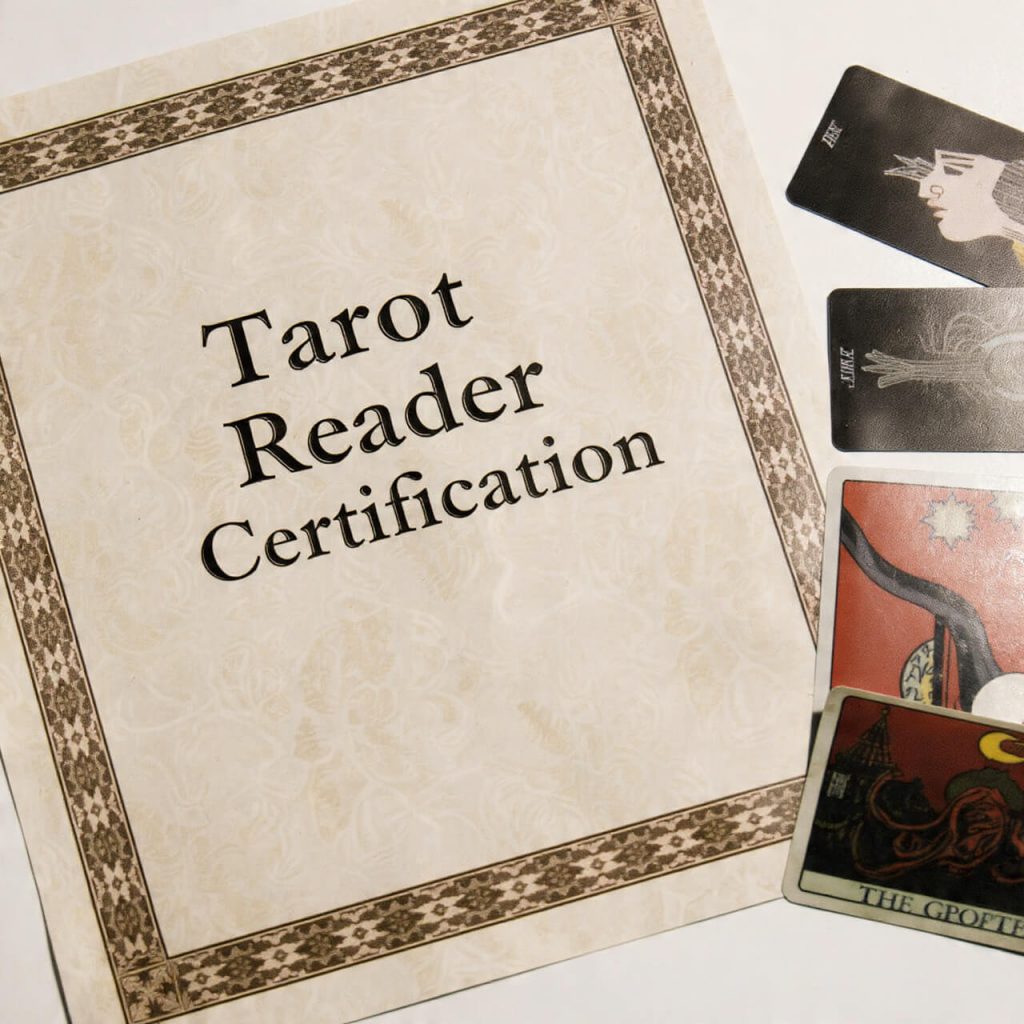
Tarot reading is a practice that blends intuition, symbolism, emotional awareness, and thoughtful communication. As interest in tarot continues to grow, many people wonder whether tarot readers should be certified, how certification works, and whether it actually matters. The truth is that tarot is an interpretive art rather than a regulated profession, meaning certification is optional and varies widely based on the organization or instructor providing it. Some readers pursue certification to deepen their learning, gain confidence, or build a structured foundation. Others learn through experience, long-term study, or mentorship instead.

💜 Need a clear answer right now?
CONSULT THE YES OR NO TAROT Free · No registration · Instant resultUnderstanding tarot reader certification helps beginners, clients, and aspiring readers alike understand what certification does (and doesn’t) guarantee. Many believe certification provides structure and ethical grounding, while others view tarot as a personal practice that cannot be standardized. Both viewpoints are valid, and the value of certification depends largely on personal learning style, goals, and expectations. Ethical tarot work is not based on credentials alone, but on communication skills, emotional sensitivity, honesty, boundaries, and respect for clients.
For those who learn best in person, some communities provide local tarot options, which you can explore through resources like local tarot options. Others pursue online training or virtual mentorship. This article provides a full breakdown of tarot certification programs, what they include, how they differ, what clients should expect from certified vs non-certified readers, and how aspiring readers can choose the right path. With structured sections, tables, and FAQs, this guide offers a grounded understanding of certification in the tarot world.
What Tarot Reader Certification Actually Means
Optional Educational Programs
Certification in tarot is not like certification in regulated professions. There is no global governing body. Instead, individual teachers, schools, or organizations offer certificates acknowledging completion of a course.
Symbolic, Not Legal
Certification demonstrates study, not licensure. It does not grant special authority or legal legitimacy.
Skills-Based Training
Programs typically emphasize symbolism, ethics, communication, and reading structure.
What Certification Usually Represents
- Completion of a structured curriculum
- Familiarity with tarot symbolism
- Understanding of ethics and boundaries
- Practice through assignments or readings
- A commitment to learning and professionalism
Readers who follow strong ethical training often participate in communities similar to videntes-fiables.
Why Some Readers Choose Certification
Structured Learning
Certification provides clear lessons, exercises, and readings for practice.
Confidence Building
Some people feel more secure offering readings after formal study.
Ethical Emphasis
Many programs include ethical guidelines, communication skills, and responsibility training.
Client Trust
Some clients feel more comfortable working with someone who completed training.
Motivations for Pursuing Certification
- Deepening tarot knowledge
- Improving reading skills
- Learning ethical practices
- Building professionalism
- Preparing to read for others
Some readers enhance their training by combining tarot study with symbolic reflection similar to horoscope insights.
Why Some Readers Do Not Choose Certification
Tarot Is an Intuitive Practice
Many readers prefer developing skills through personal study, intuition, journaling, and hands-on experience.
Certification Is Not Required
The tarot community operates without formal regulation, so certification is optional.
Skill Comes with Practice
Some skilled readers build expertise through years of reading, mentorship, and observation.
Reasons Readers Skip Certification
- Cost or accessibility
- Preference for independent learning
- Focus on intuitive or spiritual development
- Belief that tarot cannot be standardized
Clients often choose intuitive readers based on communication style or reputation rather than credentials.
What Certification Programs Typically Include
Symbolism & Structure
Most courses teach the Major Arcana, Minor Arcana, suits, numerology, court cards, and spreads.
Ethics & Boundaries
Programs often outline what tarot can and cannot do, how to avoid predictions, and how to communicate responsibly.
Practice Readings
Students complete readings for themselves or volunteers.
Common Curriculum Elements
- Card meanings and symbolism
- Reading styles (intuitive, structured, hybrid)
- Ethics and boundaries
- Communication techniques
- Reading practice
- Journaling and reflection
- Spread design
- Client interaction
Readers who follow structured training often pursue additional mentorship through communities like qualified professionals.
Types of Certification Programs
Short Courses
These programs may last days or weeks, offering compact training for beginners.
Intermediate & Advanced Programs
More in-depth, covering complex symbolism, ethics, and long-term development.
Mentorship-Based Certification
Some teachers provide personalized training with assignments and feedback.
Online Certification
Services such as tarot-online offer self-paced programs or virtual classrooms.
Table 1: Types of Certification Programs
| Certification Type | Length | Focus | Ideal For |
|---|---|---|---|
| Short Course | 1–4 weeks | Basics, spreads | New learners |
| Full Program | 2–6 months | Symbolism + ethics | Aspiring professionals |
| Mentorship | Flexible | Personalized growth | Intermediate readers |
| Online Course | Self-paced | Convenience | Independent learners |
Ethics Training Within Certification Programs
The Most Important Component
Ethical training ensures the reader practices responsibly, especially when working with emotional topics.
Boundaries
Readers learn to avoid predictions, respect client privacy, and maintain emotional awareness.
Non-Judgmental Support
Ethics courses emphasize compassion, neutrality, and reflective interpretation.
Essential Ethical Principles Taught
- No predictions
- No fear-based claims
- Respect for boundaries
- Focus on self-awareness
- Clear communication
- Avoiding invasive questions
Readers trained in ethics often approach sensitive relationship topics with frameworks similar to those used in love tarot readings.
Certification vs Experience: What Matters More?
Certification Helps with Structure
It builds a foundation of symbolic and ethical knowledge.
Experience Builds Confidence
Practice teaches how to communicate effectively.
Clients Value Both
Some clients look for credentials; others focus on connection and reading style.
Comparing Two Paths
- Certification provides grounding
- Experience provides flow
- Both contribute to skill
- Neither guarantees quality alone
Clients seeking emotionally grounded insight often choose practitioners listed through communities such as videntes-fiables.
Do Clients Prefer Certified Readers?
Depends on the Client
Some prefer formal training; others value emotional resonance and communication style.
Certification Can Be Reassuring
New clients may feel more comfortable with certified readers.
Skill Still Matters Most
Certification does not guarantee accuracy or insight — communication and emotional support matter more.
What Clients Often Look For
- Ethical boundaries
- Clear explanations
- Comfort and rapport
- Emotional safety
- Realistic, non-predictive insight
Those who appreciate face-to-face reassurance often explore certified readers through local tarot options, mentioned at local tarot options.
Online, Video & Phone-Based Certification
Online Programs
Platforms such as tarot-online provide accessibility for global learners.
Video-Based Learning
Programs that use tarot-videollamada formats offer classroom-style interaction.
Phone-Based Support
Some teachers provide voice-only mentorship or Q&A sessions similar to tarot-telefonico.
Benefits of Online Certification
- Flexible scheduling
- Global teachers
- Access to diverse reading styles
- Rewatchable lessons
- Lower cost
How to Choose a Certification Program
Evaluate Content
Look for programs that teach symbolism, ethics, boundaries, spreads, and communication.
Research the Instructor
Choose someone whose style and values feel grounding.
Look for Ethical Emphasis
Certification should reinforce responsibility, not prediction.
Match Your Learning Style
Choose between self-paced, live classes, mentoring, or blended models.
Steps to Choosing the Right Program
- Review curriculum
- Check teaching philosophy
- Look for ethics modules
- Compare prices
- Understand expectations
- Read student reviews
Readers who prioritize professionalism often align with programs similar to those recommended through qualified professionals.
What Certification Does Not Guarantee
Accuracy
Tarot is interpretive, not predictive; certification cannot ensure perfect insight.
Intuition
Some skills develop through personal experience.
Ethical Behavior
Certification helps, but personal commitment matters more.
Certification Limits
- Does not represent licensure
- Does not regulate practice
- Does not certify prediction abilities
- Does not ensure emotional compatibility with clients
Ethical readers emphasize self-awareness and reflective communication rather than authority.
Pricing of Tarot Certification Programs
Cost Varies Widely
Pricing depends on teacher reputation, program length, format, and curriculum depth.
Shorter Courses
More affordable, aimed at beginners.
Long Programs
More expensive due to extended content and mentoring.
Table 2: Typical Certification Pricing
| Program Type | Price Range |
|---|---|
| Short Course | $40–$150 |
| Full Certification | $200–$800 |
| Mentorship Program | $300–$1,200 |
| Online Academy | $100–$500 |
Courses should have clear, transparent pricing with no upselling.
What to Expect After Completing Certification
More Confidence
A structured foundation supports clearer communication.
Ethical Awareness
Training helps avoid predictive or fear-based interpretations.
Clearer Reading Style
Readers refine their approach and spread selection.
Post-Certification Development Tips
- Continue practicing
- Keep a tarot journal
- Reflect on symbolism
- Read for diverse situations
- Keep learning, regardless of credentials
Some readers combine symbolism with reflective tools such as horoscope insights for personal study.
Frequently Asked Questions
Does tarot certification make someone a better reader?
It can help provide structure and ethics, but experience and communication skills matter just as much — sometimes more.
Is tarot certification required to read professionally?
No. Tarot is not regulated, so certification is optional.
How long does it take to become certified?
Programs vary from a few weeks to several months depending on depth and structure.
Do clients trust certified readers more?
Some do, but many rely more on communication style, ethical behavior, and personal comfort.
Can teens pursue tarot certification?
Yes — as long as the program is age-appropriate, ethical, and focused on reflection rather than prediction.
Does certification allow readers to make predictions?
No. Ethical certification programs avoid predictions and emphasize symbolic interpretation.
Can a certified reader guarantee results?
No. Tarot is reflective, not predictive, so guarantees go against ethical boundaries.
Are online certification programs valid?
They can be, as long as they emphasize symbolism, ethics, and responsible communication.
Conclusion
Tarot reader certification can be a helpful path for anyone seeking structured learning, professional development, or deeper understanding of tarot symbolism and ethics. While certification is not required to read tarot, it provides valuable grounding in communication, responsibility, and reflective interpretation.
Whether you pursue training through online programs, mentorship, video classes, or in-person guidance through local tarot options, the most important qualities in a tarot reader are ethics, clarity, compassion, and respect for boundaries.
Certification serves as one step — not the final measure — of becoming a thoughtful, emotionally supportive tarot reader. By combining structured learning with ongoing practice and self-reflection, aspiring readers can build a meaningful and responsible tarot practice that supports clarity, emotional awareness, and personal growth.
