

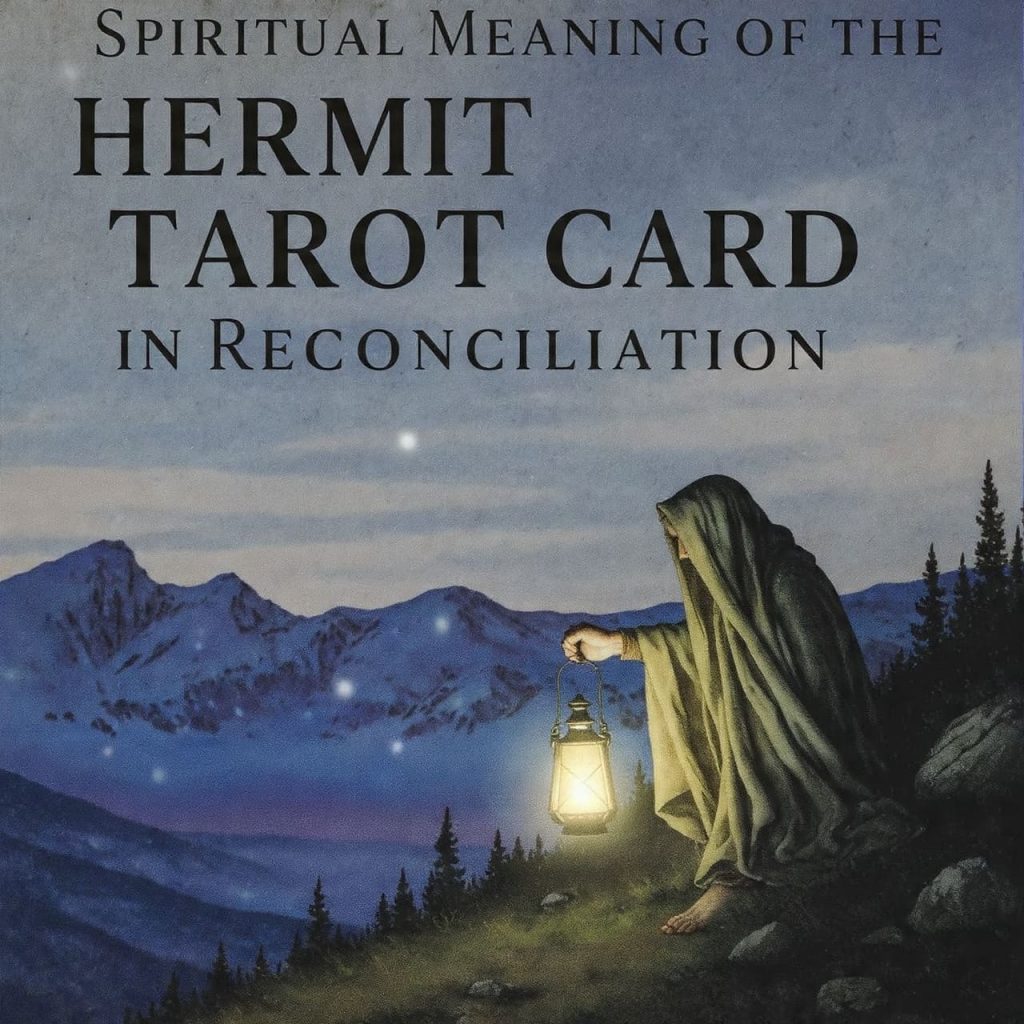
The Hermit tarot card holds a distinctive place in reconciliation readings because it emphasizes inner truth over immediate action. Many believe its spiritual meaning centers on solitude, reflection, and wisdom gained through conscious withdrawal rather than external pursuit. When reconciliation is the focus, the Hermit rarely points to quick reunions; instead, it highlights the deeper inner work that often must occur before reconnection becomes healthy or even possible. Interpreting this card responsibly often involves layered symbolic analysis, a method frequently discussed in structured interpretation frameworks such as those outlined in cards meanings.

💜 Need a clear answer right now?
CONSULT THE YES OR NO TAROT Free · No registration · Instant resultThis article explores the spiritual meaning of the Hermit tarot card specifically in reconciliation contexts. It explains how introspection, spiritual maturity, and timing shape its message, offering a grounded and credible perspective rather than absolute claims. The goal is to clarify why the Hermit can be meaningful, and even constructive, when reconciliation is being considered.
Core Symbolism of the Hermit Tarot Card
The Lantern as Inner Guidance
The most recognizable symbol on the Hermit card is the lantern. Many believe it represents inner guidance rather than external validation. In reconciliation readings, this symbol is often interpreted as a reminder that clarity must come from within before relationship dynamics can shift.
Practitioners suggest that the lantern does not illuminate the entire path at once. Instead, it reveals only the next step, reinforcing patience and deliberate self-examination.
The Staff and Spiritual Authority
The Hermit’s staff is commonly associated with stability and earned wisdom. Rather than authority over others, it symbolizes self-mastery. In reconciliation contexts, this imagery points to emotional grounding and personal responsibility.
Readers trained by qualified professionals often note that this aspect of the Hermit discourages impulsive attempts to reconnect before genuine understanding has been reached.
Solitude Versus Isolation
A key spiritual distinction within the Hermit card is the difference between solitude and isolation. Solitude is chosen for growth, while isolation is often driven by avoidance. Practitioners suggest the Hermit encourages the former, especially when reconciliation questions arise.
Spiritual Themes of the Hermit in Reconciliation
Inner Healing Before Outer Reunion
One of the most widely held beliefs about the Hermit in reconciliation is that it prioritizes inner healing. Many practitioners interpret the card as a signal that emotional clarity and self-awareness are prerequisites for any meaningful reconnection.
This theme suggests reconciliation is not blocked, but postponed until personal insight has matured.
Wisdom Gained Through Distance
Distance is not always portrayed as loss in spiritual interpretations of the Hermit. Many believe that separation creates the space needed to understand patterns, wounds, and unmet needs that may have contributed to the original conflict.
In the context of love tarot readings, the Hermit is often seen as a card that reframes distance as purposeful rather than punitive.
Spiritual Readiness and Alignment
Another reconciliation theme associated with the Hermit is spiritual readiness. Practitioners suggest that the card appears when one or both individuals are aligning with deeper values, even if outward action has not yet followed.
Common indicators of this readiness include:
- Increased self-awareness
- Reduced emotional reactivity
- Willingness to accept responsibility
Upright and Reversed Hermit in Reconciliation
Upright Hermit as Conscious Withdrawal
When upright, the Hermit is frequently interpreted as conscious withdrawal for growth. In reconciliation readings, this may indicate that stepping back is necessary to avoid repeating unhealthy dynamics.
Many believe this pause is not a rejection but an intentional phase of preparation.
Reversed Hermit and Avoidance Patterns
Reversed, the Hermit can point to avoidance, fear of vulnerability, or excessive withdrawal. Practitioners caution that this does not mean reconciliation is impossible, but it may be hindered by reluctance to engage honestly with inner truths.
This interpretation often shifts the focus toward identifying emotional blocks rather than predicting outcomes.
Balanced Interpretation and Emotional Safety
Consulting reliable readers can be particularly helpful when the Hermit appears reversed, as experienced practitioners emphasize balance and emotional safety over definitive conclusions.
Timing and Patience in Hermit Reconciliation Readings
The Hermit and Non-Linear Timing
The Hermit is rarely associated with fast-moving timelines. Many believe it reflects non-linear spiritual timing, where insight develops gradually rather than according to external schedules.
Practitioners suggest that reconciliation influenced by the Hermit unfolds when understanding has stabilized, not when impatience demands resolution.
Patience as an Active Practice
Patience in the Hermit’s context is not passive waiting. It involves active reflection, learning, and integration of lessons. This approach aligns with interpretive methods commonly emphasized in online tarot sessions, where clients are encouraged to focus on growth rather than deadlines.
Signs That Timing Is Shifting
Rather than specific dates, readers often look for internal indicators that timing is shifting, such as:
- Emotional neutrality replacing resentment
- Clarity about personal boundaries
- Reduced attachment to specific outcomes
Reconciliation Does Not Always Mean Reunion
Spiritual Reconciliation Versus Physical Reunion
A crucial spiritual insight of the Hermit is that reconciliation can occur internally without physical reunion. Many believe that peace, forgiveness, and understanding are valid forms of reconciliation.
This perspective can be liberating, especially when external circumstances limit contact.
Closure as a Form of Alignment
Closure is often framed as alignment with truth rather than finality. Practitioners suggest that the Hermit supports closure achieved through insight rather than confrontation.
When Reunion Becomes Possible
If reunion does occur under the influence of the Hermit, it is typically described as quieter and more intentional. It often follows a period of honest self-evaluation rather than emotional urgency.
Practical Reading Formats for Hermit-Based Guidance
Common Tarot Formats Used
Different reading formats can shape how Hermit energy is processed. The table below outlines commonly used options.
| Format | Reflective Depth | Interaction Style | Best For |
|---|---|---|---|
| Video | High | Visual and conversational | Deep emotional insight |
| Phone | Medium to high | Voice-focused | Privacy and focus |
| Written | Moderate | Reflective | Long-term contemplation |
Many seekers find video readings especially effective when working with introspective cards like the Hermit, as visual presence can support nuanced explanation.
Responsible Interpretation Practices
Practitioners suggest avoiding repeated readings during Hermit phases. The card’s message is often about living the insight rather than continuously analyzing it.
Pricing and Duration Expectations
While costs vary, general expectations are outlined below.
| Session Length | Typical Cost Range | Focus |
|---|---|---|
| 20–30 minutes | Lower range | Immediate insight |
| 45–60 minutes | Mid range | In-depth reflection |
| Extended | Higher range | Spiritual pattern analysis |
Spiritual Growth and Life Cycles
The Hermit as a Spiritual Teacher
Many believe the Hermit represents an inner teacher rather than an external guide. In reconciliation contexts, this suggests that answers emerge through lived experience rather than advice alone.
Integrating Tarot With Broader Cycles
Some practitioners integrate tarot insights with broader life cycles and astrological themes to add perspective. These interpretations may be considered alongside horoscope insights, though they remain interpretive rather than predictive.
Structured Interpretation for Depth
Applying structured interpretive strategies, such as symbolic layering and situational analysis discussed in cards meanings, helps ensure the Hermit’s message is explored fully rather than reduced to simple delay or withdrawal.
Accessibility, Boundaries, and Support
Emotional Readiness for Hermit Readings
Hermit-focused reconciliation readings are most effective when emotional readiness is present. Practitioners often suggest approaching them with openness rather than urgency.
Maintaining Healthy Boundaries
The Hermit emphasizes self-trust and boundaries. Readers frequently encourage spacing sessions to allow insight to integrate naturally.
Accessible Reading Options
For those who prefer discretion and focus, phone readings are often considered accessible and supportive, allowing for private reflection without external distractions.
Frequently Asked Questions
Does the Hermit mean no reconciliation?
Not necessarily. Many believe it indicates preparation and inner work rather than a permanent outcome.
Is the Hermit a positive sign for reconciliation?
It can be constructive from a spiritual growth perspective, even if it does not suggest immediate reunion.
How long does Hermit energy last?
Its influence is typically tied to personal insight rather than fixed timelines.
Can the Hermit indicate distance from an ex?
Yes, distance is often part of its symbolism, but it is usually purposeful rather than rejecting.
Is the Hermit about loneliness?
Practitioners distinguish solitude for growth from loneliness driven by fear or avoidance.
What format works best for Hermit readings?
Reflective formats, such as written or one-on-one sessions, are often preferred.
Conclusion
The spiritual meaning of the Hermit tarot card in reconciliation centers on inner wisdom, patience, and conscious self-reflection. Rather than offering immediate answers about reunion, the card encourages individuals to seek clarity within themselves before attempting to reconnect.
Many believe its true value lies in fostering emotional maturity and spiritual alignment, whether or not reconciliation occurs externally. When interpreted thoughtfully and ethically, the Hermit serves as a guide toward deeper understanding, supporting reconciliation as a process of insight rather than a guaranteed outcome.
