

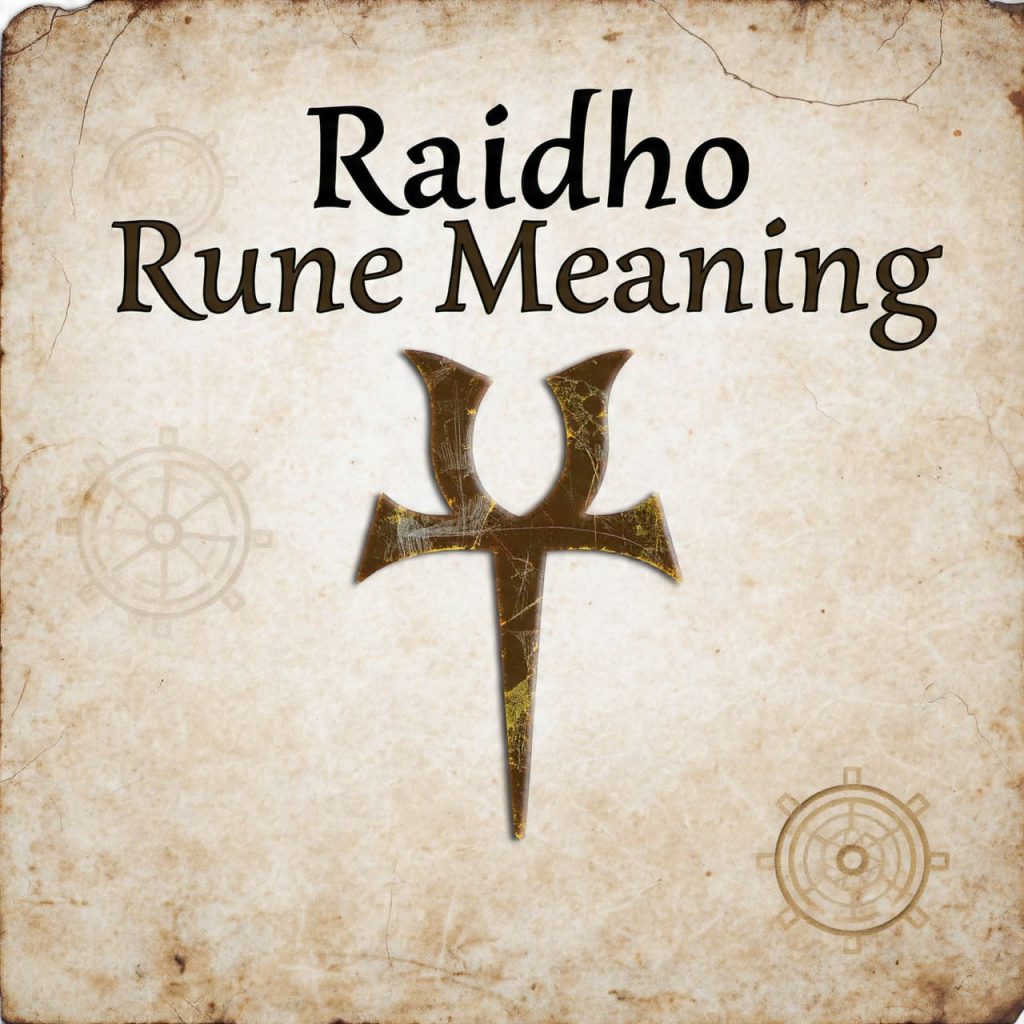
Understanding the meaning of the Raidho rune can feel challenging because it sits between movement and structure. Many people sense that it relates to travel or progress, yet feel unsure whether that movement is physical, mental, or situational. This uncertainty often creates hesitation, especially when explanations jump too quickly into symbolism or prediction instead of clarifying function.

💜 Need a clear answer right now?
CONSULT THE YES OR NO TAROT Free · No registration · Instant resultRaidho is not about speed, destination, or success. It is about orderly movement—movement that follows a sequence, rhythm, or process. When approached with clarity and restraint, using grounded learning principles such as those discussed at astroideal, Raidho becomes one of the most practical runes to understand because it highlights how progress happens rather than what happens next.
The Core Meaning of Raidho
At its core, Raidho represents movement aligned with structure. This means progress that follows a path, rule, or system rather than random motion.
Raidho is not chaos and not stagnation. It sits between the two. It describes motion that makes sense within an established order—steps taken in sequence, actions taken at the right time, or processes unfolding as they should.
Importantly, Raidho does not promise arrival. It describes the journey itself, not the outcome.
Why Raidho Is Often Misunderstood
Raidho is frequently misunderstood because it is simplified as “travel” or “journey.” While movement is involved, this definition is incomplete.
The rune does not emphasize distance or destination. It emphasizes correct movement. You can be moving quickly and still be out of alignment; Raidho does not describe that. You can also be moving slowly and still be fully aligned; Raidho applies there as well.
Misunderstanding arises when motion is confused with progress.
Clear explanation of this distinction is often emphasized by qualified professionals, who treat Raidho as a rune of order rather than momentum.
Raidho as a Rune of Process
Raidho is best understood as a rune of process. It highlights sequences, systems, and steps that must occur in a particular order.
This can apply to physical movement, but more often it applies to structured activity: plans, routines, negotiations, procedures, or developments that unfold according to rules.
Raidho appears when alignment with process matters more than force or intention. Skipping steps weakens its function.
This process-based view mirrors the discipline used in focused love tarot readings, where clarity comes from respecting sequence rather than rushing to conclusions.
Movement Versus Direction in Raidho
A key aspect of Raidho is that movement has direction. Direction does not mean destination; it means orientation.
Raidho indicates that actions are aligned with an established path. That path may be personal, professional, or situational, but it exists independently of desire.
This is why Raidho often appears when timing and order are more important than effort.
Raidho and Rhythm
Rhythm is central to Raidho. Progress under Raidho happens when actions are taken at the right moment and in the right sequence.
Forcing progress disrupts rhythm. Hesitation can also disrupt rhythm. Raidho highlights the importance of moving with the process rather than against it.
This makes Raidho feel calm rather than urgent. It is about continuity, not acceleration.
What Raidho Does Not Mean
Understanding Raidho requires knowing its limits.
Raidho does not mean:
- Immediate success
- Rapid change
- Freedom without structure
- Random movement
It also does not guarantee that movement is easy. Structured movement can still be demanding.
Recognizing what Raidho does not promise prevents unrealistic expectations.
Raidho and Alignment
Alignment is the most accurate single word associated with Raidho. Alignment refers to actions matching context.
When Raidho appears, it suggests that progress depends on following the correct framework, not creating a new one.
This can involve rules, agreements, routines, or expectations that already exist. Raidho works within systems rather than breaking them.
Readers who want to keep this interpretation grounded often seek neutral clarification from reliable readers to avoid confusing alignment with compliance or passivity.
Raidho in Situations of Change
Raidho frequently appears during transitions. These transitions are usually structured rather than abrupt.
Examples include changes that involve procedures, schedules, or stages. Raidho highlights that the transition has a route, even if the endpoint is not yet visible.
The rune reassures order, not certainty.
Raidho and Responsibility
Because Raidho involves order, it is often linked to responsibility. Responsibilities define paths and expectations.
Raidho does not judge responsibility as good or bad. It simply indicates that progress is tied to fulfilling roles correctly.
Ignoring responsibilities under Raidho creates friction. Respecting them maintains flow.
Avoiding Overinterpretation of Raidho
A common error is interpreting Raidho as encouragement to move faster. This is incorrect.
Raidho encourages correct timing, not speed. Moving too fast can disrupt the sequence just as much as moving too slowly.
The rune’s guidance is subtle: stay aligned with the process as it unfolds.
This restraint aligns with the disciplined structure used in online tarot sessions, where timing is respected rather than forced.
Modern Context of Raidho
In modern life, many systems operate simultaneously—schedules, workflows, digital processes. Raidho remains relevant because it highlights how progress depends on navigating these systems correctly.
It applies to planning, logistics, coordination, and execution within frameworks.
Raidho does not resist structure. It uses it.
Communication and Coordination Under Raidho
Raidho often appears where coordination matters. Movement is rarely individual; it usually involves others, rules, or shared expectations.
This makes clear communication important, though Raidho itself is not a communication rune. It highlights how coordination enables movement.
Visual explanations through video readings or audio-focused formats like phone readings are sometimes used to illustrate process and timing, but the rune’s meaning remains focused on alignment rather than instruction.
Context Without Prediction
Raidho does not predict where a path leads. It does not promise success, arrival, or resolution.
It highlights that a path exists and that movement along it follows an order.
Light contextual awareness, such as broad horoscope insights, can sometimes help recognize periods where structure and planning are emphasized, but these frameworks should never redefine Raidho’s core meaning.
Ethical Interpretation of Raidho
Ethical interpretation of Raidho avoids pressuring action. The rune does not instruct someone to move or stay still.
It identifies the presence of structure. What is done with that awareness remains a personal decision.
Using Raidho to justify rigid behavior or external pressure misrepresents its function.
Educational approaches like those discussed at astroideal reinforce this boundary by prioritizing clarity over control.
Long-Term Understanding of Raidho
Over time, Raidho becomes easier to recognize. It appears whenever progress depends on sequence rather than impulse.
This recognition builds patience and respect for process. Movement feels less stressful because expectations align with structure.
Raidho teaches that steady alignment often achieves more than force.
Raidho Compared to Other Movement Concepts
Raidho differs from chaos-driven movement or goal-driven urgency. It emphasizes journey with order rather than outcome.
This makes it one of the most stabilizing runes when progress feels uncertain.
Understanding this distinction deepens appreciation of its role.
Frequently Asked Questions
Is Raidho about travel?
It can include travel, but primarily refers to structured movement.
Does Raidho guarantee progress?
No. It indicates a path, not an outcome.
Is Raidho a fast-moving rune?
No. It values correct timing over speed.
Does Raidho require action?
It highlights alignment, not instruction.
Is Raidho positive or negative?
It is neutral. Context determines impact.
Can Raidho apply to non-physical situations?
Yes. It often applies to processes and systems.
Call to Action
Understanding the Raidho rune begins with recognizing the difference between motion and alignment. When movement follows structure, progress becomes sustainable rather than forced. If you want to get a clear yes or no answer about whether you are moving in alignment with an existing path, or prefer a disciplined one question tarot approach to interpretation, focusing on order and timing is the most reliable way to work with the true meaning of Raidho.
