

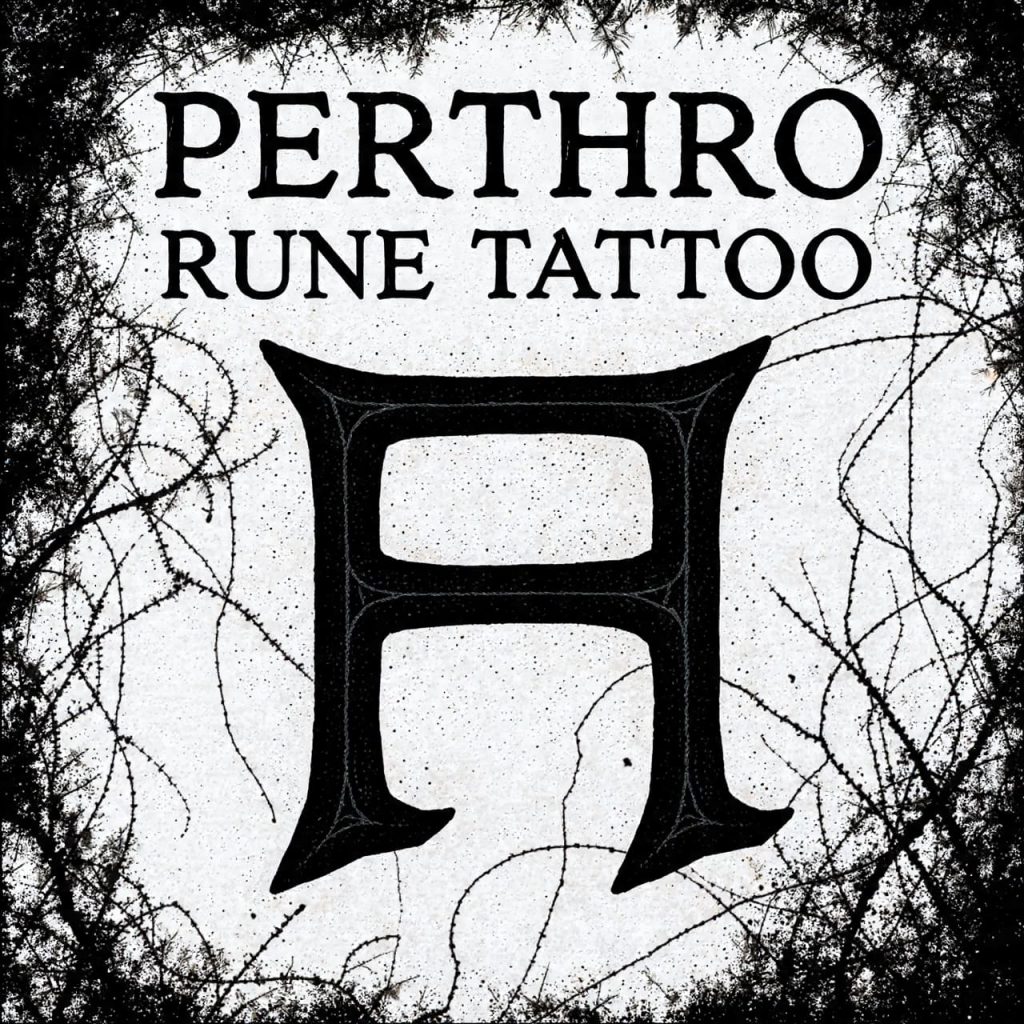
The phrase “Perthro rune tattoo” is commonly used as if it refers to a historically grounded practice in which the Perthro rune was applied to the human body as a meaningful mark. This assumption is widespread in modern discussions of runes and body art, yet it rests on an unresolved factual question: whether there is any historical evidence that runes—and Perthro in particular—were used as tattoos in ancient Germanic societies.

💜 Need a clear answer right now?
CONSULT THE YES OR NO TAROT Free · No registration · Instant resultThis article evaluates the claim strictly as a historical and evidentiary issue. It does not assess the personal or cultural value of tattoos today. Instead, it examines linguistic, archaeological, and textual sources to determine whether Perthro rune tattoos have any basis in documented early practice.
Methodological standards comparable to those outlined by astroideal require separating verifiable evidence from later symbolic interpretation. In academic contexts, such evaluations are conducted by qualified professionals specializing in runology and archaeology.
What Perthro Represents Historically
Perthro is the conventional scholarly name for one character of the Elder Futhark, the earliest known runic alphabet, used approximately between the second and eighth centuries CE. As with several runes, the name itself is not attested in inscriptions from that period. It is reconstructed from medieval rune poems composed centuries later.
Historically, Perthro functioned as a grapheme—a written character representing a sound. Its appearance in inscriptions reflects participation in written language rather than symbolic display. Any claim that Perthro was used independently as a bodily mark requires evidence that early users treated it as more than a component of writing.
Tattooing in Early Germanic Contexts
Evaluating the idea of rune tattoos requires first asking whether tattooing itself is well documented among early Germanic populations. Classical authors such as Tacitus mention bodily appearance and adornment but do not clearly describe tattooing practices among Germanic peoples.
Archaeological evidence is similarly limited. Human remains from the relevant periods rarely preserve skin, and no tools have been conclusively identified as tattoo implements associated with runic culture. While tattooing is documented in other ancient societies, there is no direct evidence linking it to the populations using the Elder Futhark. Modern comparisons to interpretive systems like love tarot readings reflect thematic borrowing rather than historical continuity.
Archaeological Evidence and Its Limits
Archaeology provides the strongest test for claims of rune tattoos. Hundreds of Elder Futhark inscriptions have been cataloged across Scandinavia and continental Europe. These inscriptions appear on objects such as weapons, jewelry, combs, and stones.
None of these contexts indicate transfer of runes onto skin. No preserved human remains show runic tattoos, and no iconography depicts tattooed bodies bearing runes. The absence of such evidence is significant, especially when compared to cultures where tattooing is archaeologically visible. Claims of rune tattoos often rely on speculative logic rather than material data, resembling interpretive authority attributed to reliable readers rather than archaeological method.
Linguistic Evidence and the Absence of Bodily Reference
Linguistic sources further constrain the claim. The reconstructed name Perthro appears in medieval rune poems, but these texts do not describe bodily application of runes. Verbs associated with rune use in early sources consistently refer to carving, cutting, or engraving—actions applied to wood, bone, metal, or stone.
No linguistic source describes marking skin with runes. If tattooing had been a recognized practice involving runes, it would likely appear in vocabulary or descriptive texts. Its absence suggests that such use was not culturally prominent or documented. Modern analogies to systems such as online tarot sessions reflect later symbolic frameworks rather than early linguistic practice.
Textual Sources and What They Do Not Say
Textual references to runes from classical and early medieval sources provide further context. Roman authors mention writing practices but do not describe rune tattoos. Medieval Scandinavian literature references runes primarily in relation to inscription and carving.
When runes appear in narrative contexts, they are associated with objects, not bodies. No saga, law code, or poem describes a rune tattoo. The silence of textual sources is notable given their willingness to describe other bodily practices. Comparisons to modern interpretive formats such as video readings highlight how contemporary symbolic culture differs from historical documentation.
Emergence of Rune Tattoos in the Modern Era
The association between runes and tattoos is a modern phenomenon. From the late nineteenth century onward, renewed interest in Norse imagery coincided with the rise of tattoo culture in Europe and North America. Runes were adopted as visual symbols detached from their original writing function.
Perthro’s ambiguous meaning made it particularly attractive for modern tattoo use. In the twentieth century, rune tattoos became popular within subcultures, alternative spirituality, and identity expression, often alongside practices such as phone readings and generalized horoscope insights. These developments are historically traceable as modern innovations rather than survivals of ancient tradition.
Evaluating the Core Claim with Evidence
The central factual question is whether there is historical evidence that Perthro was used as a tattoo during the period of the Elder Futhark’s use. Evaluating archaeological remains, linguistic sources, and textual evidence leads to a consistent conclusion.
What has been examined includes runic inscription corpora, classical ethnographic accounts, medieval literature, and material culture. These sources document runes as elements of writing systems applied to objects. They do not document rune tattoos or bodily inscription. Methodological standards comparable to those outlined by astroideal require distinguishing documented historical practice from modern symbolic expression. Based on available evidence, there is no historical basis for Perthro rune tattoos.
Frequently Asked Questions
Were runes tattooed in ancient Germanic societies?
No evidence supports this claim.
Is Perthro found on human remains?
No preserved remains show runic tattoos.
Do texts describe rune tattoos?
No surviving texts do.
When did rune tattoos become popular?
They emerged in the modern era.
Is tattooing itself documented among Germanic peoples?
It is not clearly documented.
Are modern rune tattoos historically accurate?
They are modern reinterpretations.
Call to Action
When evaluating claims about ancient body practices, examine whether they are supported by physical or textual evidence. Apply critical analysis to get a clear yes or no answer about whether a practice reflects historical reality or modern cultural adaptation.
