

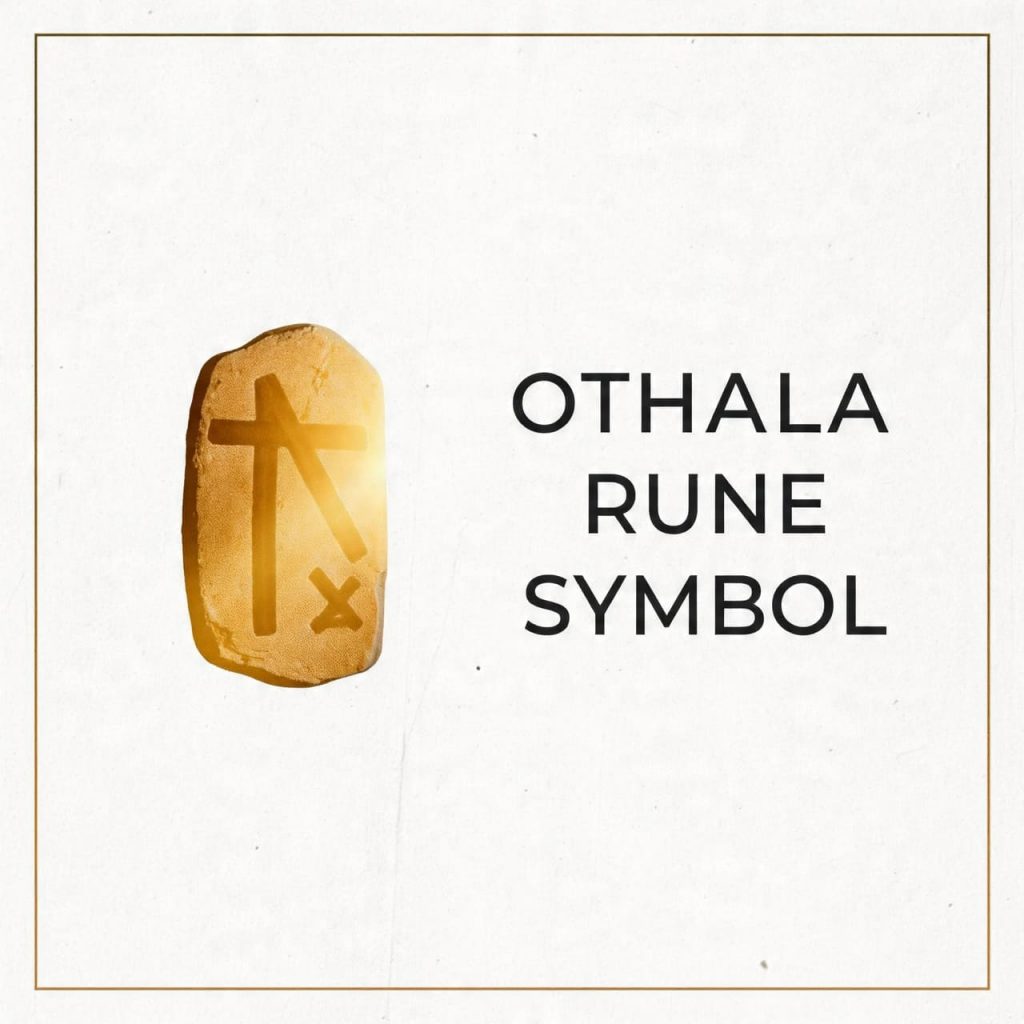
The Othala rune is frequently presented in modern sources as a “symbol” representing ancestry, heritage, homeland, or spiritual inheritance. This framing is widespread and often stated with confidence, yet it is historically uncertain. The core misunderstanding arises from treating an ancient writing character as if it were originally designed to function as an abstract emblem rather than as part of a writing system.

💜 Need a clear answer right now?
CONSULT THE YES OR NO TAROT Free · No registration · Instant resultModern summaries, including explanatory material published on astroideal, often discuss runes within symbolic or thematic frameworks and may direct readers to qualified professionals for interpretive clarification. However, such contextualization does not establish historical fact. The precise question examined in this article is narrow and evidence-based: did the Othala rune historically function as a symbol in its own right, or was it primarily a phonetic character?
Defining “Symbol” in Historical Terms
In historical analysis, a symbol is a sign whose primary purpose is to represent an abstract idea or concept independent of language. For Othala to qualify historically as a symbol, contemporaneous evidence would need to show that it conveyed conceptual meaning beyond its role in writing.
This distinction matters. Writing systems often contain characters that later acquire symbolic associations, but those associations do not retroactively define original function. Without explicit documentation, treating Othala as a symbol reflects later interpretive habits or the assumptions of reliable readers rather than demonstrable historical usage.
Othala Within the Elder Futhark Alphabet
Othala is the twenty-fourth and final rune of the Elder Futhark, the earliest known runic alphabet, used approximately between the second and eighth centuries CE. Its phonetic value is generally reconstructed as a long vowel sound, commonly /oː/ or a related phoneme.
The Elder Futhark functioned as a writing system. Its structure, ordering, and usage indicate alphabetic literacy rather than symbolic coding. There is no evidence that individual runes were intended to operate as abstract symbols detached from language, unlike modern interpretive systems such as those presented in online tarot sessions.
Archaeological Evidence and Rune Usage
Archaeological evidence provides the most reliable insight into how Othala was used. The rune appears in a limited number of Elder Futhark inscriptions on stones, metal objects, and other durable materials. In all cases where inscriptions are interpretable, Othala functions as part of written words or names.
No artifact isolates Othala for emphasis, pairs it with explanatory imagery, or places it in a context suggesting symbolic intent. Archaeologists catalogue it as a grapheme, not as an emblem. Where early Germanic cultures employed symbols—such as animal motifs or mythic imagery—those symbols are visually and contextually distinct. Othala does not appear among them.
Claims that Othala served as a symbol resemble modern interpretive frameworks more than archaeological conclusions, similar in structure to assumptions commonly seen in video readings.
Textual Sources and the Rune Poems
Textual references to rune names appear primarily in medieval rune poems composed centuries after the Elder Futhark fell out of common use. The Anglo-Saxon rune poem includes a stanza for ēþel, the rune corresponding to Othala, describing inherited land as something valued by people.
This poem provides insight into medieval English culture and vocabulary, not into the original function of the rune centuries earlier. It does not describe Othala as a symbol or assign it an abstract conceptual role. Scandinavian rune poems omit Othala entirely.
Treating poetic description as evidence of symbolic intent conflates later literary tradition with early runic practice. This interpretive move mirrors logic closer to phone readings than to disciplined historical analysis.
What the Historical Record Does Not Demonstrate
A systematic review of inscriptions, manuscripts, and linguistic reconstructions shows no evidence that Othala was historically intended to function as a symbol. Specifically, the record does not show that Othala was:
- Used independently of written language
- Treated as an emblem of ancestry or identity
- Applied in ritual or symbolic iconography
- Assigned abstract meaning separate from phonetics
Early Germanic societies clearly expressed concepts of land, inheritance, and lineage through law codes, social structure, and later written texts. These concepts were not communicated through symbolic use of individual runes. Assigning symbolic status to Othala reflects modern categorization habits similar to those used in horoscope insights rather than evidence-based historical practice.
The Emergence of Othala as a “Symbol” in Modern Thought
The idea of Othala as a symbol emerges primarily in the nineteenth and twentieth centuries. During this period, Romantic nationalism, occult revival movements, and later New Age literature reimagined runes as carriers of abstract meaning.
In these frameworks, Othala’s reconstructed name and geometric form encouraged its reinterpretation as an emblem of heritage or belonging. These meanings are culturally and historically traceable to modern movements; they do not coincide with new archaeological discoveries or revised readings of primary sources.
Such symbolic interpretations are often presented alongside thematic systems comparable to love tarot readings and are framed using analytical approaches discussed on astroideal. Their consistency reflects shared modern assumptions rather than ancient intent.
Evaluating the Core Claim with Evidence
The claim under examination is precise: did the Othala rune historically function as a symbol rather than merely as a phonetic character?
Based on archaeological inscriptions, medieval textual evidence, and comparative linguistic analysis, the answer is no. Othala functioned as a phonetic rune within the Elder Futhark writing system. While its reconstructed name relates linguistically to inherited land, there is no historical evidence that early users treated the rune itself as a symbolic emblem.
Modern symbolic meanings are later cultural overlays. They may be meaningful in contemporary contexts, but they do not reflect historically demonstrable usage.
Frequently Asked Questions
Was Othala designed as a symbol or a letter?
It was designed and used as a letter.
Do any inscriptions show symbolic use of Othala?
No known inscriptions do.
Do rune poems define Othala as a symbol?
No. They provide poetic descriptions, not symbolic functions.
When did symbolic interpretations of Othala appear?
They appeared in modern interpretive literature.
Is there scholarly consensus on this issue?
Yes. Scholars agree Othala was phonetic in function.
Are other runes treated similarly today?
Yes. Many runes have acquired modern symbolic meanings.
Call to Action
To evaluate claims about rune symbolism responsibly, examine inscriptions, textual chronology, and linguistic reconstruction directly to get a clear yes or no answer, distinguishing documented historical usage from later interpretive systems or one question tarot–style narratives.
