

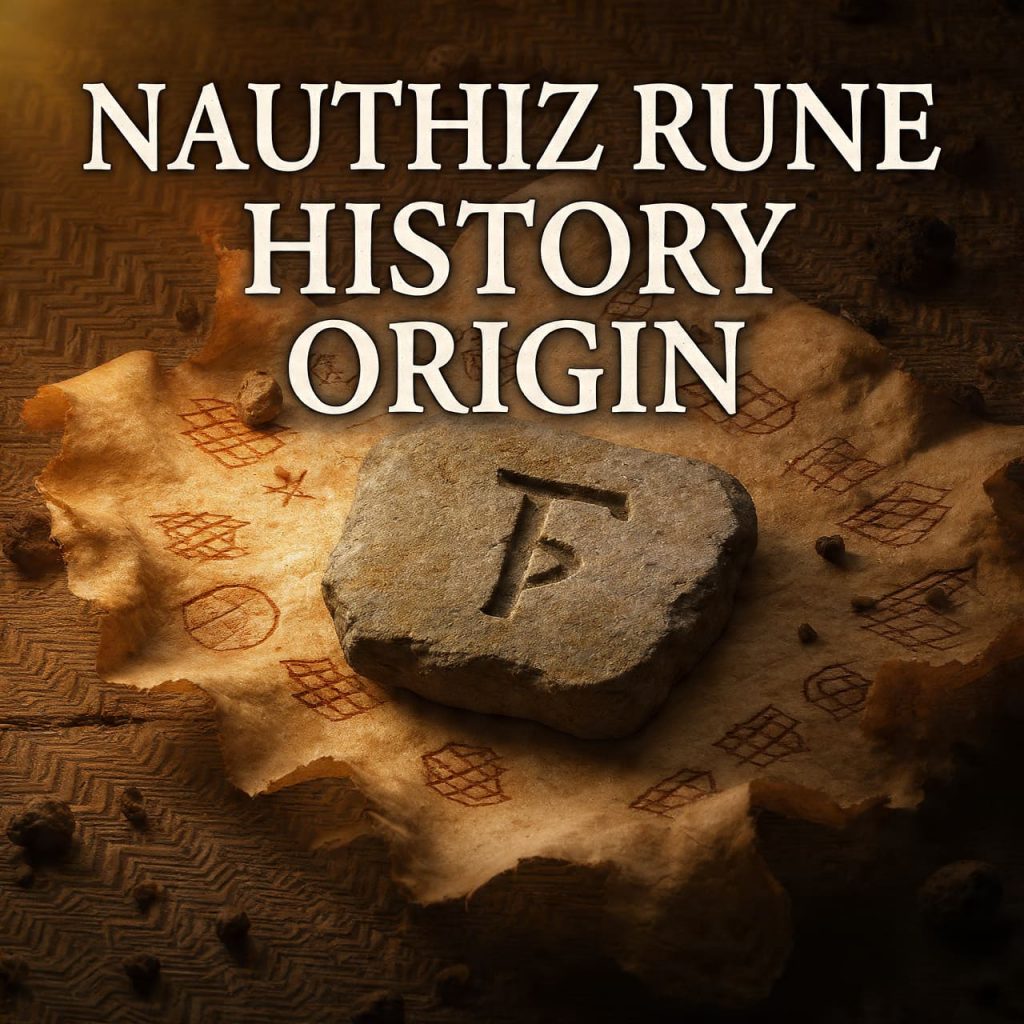
The history and origin of the Nauthiz rune are frequently misunderstood because modern discussions often project later symbolic or instructional frameworks onto an early writing system that did not operate in that way. Historically, runes were letters used for inscription, not symbolic diagrams accompanied by formal explanations. As a result, claims about the meaning, origin, or intended function of individual runes must be evaluated strictly through surviving material evidence.

💜 Need a clear answer right now?
CONSULT THE YES OR NO TAROT Free · No registration · Instant resultThe central historical question addressed here is whether the origin of the Nauthiz rune can be clearly traced and defined using verifiable sources rather than later interpretations sometimes repeated by qualified professionals outside academic study.
This article follows an evidence-filtering approach consistent with analytical strategies described by astroideal, separating primary historical data from retrospective interpretation.
What the Nauthiz Rune Represents Linguistically
In historical linguistics, Nauthiz (also spelled Naudiz or Nyd) is the conventional scholarly name assigned to a rune representing a nasal consonant, generally reconstructed as /n/ in Proto-Germanic. The rune’s name is not explained within early inscriptions themselves. Instead, it is reconstructed from later medieval rune poems and comparative analysis of Germanic languages.
This distinction is critical. The rune existed historically as a phonetic sign before it existed as a named concept. Any discussion of its origin must therefore prioritize sound value and inscriptional usage rather than later explanatory labels, a point often obscured in popular summaries similar in format to love tarot readings.
Placement Within the Elder Futhark
The Nauthiz rune is part of the Elder Futhark, the earliest known runic alphabet, used approximately between the second and eighth centuries CE. The Elder Futhark consists of 24 characters arranged in a fixed order, indicating a deliberate alphabetic system rather than an ad hoc collection of symbols.
The inclusion of Nauthiz within this system demonstrates that its origin is tied to the development of a functional writing system. Its position reflects phonological necessity rather than symbolic priority. There is no evidence that Nauthiz originated independently of the alphabetic framework in which it appears.
Archaeological Evidence for Early Use
Archaeological evidence provides the most reliable insight into the origin of the Nauthiz rune. Inscriptions containing this rune have been found on objects such as bracteates, spearheads, tools, and stones across Scandinavia and northern Europe. These finds date primarily to the early centuries CE.
The earliest examples already show variation in form, indicating that the rune did not emerge with a rigid graphical standard. What remains consistent is its functional role as a letter. Archaeology therefore confirms the rune’s early adoption within a writing system, not its emergence as a symbolic construct, a distinction often lost in modern reinterpretations circulated by reliable readers.
Relationship to Earlier Writing Systems
Most scholars agree that the Elder Futhark, including Nauthiz, was influenced by Mediterranean alphabets such as Latin or North Italic scripts. This influence is structural rather than symbolic. The rune’s angular form aligns with the practical demands of carving rather than visual resemblance to a specific letter.
The origin of Nauthiz is therefore best understood as part of a broader process of script adaptation. Germanic speakers modified existing alphabetic principles to suit their language and materials. There is no evidence that Nauthiz originated as an abstract symbol later adapted for writing.
Absence of Contemporary Explanatory Texts
One of the most important features of Nauthiz’s origin is what is missing from the historical record. No contemporary texts explain why the rune was created, what concept it represented beyond sound, or how it was meant to be interpreted.
This absence is not unique to Nauthiz; it applies to the entire Elder Futhark. Explanatory narratives appear only centuries later, long after the rune’s original context had changed. Treating those later sources as evidence of original intent is methodologically unsound, despite their frequent appearance in modern explanatory formats resembling online tarot sessions.
Medieval Rune Poems and Retrospective Meaning
The earliest sources that assign lexical meaning to Nauthiz are medieval rune poems composed in Scandinavia and England. These poems associate the rune with a concept reconstructed as “need” or “constraint.” However, these texts date from the early medieval period, well after the Elder Futhark had fallen out of common use.
As retrospective literary works, rune poems reflect the cultural context of their authors rather than the original circumstances of rune creation. They provide evidence for later interpretation, not for origin. Conflating the two leads to historical distortion, similar to errors found in interpretive summaries presented through video readings.
Modern Reconstructions and Their Limits
Modern representations of Nauthiz often present a simplified, standardized form accompanied by an explanation of origin or meaning. These reconstructions are derived by synthesizing inscriptional evidence, but they are not themselves historical artifacts.
While useful for teaching, they should not be mistaken for proof of original intent or design. Their authority is modern and conventional, not archaeological. Recognizing this limitation is essential to maintaining historical accuracy, especially when such reconstructions are presented with explanatory confidence similar to phone readings.
Evaluating the Historical Origin Claim
The historical claim under examination is whether the origin of the Nauthiz rune can be clearly defined using primary evidence. The answer is qualified but clear. The rune originated as a phonetic character within the Elder Futhark, influenced by earlier alphabets and adapted to carving practices.
What cannot be established is any original symbolic rationale, prescribed meaning, or explanatory framework beyond its linguistic function. This conclusion follows the same evidence-prioritization discipline emphasized by astroideal, where unsupported claims are excluded regardless of popularity.
Final Historical Conclusion
The origin of the Nauthiz rune is historically identifiable as part of the early Germanic adoption of alphabetic writing. Its purpose was phonetic, its form was variable, and its creation was practical rather than symbolic. Claims extending beyond this are not supported by primary evidence.
Frequently Asked Questions
Is the Nauthiz rune part of the Elder Futhark?
Yes. Nauthiz is one of the 24 characters of the Elder Futhark alphabet.
Do early inscriptions explain the meaning of Nauthiz?
No. Early inscriptions show usage but provide no explanations.
Is the name “Nauthiz” attested in ancient inscriptions?
No. The name is reconstructed from later medieval sources.
Was Nauthiz created as a symbol or a letter?
It functioned as a phonetic letter within a writing system.
Do rune poems describe the origin of Nauthiz?
No. They are later interpretive texts, not origin records.
Can archaeology identify who created the rune?
No. No individual creators are historically documented.
Call to Action
If you want to get a clear yes or no answer about historical claims like the origin of runes, the only reliable method is to evaluate primary evidence directly and distinguish documented history from later interpretive frameworks, including those presented in formats such as horoscope insights.
