

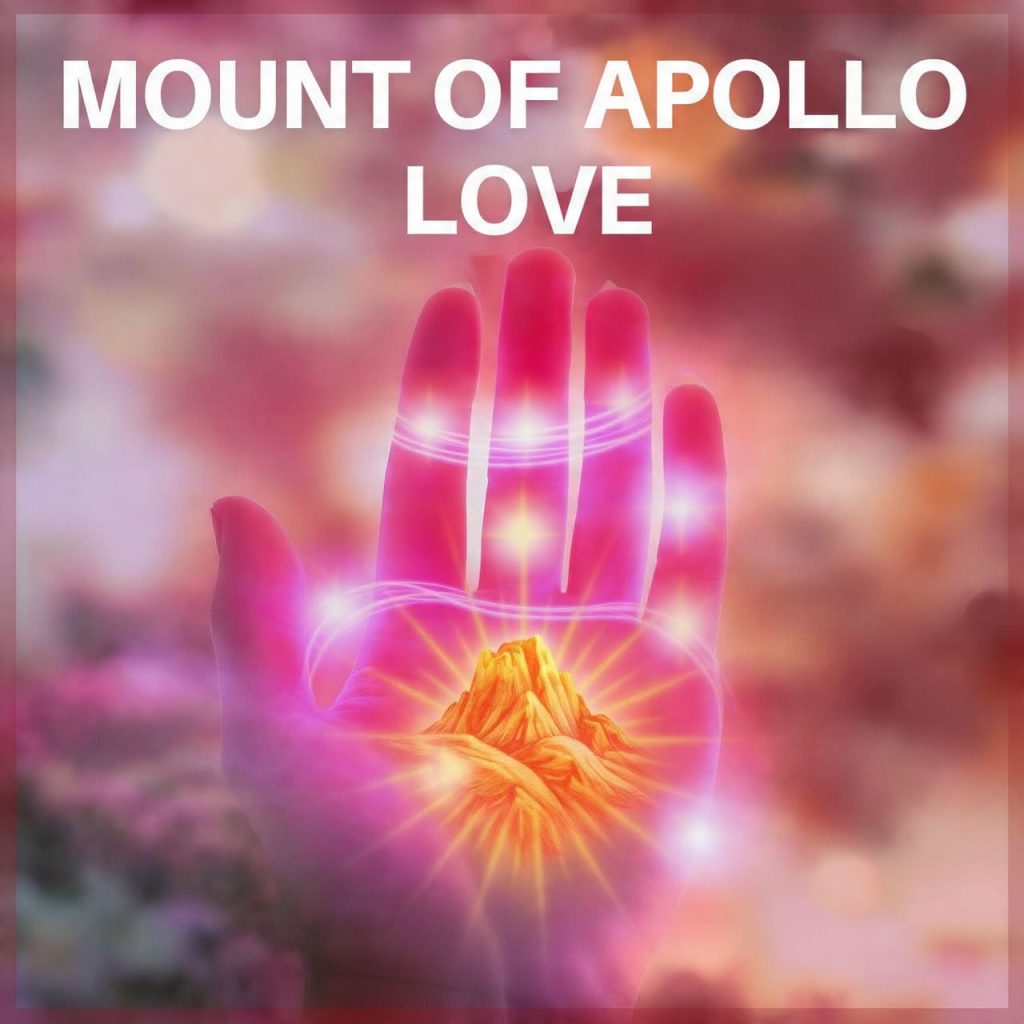
The Mount of Apollo is frequently associated in modern palmistry content with love, attraction, romance, or emotional expression, particularly through claims linking it to charm or artistic magnetism in relationships. These assertions are often presented as traditional interpretations, even though historical palmistry texts rarely framed love as a distinct analytical category tied to specific mounts. Over time, anatomical descriptions have been expanded into symbolic narratives about emotional life, obscuring what classical sources actually document. Aggregation platforms such as astroideal commonly place early references alongside contemporary interpretations, which can blur the boundary between historical evidence and later extrapolation.

💜 Need a clear answer right now?
CONSULT THE YES OR NO TAROT Free · No registration · Instant resultFor readers evaluating explanations offered by qualified professionals, the central question is whether the Mount of Apollo was historically associated with love in palmistry.
This article addresses one narrowly defined question only: does historical palmistry evidence support a connection between the Mount of Apollo and love? The analysis is evidence-first, historically disciplined, and confined strictly to documented sources.
Defining the Mount of Apollo in Palmistry
In palmistry terminology, the Mount of Apollo is the raised area at the base of the ring finger. It is classified as a primary mount and defined anatomically rather than emotionally. Classical palmists assessed mounts through physical traits such as elevation, firmness, and proportional balance, not through romantic or relational symbolism.
Early descriptions of the Mount of Apollo emphasize refinement, balance, and structural harmony of the hand rather than emotional attachment or romantic behavior. This anatomical approach differs from later interpretive frameworks promoted by reliable readers, where mounts are often mapped directly to love-related traits or interpersonal appeal.
Mythological Origins and Misinterpretation
The Mount of Apollo derives its name from Greco-Roman mythology, where Apollo was associated with light, order, and the arts. Importantly, Apollo was not a god of romantic love; that role belonged to Venus. The application of Apollo’s name to the ring finger mount served primarily as a classificatory convention rather than a doctrinal statement about emotional or romantic capacity.
Earlier non-European traditions, including Indian Hast Samudrika Shastra, recognized the ring finger region structurally but did not associate it with love or romantic inclination. This indicates that linking the Mount of Apollo to love is a symbolic reinterpretation rather than a historically grounded concept, similar to symbolic overlays later applied in online tarot sessions.
Evidence from Classical Palmistry Texts
A review of classical palmistry texts from the 16th to 19th centuries reveals no consistent association between the Mount of Apollo and love. Authors such as Desbarrolles and Cheiro described the mount in terms of balance, refinement, or aesthetic proportion of the hand, without linking it to romantic inclination or emotional bonding.
Where affection or emotional expression is discussed in classical palmistry, it is typically addressed through the Heart Line or overall hand harmony, not through isolated mounts. No authoritative text establishes the Mount of Apollo as an indicator of love. This absence contrasts with modern explanatory formats such as video readings, which often rely on simplified symbolic correlations.
Absence of Empirical and Documentary Support
Palmistry does not produce archaeological evidence, so historical evaluation relies on manuscript continuity, illustrations, and textual comparison. Across these materials, the Mount of Apollo is consistently identified anatomically, but references connecting it to love are minimal or nonexistent.
Illustrations may show variation in mount prominence, yet these differences are not accompanied by commentary linking them to romantic behavior or emotional capacity. This suggests that early palmists did not conceptualize the mount as a love indicator. The lack of empirical support further limits such claims, a constraint also acknowledged in interpretive services such as phone readings.
Emergence of Modern Love-Based Interpretations
The association between the Mount of Apollo and love appears primarily in late 20th-century popular palmistry literature and online content. These interpretations often conflate artistic charm or aesthetic refinement with romantic appeal, despite lacking historical precedent.
This development aligns with broader trends in modern esoteric symbolism, where complex emotional experiences are retroactively mapped onto traditional anatomical features. Comparable patterns are evident in generalized horoscope insights, where relational themes are frequently presented as traditional despite limited historical grounding.
Evaluation of the Core Claim
When the historical record is examined critically, the conclusion is clear. There is no historically verifiable evidence that the Mount of Apollo was used as an indicator of love in classical palmistry. While the mount was consistently recognized as an anatomical feature, its documented role was limited to descriptive observation rather than emotional or relational interpretation.
Analytical standards referenced by astroideal emphasize separating primary-source documentation from later symbolic expansion. Based on surviving texts and illustrations, the factual answer to the core question is no. This distinction is often obscured in symbolic interpretations similar to those found in love tarot readings.
Frequently Asked Questions
Did classical palmistry associate the Mount of Apollo with love?
No. Classical texts do not link this mount to romantic love.
Why do modern sources connect Apollo with romance?
Because later authors applied artistic symbolism to emotional contexts without historical support.
Is the Mount of Apollo mentioned in early palmistry sources?
Yes. It is consistently identified as a primary anatomical feature.
Did ancient traditions use mounts to assess relationships?
No. Relationship analysis was not systematically developed in early palmistry.
Are modern love interpretations historically supported?
No. They lack citation from primary palmistry texts.
Is there scientific evidence for love-based palm interpretations?
No. Palmistry interpretations are not empirically validated.
Conclusion
The historical evidence does not support the claim that the Mount of Apollo functioned as an indicator of love in traditional palmistry. While the mount has long been recognized as a physical feature of the palm, its documented role was limited to structural and descriptive observation rather than emotional or romantic interpretation. Love-based meanings emerged later through symbolic extrapolation rather than historical doctrine. The evidence leads to one clear conclusion: the Mount of Apollo was not historically associated with love in palmistry.
Call to Action
Readers assessing palmistry claims should clearly distinguish historical documentation from later symbolic interpretation. Applying an evidence-first approach allows one to get a clear yes or no answer grounded in historical records rather than assumption.
