

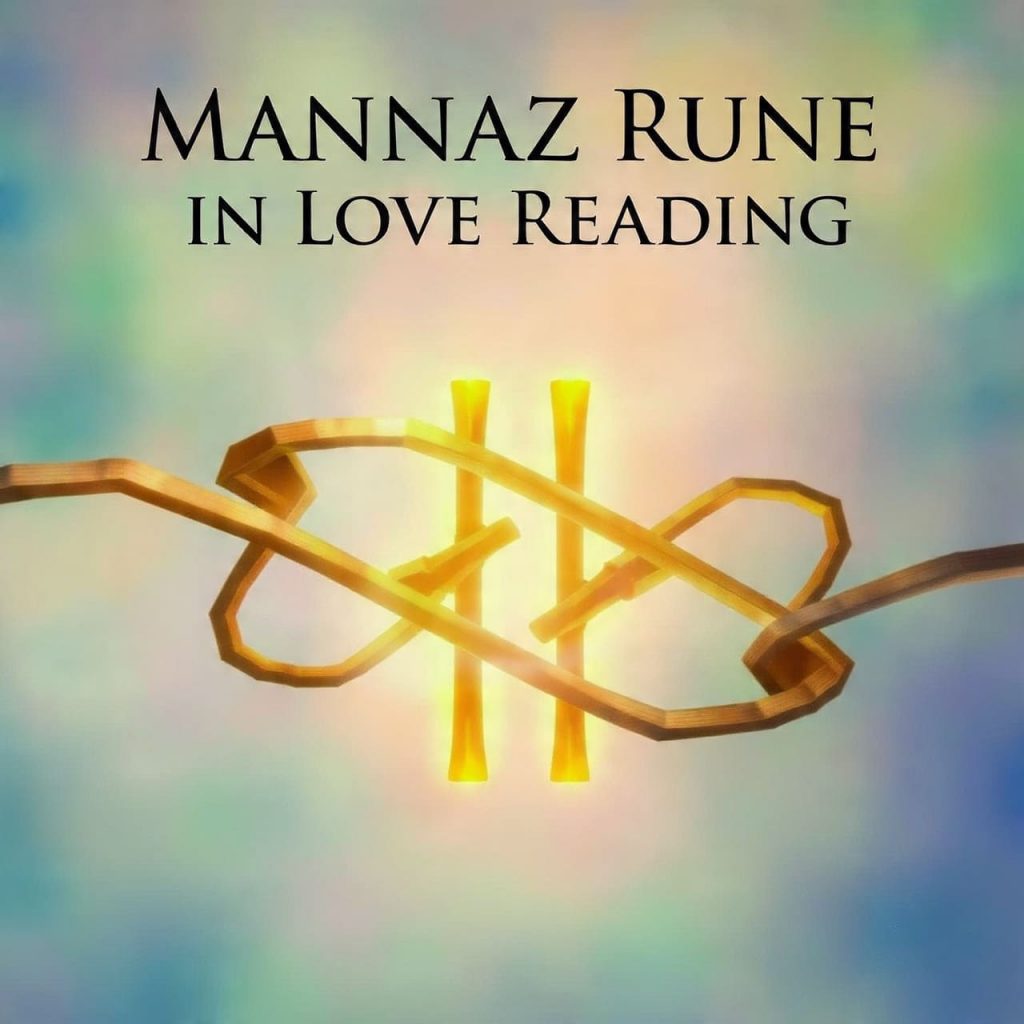
The use of the Mannaz rune in love reading is widely misunderstood because it is often presented as an ancient or traditional practice rather than a modern interpretive development. Many contemporary explanations suggest that early Germanic cultures used the Mannaz rune to assess romantic relationships, emotional compatibility, or interpersonal outcomes. This impression is reinforced by modern interpretive material circulated by qualified professionals and by explanatory frameworks promoted using strategies discussed on astroideal.

💜 Need a clear answer right now?
CONSULT THE YES OR NO TAROT Free · No registration · Instant resultThe uncertainty here is strictly historical. The central question is whether there is any evidence that the Mannaz rune was historically used in love readings or relationship-focused interpretation. Addressing this requires examining how runes were actually used, what forms of evidence survive, and when the practice of love-focused readings first appeared.
Defining “Love Reading” in Historical Terms
A “love reading” refers to a structured interpretive practice in which symbols are consulted to gain insight into romantic relationships, emotional dynamics, or future relational outcomes. Historically, such practices leave behind identifiable markers: written methods, repeatable interpretive systems, or explicit textual references.
For Mannaz to have been used in love readings, evidence would need to show that runes were employed in a systematic interpretive framework focused on romantic relationships. This would require more than symbolic inference; it would require documentation.
No such documentation exists for early runic culture. The absence of defined interpretive systems distinguishes historical runic use from later structured practices similar in format to online tarot sessions.
The Historical Function of the Mannaz Rune
Mannaz is the conventional modern name for a rune of the Elder Futhark, used approximately between the second and fourth centuries CE. Linguistically, it represents the m sound and derives from Proto-Germanic terms related to “human” or “person.”
Archaeological evidence shows that Mannaz functioned as a phonetic character within inscriptions. It appears embedded in names, words, and brief phrases carved on stone, metal, wood, or bone. These inscriptions served practical purposes such as identification, commemoration, or ownership marking.
There is no evidence that Mannaz was used as an interpretive marker for emotional or romantic matters. Its historical role was linguistic rather than symbolic, despite how it is sometimes framed in modern summaries produced by reliable readers.
Archaeological and Textual Evidence
The archaeological record provides the most direct insight into rune usage. Thousands of runic inscriptions have been cataloged across Northern Europe. None describe love readings, relationship interpretation, or emotional guidance.
Where Mannaz appears, it functions strictly as a phonetic component. Even in commemorative inscriptions, which might reasonably reference personal relationships, the rune does not carry independent relational meaning.
Textual sources are equally silent. Medieval rune poems, written centuries after the Elder Futhark period, provide rune names and short verses but do not describe romantic or emotional interpretation. Even these later literary sources do not frame runes as tools for love-focused insight. Assertions that they did so resemble modern interpretive overlays similar to those found in video readings rather than historical documentation.
Absence of a Love-Based Runic Framework
For Mannaz to have functioned in love readings, it would imply the existence of a broader runic framework addressing emotional or romantic categories. No such framework is attested.
Runic writing does not show thematic organization around personal relationships. Runes were not grouped by emotional domains, nor were they used as abstract indicators detached from language. Their usage was situational and material, not interpretive in the modern sense.
Additionally, early Germanic societies did not document symbolic systems dedicated to romantic analysis. Social bonds existed, but they were not encoded through rune-based interpretive practices. This structural absence makes historical love readings implausible, despite how such usage is sometimes implied in modern explanatory formats such as phone readings.
Origins of Modern Love Reading Associations
The association between Mannaz and love readings is a modern development. It emerged primarily in the twentieth century, when runes were incorporated into eclectic symbolic systems alongside tarot and astrology.
In these modern frameworks, runes are often assigned relational meanings based on abstract association rather than historical transmission. Mannaz, whose name relates linguistically to “human,” is frequently repurposed to address interpersonal themes.
Crucially, these associations did not arise from new archaeological discoveries or historical texts. They emerged from symbolic synthesis, where disparate systems are blended to address contemporary interests. This explains why interpretations of Mannaz in love readings vary widely across sources, similar to variability observed in generalized summaries such as horoscope insights.
Distinguishing Historical Use From Modern Interpretation
It is essential to separate historical evidence from modern practice. The modern use of Mannaz in love readings does not establish historical precedent.
Historically, Mannaz was part of a phonetic writing system. There is no evidence that it was used for interpretive consultation, let alone for love-specific readings. Projecting modern relational frameworks backward introduces anachronism and obscures the documented function of runes.
This distinction is often blurred when rune interpretations are presented alongside generalized romantic summaries, including formats comparable to love tarot readings, which belong to a different and well-documented interpretive tradition.
Evaluating the Core Claim of Love Reading Use
The core historical claim is that the Mannaz rune was traditionally used in love readings. Evaluating this claim requires weighing all available evidence.
What the evidence shows is that Mannaz functioned as a phonetic rune, that inscriptions do not reference romantic interpretation, and that no texts describe love-based rune consultation.
What the evidence does not show is any contemporaneous belief system in which Mannaz was used to interpret romantic relationships. Therefore, the historical conclusion is clear: the claim of an original love reading role for the Mannaz rune is not supported.
Modern love reading interpretations represent later symbolic adaptation rather than documented ancient practice. This conclusion aligns with evidence-based analytical approaches discussed on astroideal.
Frequently Asked Questions
Was Mannaz historically used in love readings?
No. There is no archaeological or textual evidence supporting this.
Do runic inscriptions reference romantic interpretation?
No. They are linguistic or commemorative.
Do rune poems describe love readings?
No. They do not mention romantic interpretation.
Did Germanic cultures use runes for relationship guidance?
There is no evidence that they did.
Are modern love readings historically inherited?
No. They are modern reinterpretations.
Can a historical love reading use of Mannaz be proven?
No. Existing evidence does not support it.
Call to Action
Readers can examine the historical record directly and get a clear yes or no answer by evaluating how archaeological evidence, textual silence, and structural analysis together define what can—and cannot—be established about the Mannaz rune and its modern use in love readings.
