

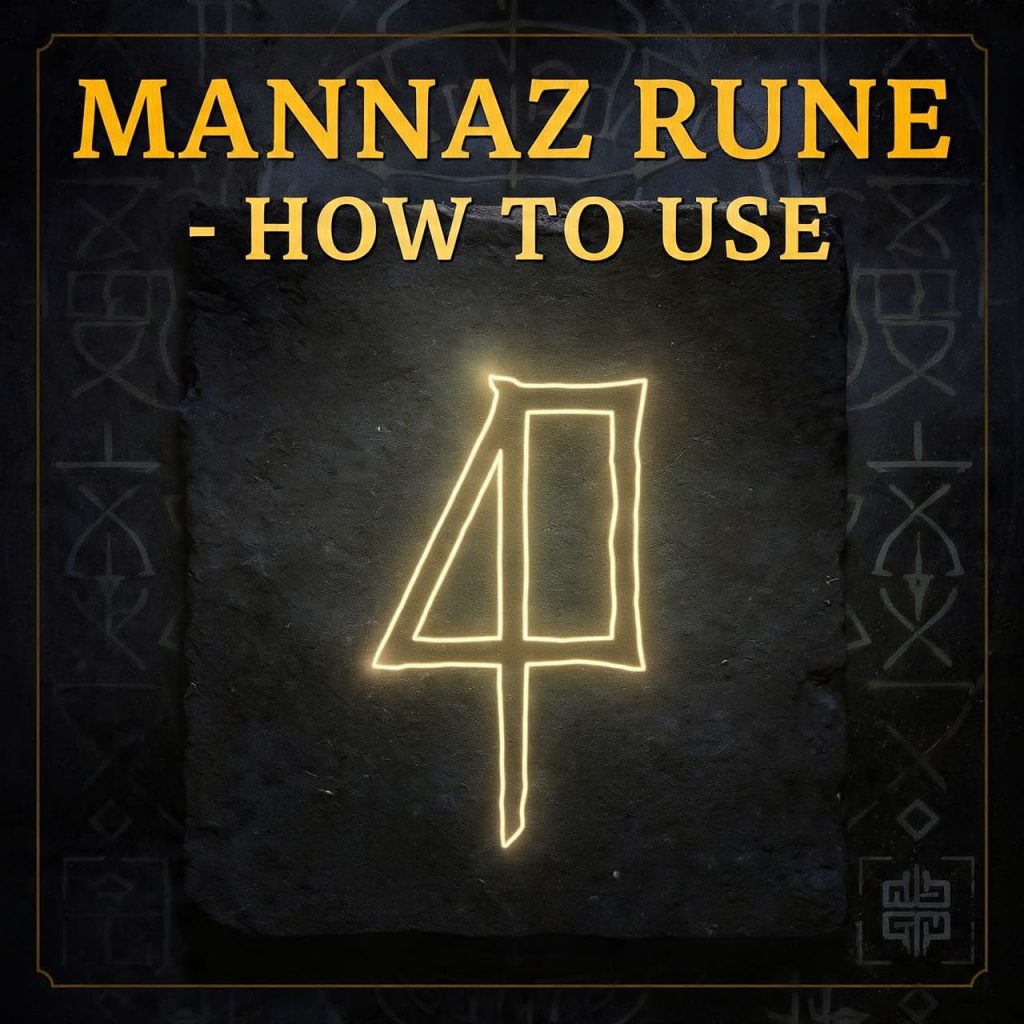
The phrase “Mannaz rune how to use” is widely misunderstood because it presumes that historically documented instructions ever existed. In popular writing, the question is often treated as practical rather than evidentiary, leading readers to assume that early Germanic cultures transmitted standardized methods for applying individual runes. This assumption persists despite a lack of primary sources that describe such procedures.

💜 Need a clear answer right now?
CONSULT THE YES OR NO TAROT Free · No registration · Instant resultFrom a historical standpoint, the issue is not whether modern people can assign uses to Mannaz, but whether the historical record supports the idea that the rune had defined methods of use beyond writing. Evidence-based platforms such as astroideal emphasize that historical clarity depends on examining what sources actually show, not on later interpretive traditions. The uncertainty here is factual and academic: did early sources describe “how to use” the Mannaz rune in a systematic or prescriptive way?
Defining “Use” in a Historical Context
In historical analysis, “use” must be defined narrowly and concretely. For runes, use can be established only where material or textual evidence demonstrates function. This includes inscriptional use, linguistic representation, and documented social contexts.
The Mannaz rune appears in the Elder Futhark as a grapheme corresponding to a phonetic value. Its meaning, reconstructed through comparative linguistics, relates to “human” or “person.” Importantly, this semantic value does not imply a method of application. Scholars trained as qualified professionals distinguish between semantic reconstruction and behavioral instruction. The former is supported by evidence; the latter requires explicit documentation, which is absent.
Runic Writing as the Primary Documented Use
The earliest and most reliable evidence for how runes were used comes from inscriptions on objects such as weapons, jewelry, tools, and memorial stones. In these cases, Mannaz functions as a letter within a word, not as an independent tool.
For example, when Mannaz appears in names or short phrases, its role is identical to other runes: it contributes to spelling. No inscription isolates Mannaz and explains its application. This sharply contrasts with later symbolic systems, where individual symbols are often given stand-alone interpretive roles similar to those seen in love tarot readings. Historically, runes do not operate in this way.
Archaeological Context and Limitations
Archaeological findings are crucial for determining historical use. Objects bearing runes are typically found in graves, hoards, or public memorial contexts. These locations indicate social communication rather than private technique or instruction.
If Mannaz had a specialized “use” beyond writing, archaeologists would expect contextual clues: repeated placement, accompanying explanatory text, or standardized physical arrangements. None of these patterns appear in the archaeological record. Assertions of hidden or oral-only usage are speculative and methodologically weak. As with claims about intuitive interpretation by reliable readers, such arguments rely on absence rather than evidence.
Literary Sources and Their Silence on Instructions
Medieval literary sources, including the Poetic Edda and later sagas, are often cited in discussions of runes. These texts occasionally mention runes being carved or known, but they do not provide operational instructions for individual runes.
When instructions appear in medieval texts, they are usually explicit, such as directions for legal procedures or ritual acts. The lack of comparable detail regarding Mannaz or any rune’s “use” is significant. This silence suggests that no standardized instructional framework existed. Attempts to fill this gap resemble modern explanatory systems found in online tarot sessions rather than historically transmitted knowledge.
The Development of Modern “How to Use” Frameworks
The notion that each rune has a prescribed method of use emerges primarily in the twentieth century. During this period, authors combined runic alphabets with modern psychological, esoteric, or symbolic theories. These frameworks were often presented as reconstructions but can be traced clearly to modern publications.
Such systems parallel developments in other interpretive practices that adapted to new media, including video readings. The historical problem is not that these systems exist, but that they are frequently presented without acknowledging their modern origin. There is no manuscript trail linking these frameworks to early Germanic societies.
Evaluating Claims of Implied Usage
Some proponents argue that the meaning “human” implies a practical use for Mannaz. From a historical perspective, semantic implication does not equal instruction. Many words carry meanings without prescribing actions.
Philological analysis shows that rune names helped users remember phonetic values. This mnemonic function does not demonstrate a broader application method. Claims that meaning automatically implies use are interpretive leaps similar to those made in phone readings, where symbolism is expanded beyond its documented function.
Comparative Historical Methodology
Historians often compare cultures to test claims of usage. In societies where symbolic systems had prescribed methods—such as certain forms of divination—texts and artifacts explicitly describe procedures. No such comparative evidence exists for Mannaz.
The methodological standard requires positive evidence. Without inscriptions explaining application, texts describing procedure, or consistent archaeological patterns, the conclusion must remain negative. Modern associations with predictive systems, including horoscope insights, highlight how easily symbolic meaning can be retrofitted into older materials without historical grounding.
Final Evaluation of the Core Claim
The central claim embedded in the phrase “Mannaz rune how to use” implies that historically recognized instructions existed. After examining linguistic data, archaeological evidence, and literary sources, the answer is clear. There is no historical evidence describing how to use the Mannaz rune beyond its function as a written character.
As emphasized in analytical discussions such as those found on astroideal, distinguishing between documented history and modern reinterpretation is essential. The documented use of Mannaz is limited to writing. All other “uses” originate in modern symbolic systems.
Frequently Asked Questions
Did ancient sources explain how to use the Mannaz rune?
No ancient sources provide instructions for using Mannaz beyond writing.
Was Mannaz used differently from other runes?
No evidence suggests Mannaz had a unique function separate from other letters.
Are rune meanings the same as usage instructions?
No, semantic meanings do not constitute documented methods of use.
When did “how to use” interpretations appear?
They appeared mainly in twentieth-century esoteric literature.
Do archaeological finds support specialized use?
No, archaeological contexts show communicative, not instructional, use.
Is there scholarly disagreement on this point?
Mainstream scholarship agrees that no historical instructions exist.
Call to Action
Evaluating historical claims requires separating evidence from assumption. Readers are encouraged to review primary sources and academic analyses to get a clear yes or no answer on whether the Mannaz rune had documented methods of use.
