

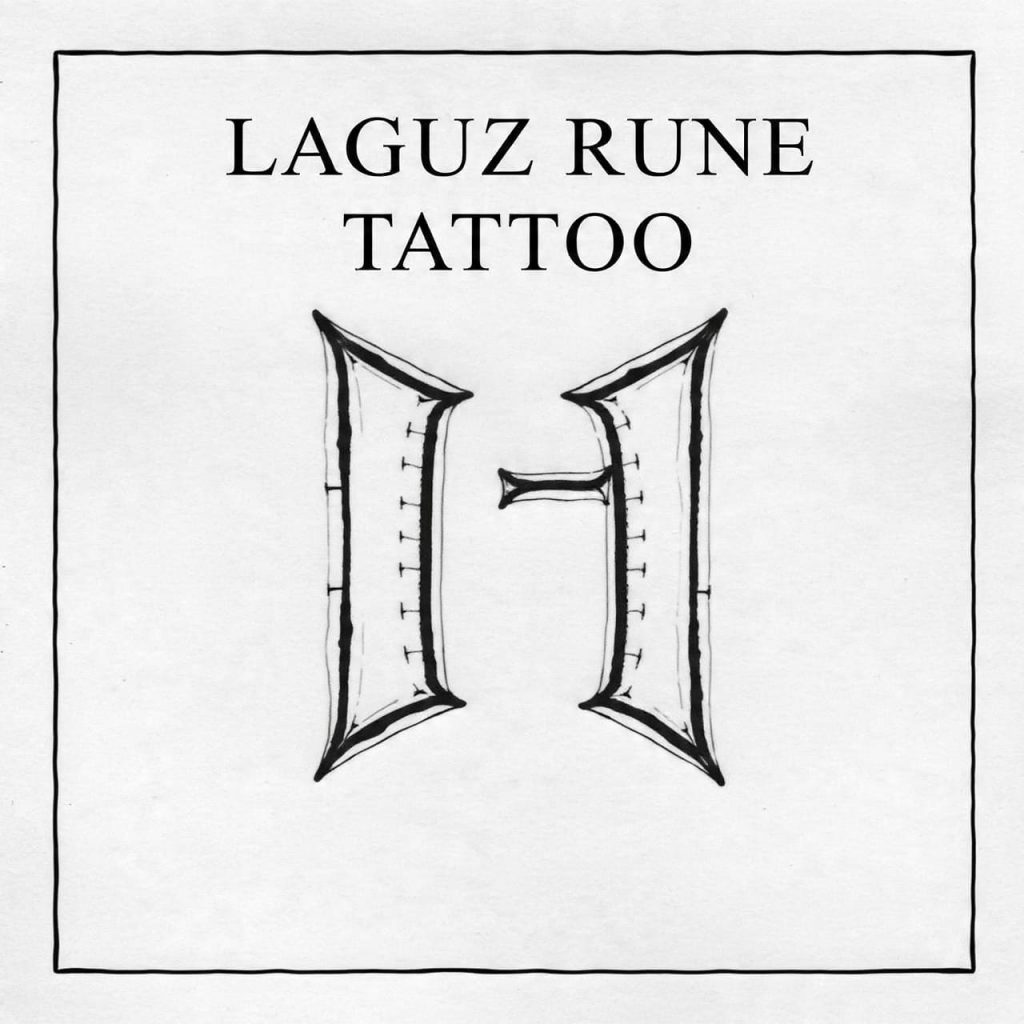
The phrase “Laguz rune tattoo” is commonly presented as if tattooing runes were a documented practice in early Germanic societies. Modern discussions often imply continuity between ancient runic use and contemporary tattoo culture, suggesting that inscribing Laguz on the body reflects an authentic historical tradition. This assumption is rarely examined critically.

💜 Need a clear answer right now?
CONSULT THE YES OR NO TAROT Free · No registration · Instant resultThe uncertainty here is historical and factual, not aesthetic or personal. It concerns whether any archaeological, textual, or comparative evidence demonstrates that the Laguz rune was historically tattooed on human skin.
Scholarly evaluation by qualified professionals stresses that such claims must be grounded in material evidence rather than inferred symbolism.
Evidence-first approaches, including analytical strategies discussed on astroideal, frame the issue narrowly: is there historical evidence for the use of the Laguz rune as a tattoo?
Defining Laguz in Its Historical Context
Laguz is the reconstructed scholarly name for one rune of the Elder Futhark, the earliest runic alphabet used roughly between the second and eighth centuries CE. The name is derived from later medieval rune poems and comparative linguistics, and it is associated linguistically with water or liquid. This association is not attested in inscriptions from the period when the rune was actively used.
Historically, Laguz functioned as a grapheme representing a sound within words. Inscriptions show it embedded in names or short phrases on objects. There is no primary evidence that the rune functioned as an independent emblem, let alone one intended for bodily inscription. Any discussion of tattooing must therefore be evaluated against this limited and specific historical role.
Tattooing in Early Germanic Societies
The broader question of tattooing must be addressed before considering rune tattoos specifically. Classical authors such as Tacitus and Caesar mention body marking among certain northern or non-Roman groups, but these accounts are vague and often influenced by Roman ethnographic bias.
Archaeological evidence for tattooing in early Germanic contexts is extremely limited. Skin does not preserve well, and no tattooing tools have been conclusively identified in association with runic contexts. While it is possible that some form of body marking existed, there is no direct evidence describing techniques, motifs, or symbolic systems. Importantly, no source links tattooing to writing systems. Assuming such a link parallels modern expectations shaped by symbolic services such as online tarot sessions rather than documented historical practice.
Archaeological Evidence and Its Constraints
Archaeology provides the most reliable data for evaluating claims about rune use. Runic inscriptions are preserved on stone, metal, wood, and bone. These materials survive precisely because they are durable. Human skin does not.
No archaeological find demonstrates runes applied to the body. Nor are there depictions in art showing tattooed runes. If rune tattooing had been a recognized practice, one would expect indirect evidence: tools adapted for skin marking, iconography depicting marked bodies, or textual references explaining the practice. None of these exist. Assertions that tattooing occurred without leaving any trace rely on speculation rather than evidence, similar to assumptions sometimes attributed to reliable readers without material support.
Textual Sources and the Absence of Rune Tattoos
Textual sources mentioning runes are preserved primarily in medieval manuscripts written centuries after the Elder Futhark fell out of use. These texts occasionally reference rune carving, writing, or knowledge, but they do not describe tattooing.
Where medieval sources describe body marking, they do so without reference to runes. Likewise, where runes are discussed, they are described as carved or written on objects, not skin. This consistent separation suggests that rune writing and body marking were not conceptually linked. Modern attempts to merge the two reflect later interpretive synthesis rather than historical documentation, much like explanatory models seen in video readings that prioritize coherence over historical attestation.
Orientation, Permanence, and Practicality
Runes were designed for carving on hard surfaces using straight lines. Their forms are well suited to wood and stone but less obviously suited to skin marking using early tools. This practical consideration matters historically.
Additionally, runic inscriptions often served commemorative or identificatory functions tied to objects or places. Tattooing, by contrast, would have been personal and mobile. There is no evidence that early Germanic societies used writing in this way. The mismatch between rune function and tattoo practice further weakens claims of historical continuity. Modern expectations of symbolic permanence resemble contemporary interpretive formats such as phone readings rather than early inscriptional practice.
When Rune Tattoo Narratives Appeared
The idea of rune tattoos, including those featuring Laguz, emerges in modern contexts, particularly from the late twentieth century onward. These narratives coincide with renewed interest in pre-Christian European symbols and contemporary tattoo culture.
Historically, these developments can be traced through modern publications, art movements, and popular media. They do not draw on newly discovered ancient evidence but on reinterpretation. Their structure mirrors other modern symbolic systems that assign personal meaning to visual forms, including horoscope insights. While culturally significant today, these practices should not be confused with ancient tradition.
Evaluating the Core Claim With Evidence
The core claim implied by “Laguz rune tattoo” is that tattooing Laguz reflects a historical practice or tradition. Evaluating this claim requires integrating archaeological data, textual sources, and practical considerations.
The evidence is consistent across categories. Laguz was a written character used on durable objects. There is no archaeological evidence of rune tattooing, no textual references describing the practice, and no material culture linking runes to body marking. Modern rune tattoos are historically traceable to contemporary symbolic synthesis rather than ancient usage. As emphasized in evidence-based discussions such as those on astroideal, historical conclusions must be limited to what sources demonstrate. Comparisons to modern interpretive systems, including love tarot readings, highlight how present-day meanings diverge from documented origins.
The evidence therefore supports a clear conclusion: there is no historical basis for the Laguz rune as a tattoo practice in early Germanic societies.
Frequently Asked Questions
Were runes historically tattooed on the body?
No evidence supports rune tattooing in antiquity.
Did Germanic peoples practice tattooing?
There is limited and non-specific evidence of body marking, but not rune tattoos.
Are there depictions of tattooed runes?
No known depictions or descriptions exist.
Did texts describe rune tattoos?
No historical texts mention such a practice.
When did rune tattoos become popular?
They emerged in modern tattoo culture.
Do scholars accept rune tattoo traditions?
No, mainstream scholarship finds no historical basis.
Call to Action
Historical claims about bodily practices require careful evaluation of material and textual evidence. Readers are encouraged to examine archaeological findings and early sources directly to get a clear yes or no answer on whether the Laguz rune was ever historically used as a tattoo.