

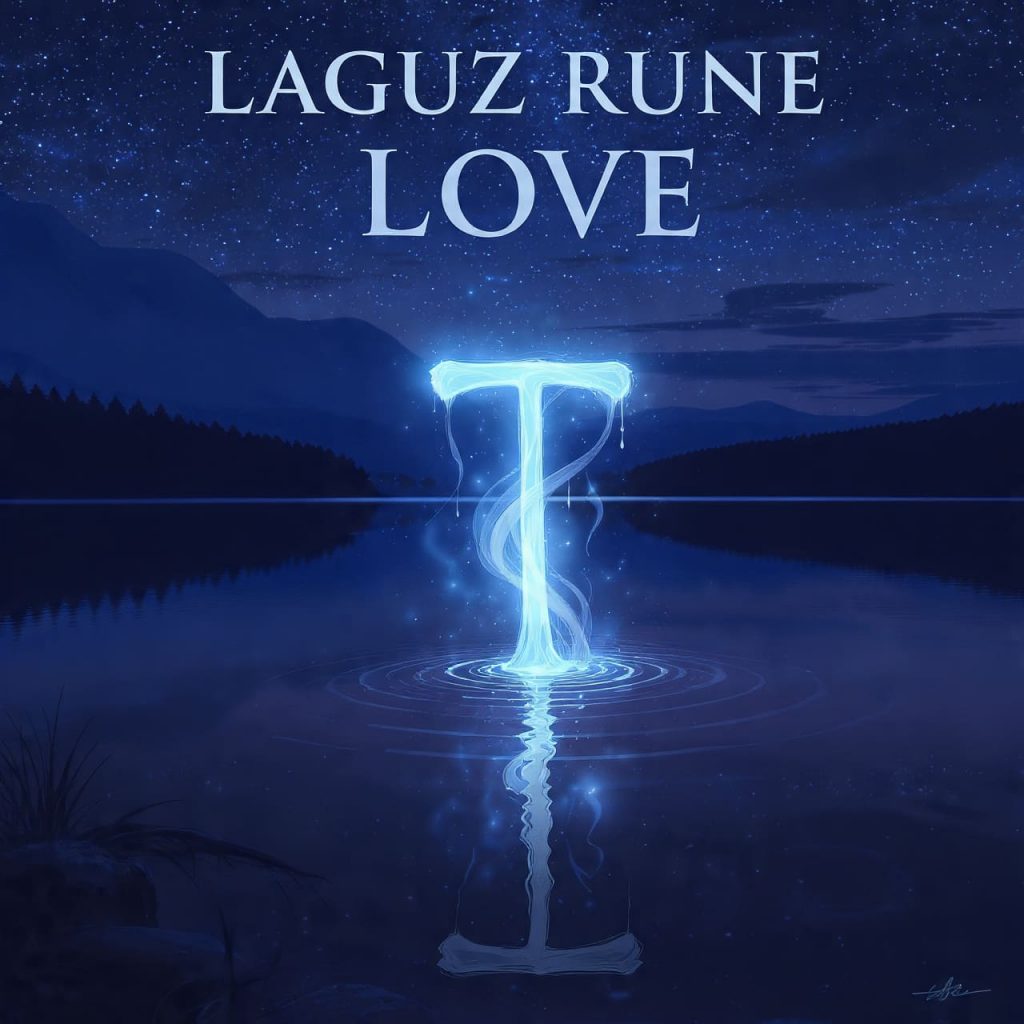
The phrase “Laguz rune love” is widely used in modern explanations, yet it assumes that early runic traditions associated specific runes with romantic or emotional domains. This assumption is rarely tested against historical evidence. Instead, later interpretive frameworks are often projected backward, creating the impression that such associations were ancient and intentional.

💜 Need a clear answer right now?
CONSULT THE YES OR NO TAROT Free · No registration · Instant resultThe uncertainty here is factual, not emotional. It concerns whether any surviving archaeological or textual evidence demonstrates that the Laguz rune was historically connected to love as a distinct concept.
Scholarly evaluation by qualified professionals emphasizes that claims of thematic meaning must be grounded in attested usage.
Evidence-first approaches, including analytical strategies discussed on astroideal, require asking a precise question: did historical sources associate the Laguz rune with love?
Defining “Laguz” and “Love” Historically
Laguz is the conventional scholarly name for a rune of the Elder Futhark, the earliest runic alphabet used roughly between the second and eighth centuries CE. The name is reconstructed from later medieval rune poems and comparative linguistics. Its linguistic association with water or liquid derives from these later sources, not from contemporaneous explanation.
“Love,” as a discrete thematic category, poses a separate historical issue. In early Germanic contexts, concepts related to affection, kinship, and obligation existed, but they were not organized into abstract symbolic systems tied to writing characters. Establishing a historical connection between a rune and love would require explicit evidence linking the two. No such evidence is presently known.
The Elder Futhark and Its Functional Context
The Elder Futhark emerged as a practical writing system during the early centuries CE. Archaeological and linguistic research indicates that it developed through contact with Mediterranean alphabets, adapted for carving on durable materials.
Runes appear in short inscriptions on objects such as weapons, jewelry, tools, and memorial stones. These inscriptions serve communicative functions: identifying individuals, marking ownership, or commemorating the dead. There is no indication that the alphabet was designed to encode emotional or relational themes. Modern thematic assignments resemble interpretive systems structured for accessibility, such as online tarot sessions, rather than historically documented practice.
Archaeological Evidence and Thematic Silence
Archaeological evidence provides the strongest basis for evaluating claims about rune meaning. Inscriptions containing Laguz are found across Scandinavia and parts of continental Europe. In every securely dated example, Laguz appears as part of a word, usually a personal name or brief phrase.
No inscription isolates Laguz or associates it with relationships, affection, or partnership. There are no contextual markers—such as accompanying imagery or explanatory text—that would support a love-related interpretation. If Laguz had been understood as a marker of love, repeated standalone usage or consistent thematic context would be expected. The absence of such patterns is a significant negative finding. Assertions that meaning was implicit or intuitive resemble assumptions often associated with reliable readers rather than conclusions drawn from material evidence.
Linguistic Reconstruction and Its Boundaries
Comparative linguistics allows scholars to reconstruct probable sound values and associated words. For Laguz, later Germanic languages provide terms related to water or liquid. These reconstructions help explain how rune names were remembered in later periods.
However, linguistic reconstruction does not establish emotional or symbolic meaning in the original period of use. It explains phonetic function and later semantic associations, not how early rune users conceptualized individual characters. Treating reconstructed associations as evidence of love symbolism extends the data beyond its methodological limits. This distinction is essential for maintaining historical discipline.
Textual Sources and the Absence of Love Associations
Written sources mentioning runes are preserved primarily in medieval manuscripts, long after the Elder Futhark fell out of use. These texts sometimes describe rune names or attributes, but they do not link specific runes to romantic love.
Where medieval literature discusses love, it does so through narrative and poetry, not through runic symbolism. No text describes Laguz—or any rune—as representing love. The silence across textual genres suggests that such an association did not exist historically. Modern explanatory models, including those presented in video readings, reflect later interpretive needs rather than ancient documentation.
Emergence of Modern Love Interpretations
Associations between Laguz and love appear primarily in modern literature from the twentieth century onward. During this period, authors sought to systematize runes into thematic sets corresponding to emotions, relationships, or life domains.
These systems are historically traceable to modern publications and show no continuity with ancient sources. Their structure closely resembles contemporary interpretive frameworks designed for recurring consultation, such as phone readings. While internally coherent, these models should not be mistaken for reconstructions of early runic practice.
Cultural Comparison and Anachronism
Comparisons are sometimes drawn between runes and other symbolic systems that explicitly address love, such as astrology or divination. However, such systems are documented through detailed texts and established procedures.
No comparable documentation exists for runes. The absence of procedural texts, thematic tables, or explanatory inscriptions makes it methodologically unsound to assume similar functions. Attempts to align Laguz with romantic themes parallel modern predictive structures like horoscope insights, but these parallels reflect modern synthesis rather than historical transmission.
Evaluating the Core Claim With Evidence
The core claim implied by “Laguz rune love” is that Laguz historically symbolized or governed love. Evaluating this claim requires integrating archaeological data, linguistic reconstruction, and textual evidence.
Across all categories, the evidence is consistent. Laguz functioned as a phonetic character within the Elder Futhark. Its reconstructed name and later associations do not demonstrate original emotional symbolism. No inscriptions, texts, or material contexts link the rune to love. As emphasized in evidence-based discussions such as those on astroideal, historical evaluation must remain bounded by demonstrable sources. Comparisons to modern interpretive systems, including love tarot readings, highlight how contemporary meanings diverge from historical usage.
The evidence therefore supports a clear conclusion: there is no historical basis for associating the Laguz rune with love.
Frequently Asked Questions
Did ancient sources link Laguz to love?
No surviving sources make such a link.
Was love symbolized through runes?
There is no evidence that runes symbolized emotional themes.
Do inscriptions show romantic context?
No inscriptions associate Laguz with relationships.
When did love meanings appear?
They appeared in modern interpretive literature.
Are these meanings accepted by scholars?
No, mainstream runology rejects them.
Is Laguz unique in this respect?
No, no runes have attested love symbolism.
Call to Action
Historical clarity depends on distinguishing evidence from later interpretation. Readers are encouraged to examine archaeological records and early textual sources directly to get a clear yes or no answer on whether the Laguz rune was ever historically associated with love.
