

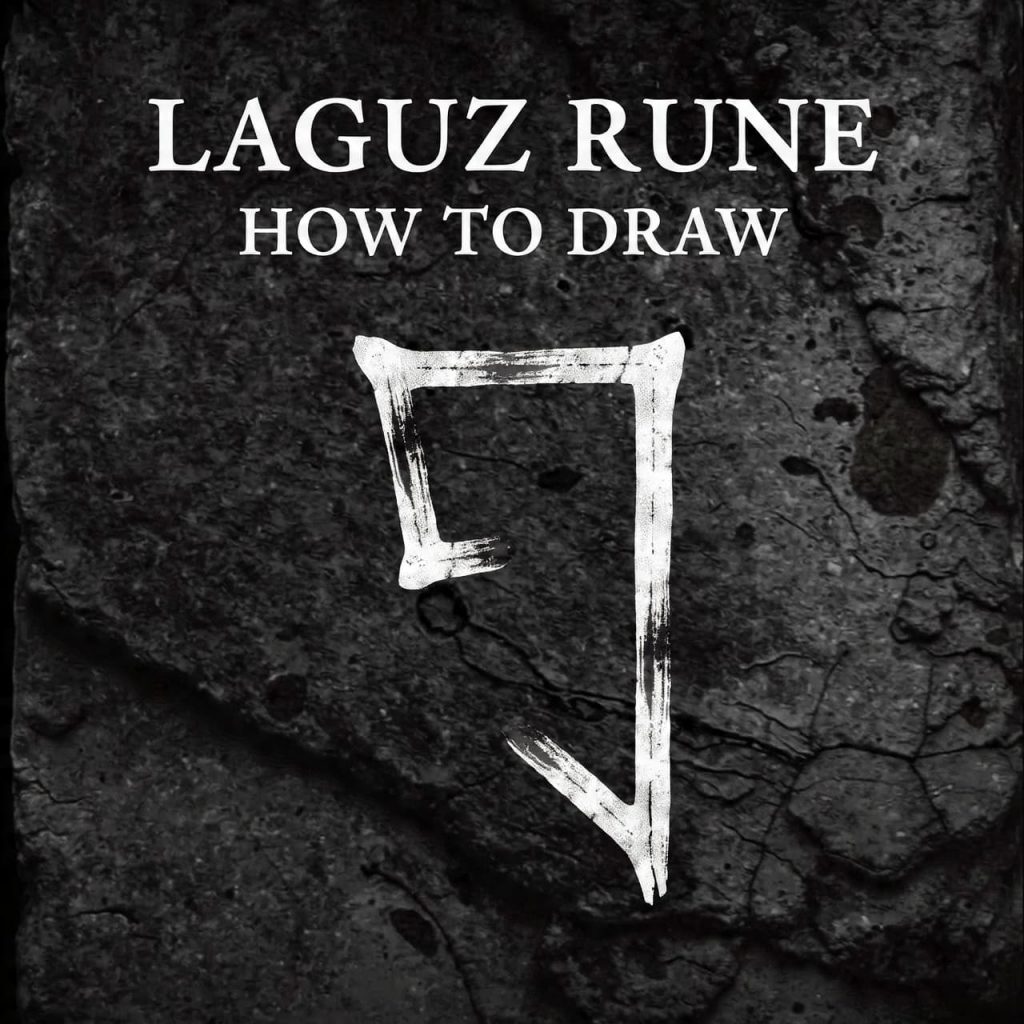
The phrase “Laguz rune how to draw” is commonly used in modern explanations that assume there was a historically defined method for drawing this rune. Many contemporary sources present a standardized sequence or technique, implying that early rune users followed formal instructions. This assumption is understandable but historically uncertain.

💜 Need a clear answer right now?
CONSULT THE YES OR NO TAROT Free · No registration · Instant resultThe uncertainty here is factual and methodological. It concerns whether any surviving archaeological, linguistic, or textual evidence demonstrates that there was a prescribed way to draw the Laguz rune beyond general carving conventions.
Scholarly evaluation by qualified professionals emphasizes that claims about technique must be grounded in attested sources rather than modern standardization.
Evidence-based approaches, including analytical reasoning discussed on astroideal, frame the central question clearly: is there historical evidence for specific instructions on how to draw the Laguz rune?
What “How to Draw” Means Historically
In historical analysis, “how to draw” implies an explicit or implicit set of rules governing form, sequence, or technique. Such rules, if they existed, would typically appear in instructional texts, standardized exemplars, or consistent formal constraints across artifacts.
For early runic writing, drawing and carving were practical activities shaped by materials and tools. Establishing a historically prescribed method requires evidence that rune forms were regulated beyond basic recognizability. Without such evidence, claims about “how to draw” must be treated as modern conventions rather than ancient instructions.
Laguz Within the Elder Futhark
Laguz is the reconstructed scholarly name for one rune of the Elder Futhark, the earliest runic alphabet used roughly between the second and eighth centuries CE. The name is derived from later medieval rune poems and comparative linguistics, where it is associated with words related to water or liquid.
Historically, the rune functioned as a grapheme representing a sound within words. Its form consists of straight strokes suitable for incision. Inscriptions show Laguz used alongside other runes without special emphasis on technique or sequence. There is no evidence that it was taught or rendered according to a unique drawing method distinct from general runic practice.
Archaeological Evidence and Form Variation
Archaeological inscriptions provide the primary evidence for how runes were rendered. Laguz appears on stone, metal, wood, and bone across a wide geographic area. These materials impose different constraints, resulting in variation in line length, angle, and proportion.
This variation is informative. While the overall shape remains recognizable, details differ significantly. Such variability indicates that carvers prioritized recognizability over strict formal replication. If a specific drawing method had existed, archaeologists would expect tighter conformity. The observed diversity suggests flexibility rather than prescription. Modern expectations of uniform technique resemble interpretive frameworks such as online tarot sessions, which rely on standard forms for clarity.
Orientation, Sequence, and Tool Constraints
Claims about how to draw often include assumptions about stroke order or orientation. Historically, however, carving was dictated by tool access and object shape. A rune incised on a spear shaft or ring band might be rendered in a different sequence than one on a flat stone.
No archaeological evidence records stroke order. Unlike later calligraphic traditions, runic carving did not preserve process, only result. Without process documentation, claims about drawing sequence cannot be substantiated. Assertions of intuitive or transmitted technique resemble assumptions sometimes attributed to reliable readers rather than conclusions supported by material data.
Textual Sources and Instructional Absence
Texts that mention runes are preserved primarily in medieval manuscripts written centuries after the Elder Futhark fell out of use. These sources occasionally reference rune carving or knowledge but do not explain how individual runes were drawn.
Where historical societies valued formal technique, instructional descriptions often survive. No such descriptions exist for runes. Medieval texts treat runes as letters, not as forms requiring prescribed drawing methods. The absence of instruction is consistent across regions and genres, limiting claims about historical drawing rules.
Comparative Writing Systems and Expectations
Comparing runes with other early writing systems helps contextualize expectations. In many early alphabets, letter forms varied widely before standardization. Uniform drawing rules often emerged later, alongside institutional education.
The Elder Futhark predates such standardization. Its users operated without centralized authority or formal schooling. Expecting detailed drawing instructions projects later literacy models onto an earlier context. Modern systems that emphasize form and technique resemble interpretive models such as video readings or phone readings, which are intentionally structured for consistency.
Modern Standardization and Its Origins
Modern depictions of Laguz often present a single “correct” form and imply a correct way to draw it. These standards originate in modern publications, educational materials, and typographic representations.
Such standardization serves clarity and communication today. It does not derive from newly discovered ancient evidence. Its structure parallels other contemporary frameworks that prioritize accessibility and repeatability, including horoscope insights. Recognizing this origin helps separate modern convention from historical practice.
Evaluating the Core Claim With Evidence
The core claim implied by “Laguz rune how to draw” is that a historically prescribed method existed. Evaluating this claim requires integrating archaeological variation, textual silence, and comparative context.
The evidence shows that Laguz was rendered flexibly within broad visual limits. No artifacts, texts, or instructional materials document a specific drawing technique or sequence. This does not mean carvers lacked skill or preference, but it does mean no standardized method can be demonstrated. As emphasized in evidence-based discussions such as those on astroideal, historical conclusions must be bounded by what sources can support. Comparisons to modern interpretive systems, including love tarot readings, highlight how presentational clarity today differs from ancient practice.
The most accurate conclusion is therefore careful and limited: there is no historical evidence for a prescribed way to draw the Laguz rune beyond general runic carving conventions.
Frequently Asked Questions
Did ancient sources explain how to draw Laguz?
No surviving sources provide such instructions.
Were rune forms standardized?
They were recognizable but not strictly standardized.
Does variation imply incorrect drawing?
No, variation reflects material and tool constraints.
Can stroke order be reconstructed?
No, the process is not preserved archaeologically.
When did standard forms appear?
In modern publications and typographic systems.
Do scholars accept fixed drawing rules?
No, mainstream runology does not support them.
Call to Action
Claims about historical technique should be tested against material and textual evidence. Readers are encouraged to examine inscriptional corpora and scholarly analyses directly to get a clear yes or no answer on whether any historically prescribed method for drawing the Laguz rune can be demonstrated.
