

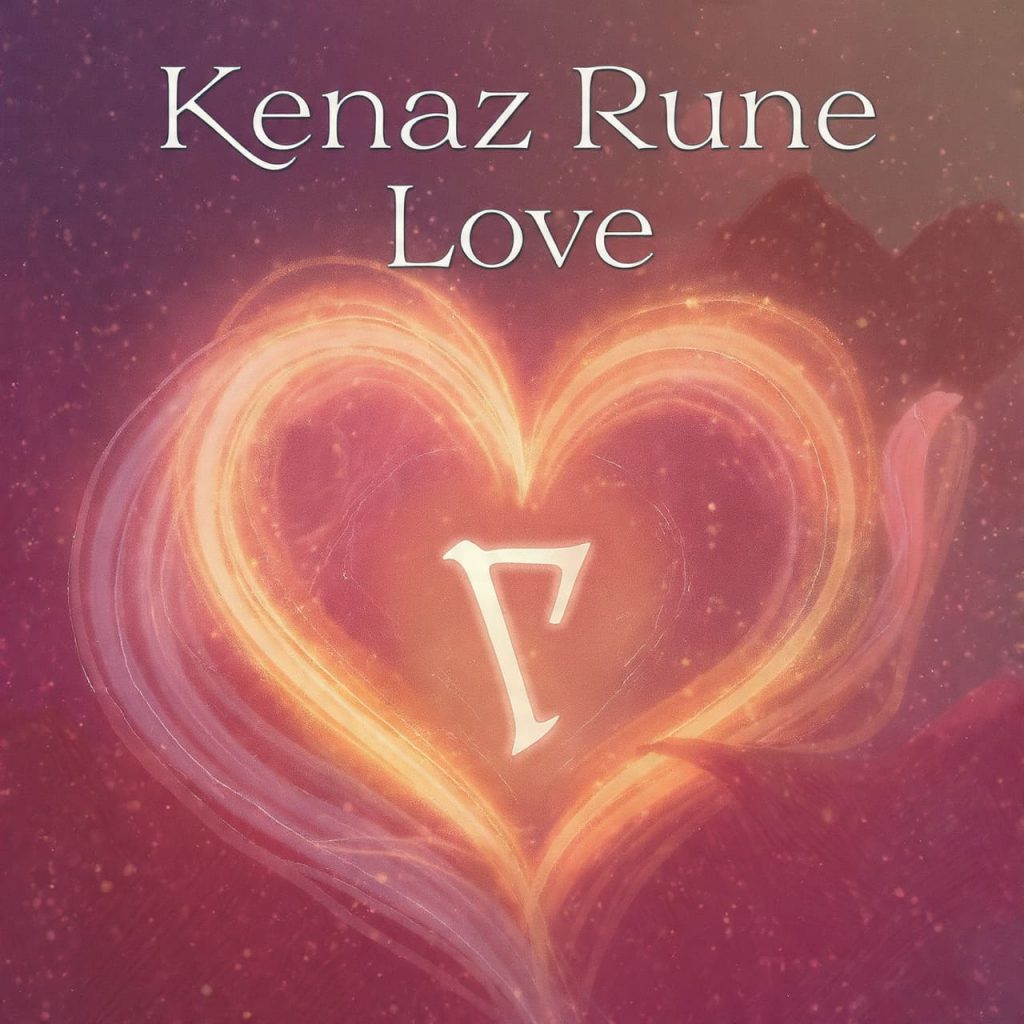
The idea of Kenaz rune love often creates confusion because modern interpretations tend to assign emotional meaning to a rune that originally served a practical linguistic function. Many sources describe Kenaz as a symbol of passion or emotional warmth without explaining whether this association has historical grounding or is a later conceptual overlay. For readers seeking clarity, the difficulty lies in separating what Kenaz originally represented from how it is currently discussed in relationship-oriented contexts.

💜 Need a clear answer right now?
CONSULT THE YES OR NO TAROT Free · No registration · Instant resultThis uncertainty is analytical rather than emotional. When examined using evidence-based reasoning methods such as those emphasized at astroideal, the topic becomes clearer and more grounded, particularly when interpretations are reviewed by qualified professionals who distinguish historical usage from modern narrative framing.
What “Love” Means in a Runic Context
To evaluate Kenaz rune love accurately, the concept of “love” itself must be clarified. In early Germanic societies, runes were not tools for emotional categorization. They functioned as characters within writing systems, used for naming, marking ownership, recording events, and memorializing the dead.
Modern definitions of love—romantic affection, emotional intimacy, or personal connection—did not exist as abstract categories within runic usage. Therefore, when love is associated with Kenaz today, it reflects a contemporary interpretive lens rather than an ancient conceptual framework. Recognizing this distinction prevents projecting modern emotional language onto historical material.
Historical Origin of the Kenaz Rune
Kenaz originates from the Elder Futhark, the earliest known runic alphabet, dated approximately from the 2nd to the 8th centuries CE. This alphabet consisted of 24 runes, each designed to represent a phonetic sound.
Kenaz typically appears as the sixth rune in this system. Its design is widely understood to have been influenced by earlier Mediterranean alphabets, including Latin and North Italic scripts. This connection reinforces its role as a writing character rather than a symbolic or ritual tool.
Nothing in the archaeological record suggests that Kenaz was associated with interpersonal relationships or emotional expression during its early use.
Linguistic Meaning of Kenaz
The name “Kenaz” is reconstructed from Proto-Germanic roots related to fire, torchlight, or illumination. These terms referred to tangible, functional elements of daily life. Fire enabled craftsmanship, cooking, and survival. Light allowed people to work, learn, and see clearly.
These meanings were practical rather than emotional. They described utility, not feeling. Understanding this linguistic origin is essential before assigning any relational interpretation.
Later poetic associations drew on metaphor, but metaphor should not be confused with origin. This distinction is frequently emphasized by reliable readers who avoid presenting symbolic language as historical fact.
Awareness Versus Emotion in Kenaz
Historically, Kenaz is better understood as a rune of awareness or skill rather than emotion. It was associated with knowledge gained through practice and observation. This awareness was outward-facing and functional.
Modern interpretations sometimes translate this awareness into emotional insight, particularly in relational contexts. While this makes conceptual sense to modern readers, it represents a shift in meaning rather than a continuation of historical usage.
This shift is important when discussing Kenaz rune love, because it clarifies that the association is interpretive, not original.
How Love Became Associated With Kenaz
The association between Kenaz and love emerged after runes stopped being used as primary writing systems. As literacy transitioned toward the Latin alphabet, runes became cultural artifacts rather than functional tools.
During this period, runes were increasingly interpreted through poetry, folklore, and later esoteric systems. Fire and light, once practical necessities, became metaphors for understanding, attraction, and connection. In modern language, love is often described using similar metaphors, such as warmth or illumination.
This linguistic overlap led to Kenaz being incorporated into relationship-focused interpretations. These interpretations are modern constructions rather than historical continuities.
Kenaz in Modern Relationship Frameworks
In contemporary frameworks that reinterpret runes symbolically, Kenaz is sometimes presented as representing emotional clarity or mutual understanding between people. These frameworks operate on narrative logic rather than historical documentation.
Such usage is comparable to interpretive models found in love tarot readings, where symbolic meaning is acknowledged as a constructed language rather than an ancient record. This comparison highlights the importance of transparency about source and intent.
What History Does Not Support
The historical record does not support claims that Kenaz was:
- a rune specifically for romance
- a tool for influencing relationships
- a symbol of attraction or passion
- used in emotional or relational rituals
No inscriptions, manuscripts, or archaeological findings indicate that Kenaz held such roles. Claims suggesting otherwise rely on retrospective symbolism rather than evidence.
Human Interaction and Shared Understanding
Although Kenaz was not a love rune historically, it was associated with teaching, learning, and craftsmanship—activities that involved human interaction. These interactions required cooperation and shared focus.
Over time, modern interpretation reframed shared understanding as emotional connection. This reinterpretation explains how Kenaz entered discussions of love without altering its original function.
Understanding this evolution allows readers to engage with modern meanings responsibly while respecting historical accuracy.
Separating Origin From Application
A critical step in evaluating Kenaz rune love is separating origin from application. Origin explains how and why the rune came into existence. Application explains how people choose to use it today.
Modern applications are valid as long as they are acknowledged as modern. Confusing them with ancient intent creates misinformation.
This boundary is also maintained in structured educational environments such as online tarot sessions, where symbolic systems are presented without being misrepresented as historical predictors.
Evaluating Claims About Kenaz and Love
When evaluating claims that Kenaz is a love rune, the question should be narrow and evidence-based. Does the claim rely on historical documentation, or does it depend on modern metaphor?
If the claim requires redefining Kenaz’s original function, it is interpretive rather than historical. Recognizing this allows a clear assessment without dismissing modern use.
This disciplined evaluation mirrors the approach encouraged in video readings, where context and limitations are acknowledged rather than obscured.
Modern Interest and Common Misconceptions
Modern interest in runes often blends history with spirituality. While this has increased awareness, it has also produced misconceptions. One common misconception is that Kenaz was always intended to symbolize emotional or romantic connection.
There is no historical basis for this belief. Kenaz’s association with love reflects modern values rather than ancient practice.
Educational caution helps prevent such misunderstandings.
Learning Through Different Formats
Some readers prefer visual or auditory explanations of rune history. Educational formats resembling phone readings can help explain linguistic development and cultural context, but they do not replace historical evidence.
Different formats can support learning, but accuracy remains essential regardless of medium.
Kenaz and Astrology-Based Overlays
Rune systems developed independently of astrology. Attempts to align Kenaz with zodiac or astrological frameworks are modern overlays without historical support.
General horoscope insights may offer personal reflection, but they do not contribute evidence to rune history or justify claims about Kenaz’s original meaning.
Keeping these systems separate preserves clarity.
Frequently Asked Questions
Was Kenaz originally a love rune?
No. It was a phonetic character with practical associations.
Does Kenaz symbolize emotion historically?
There is no evidence that it did.
Why is Kenaz linked to love today?
The link comes from modern metaphor, not ancient usage.
Can modern interpretations still be valid?
Yes, if they are acknowledged as modern.
Is Kenaz connected to relationships at all?
Only indirectly through later symbolic reinterpretation.
Does history limit personal use?
History explains origin, not modern choice.
Call to Action
Understanding Kenaz rune love requires separating evidence from interpretation. When that distinction is respected, confusion gives way to clarity. If you want to get a clear yes or no answer about whether Kenaz was historically connected to love, focusing on linguistic origin and archaeological context provides the most reliable foundation. A disciplined one question tarot approach helps evaluate such claims without distortion or assumption.
