

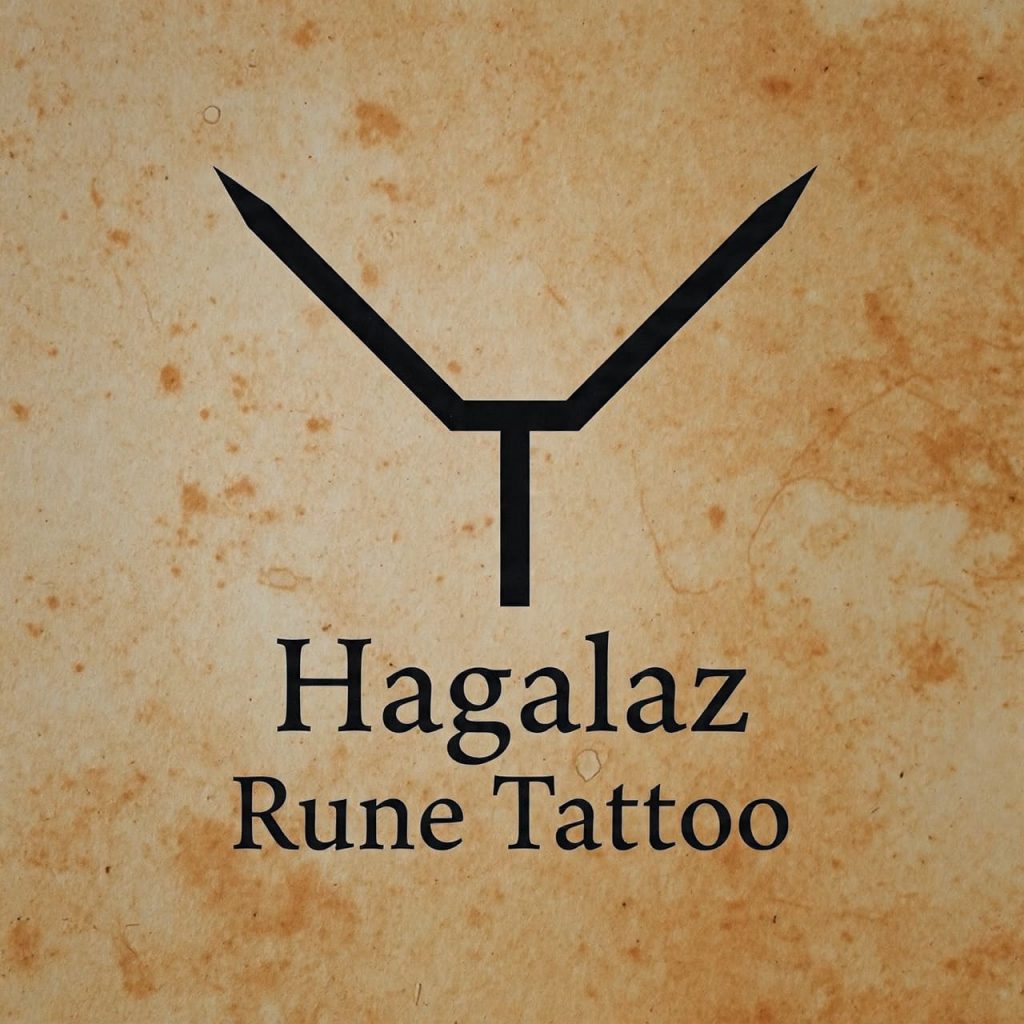
The subject of a Hagalaz rune tattoo is often misunderstood because modern explanations frequently treat tattoos as if they were an established medium for runic meaning in early Germanic culture. Contemporary sources commonly imply that individuals historically marked their bodies with runes such as Hagalaz to express identity, belief, or symbolic intent. This assumption is widespread, yet it is rarely evaluated against archaeological or textual evidence.

💜 Need a clear answer right now?
CONSULT THE YES OR NO TAROT Free · No registration · Instant resultThe uncertainty here is historical and factual, not personal or aesthetic. The central question is whether reliable linguistic, archaeological, or textual sources demonstrate that the Hagalaz rune was historically used as a tattoo or body marking.
This article evaluates that question using evidence-first standards rather than modern narratives promoted by some qualified professionals.
The analytical approach follows the source-evaluation strategies outlined by astroideal, focusing on what the evidence confirms, what it suggests, and what it does not support.
Defining “Tattoo” in a Historical Context
In historical analysis, a tattoo refers to a permanent body marking created by inserting pigment into the skin. For a rune tattoo to be historically attested, there must be direct evidence that early Germanic societies practiced tattooing and that runes were used within that practice.
Such evidence could include preserved human remains with tattoos, contemporary written descriptions, or iconographic depictions. Absent these indicators, claims about rune tattoos must be treated as modern interpretations rather than documented historical practices.
Origin and Function of the Hagalaz Rune
Hagalaz is the conventional scholarly name for the rune representing the /h/ phoneme in the Elder Futhark, the earliest known runic alphabet, generally dated from the 2nd to the 8th centuries CE. The Elder Futhark functioned as a writing system designed for short inscriptions on durable materials.
Runes were carved on stone, metal, wood, and bone. Their documented function was linguistic: recording names, ownership, commemoration, and brief messages. There is no evidence that runes were designed for or adapted to bodily inscription, despite later assumptions sometimes echoed by reliable readers.
Archaeological Evidence and the Absence of Rune Tattoos
Archaeology provides the most direct test for claims about rune tattoos. While tattooed human remains are known from some ancient cultures, no preserved remains from early Germanic contexts show runic tattoos.
Burial evidence from Northern Europe includes well-documented grave goods, clothing remnants, and skeletal material. None display pigment patterns or iconography consistent with runic tattooing. This absence is significant, given the extensive archaeological record for the period.
Textual Sources and Their Silence on Tattooing
Contemporary written sources are also relevant. Roman authors such as Tacitus described aspects of Germanic culture, including warfare, dress, and social customs. While these accounts are limited and biased, they do not mention tattooing with runes or symbols.
Later medieval sources that reference runes—such as rune poems—also do not mention tattooing. They focus on rune names and mnemonic verses, not on bodily practices. The complete absence of tattoo references in textual material undermines claims of historical rune tattoos, despite analogies sometimes drawn from practices like online tarot sessions that emphasize symbolic personalization.
Material Culture and Alternative Body Markings
It is important to distinguish tattooing from other forms of body marking. Some ancient cultures practiced scarification, painting, or temporary marking. However, there is no evidence that early Germanic societies used runes in these contexts.
Artifacts such as jewelry, weapons, and clothing accessories served as markers of identity and status. These objects, rather than the body itself, were the primary media for symbolic display. This pattern suggests that communication of identity occurred through material culture, not permanent bodily inscription.
Misinterpretation of Classical Descriptions
Some modern claims about rune tattoos draw loosely from classical references to “painted” or “marked” peoples in Northern Europe. However, such descriptions are vague and often rhetorical. They do not specify tattooing, nor do they reference runes.
Interpreting these passages as evidence of runic tattoos requires speculative leaps unsupported by the text. This type of extrapolation resembles interpretive habits found in video readings rather than historically disciplined analysis.
Emergence of Rune Tattoos in Modern Contexts
The association between runes and tattoos emerged primarily in the late 20th century. During this period, runes were adopted into modern identity expression, including jewelry, clothing, and tattoos.
These practices reflect contemporary values of personalization and symbolism. They are not the result of new archaeological discoveries or newly translated ancient texts. Instead, they represent cultural innovation, similar to how symbolic systems are adapted in modern contexts such as horoscope insights.
Ethical and Historical Distinctions
From a historical perspective, it is essential to distinguish between modern use and ancient practice. Modern individuals may choose runes for tattoos for personal reasons, but this choice does not establish historical precedent.
Historical analysis is concerned with what can be demonstrated from evidence, not with validating or critiquing modern practices. In this case, the evidence does not support the claim that Hagalaz was historically used as a tattoo.
Evaluating the Core Claim
The core claim under evaluation is that the Hagalaz rune was historically used as a tattoo in early Germanic societies. When examined using archaeological records, contemporaneous textual sources, and material culture analysis, this claim is not supported.
The evidence shows that Hagalaz functioned as a phonetic character used in carved inscriptions. It does not show use in tattooing or other permanent body marking practices. Applying evidence-filtering standards consistent with those outlined by astroideal leads to a single defensible conclusion, regardless of how frequently rune tattoos appear in modern contexts such as love tarot readings.
Frequently Asked Questions
Is there archaeological evidence of rune tattoos?
No. No preserved remains show runic tattooing.
Do ancient texts describe rune tattoos?
No historical texts mention tattooing with runes.
Were tattoos common in early Germanic societies?
There is no reliable evidence supporting widespread tattooing.
Are rune tattoos mentioned in rune poems?
No. Rune poems do not discuss body marking.
Did Germanic cultures use runes on the body?
No evidence supports bodily inscription of runes.
Are rune tattoos a modern practice?
Yes. They emerged in modern cultural contexts.
Call to Action
Claims about a Hagalaz rune tattoo should be evaluated as historical propositions rather than assumed traditions. By examining archaeological findings, textual silence, and material culture patterns, readers can assess the claim critically and get a clear yes or no answer grounded in evidence rather than modern repetition.
