

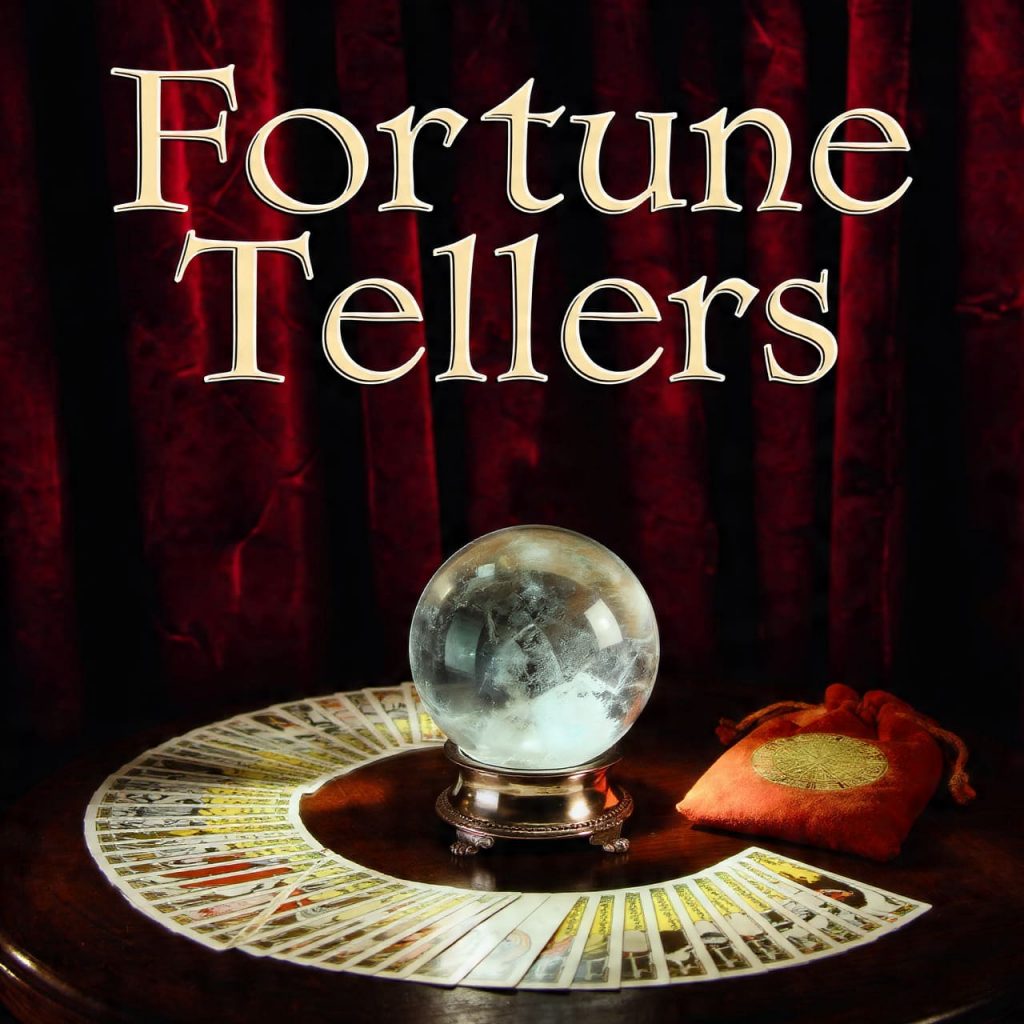
The word fortune teller evokes a long cultural history—silk-draped booths, crystal spheres, symbolic gestures, and the iconic fascination with “knowing what lies ahead.” But modern, ethical interpretations of fortune telling differ dramatically from these traditional images. Today’s fortune tellers are less about prediction and more about facilitating reflection, emotional clarity, and insight into personal patterns. The contemporary practitioner helps individuals understand how internal dynamics shape choices, relationships, and self-perception.

💜 Need a clear answer right now?
CONSULT THE YES OR NO TAROT Free · No registration · Instant resultRather than delivering destiny, a modern fortune teller interprets symbolic systems—tarot, numerology, intuition, or narrative mapping—to illuminate emotional truths and decision-making pathways. Clients who want deeper, more grounded insight often prepare focused questions using structured strategies similar to those explained in fortune teller, helping them enter the session with clarity and intention rather than anxiety or expectation.
The Evolution of the Modern Fortune Teller
Traditional fortune tellers were storytellers, symbol interpreters, and cultural mirrors. Although many still enjoy symbolic systems like horoscope insights for understanding life cycles, modern fortune tellers work within ethical frameworks that emphasize emotional insight rather than prophecy.
A contemporary fortune teller focuses on:
- Understanding internal emotional patterns
- Clarifying conflicting motivations
- Highlighting subconscious influences
- Supporting grounded decision-making
- Reflecting psychological readiness or resistance
- Helping clients articulate desires, fears, and values
- Encouraging autonomy rather than reliance
Practitioner Insight
Dr. Sara Lin, a psychology-informed intuitive practitioner, explains:
“People come to fortune tellers not for prediction but for meaning. They want someone to translate complexity into clarity. A modern fortune teller helps decode emotional patterns and illuminate pathways—not outcomes.”
This shift transforms the role entirely: from determining fate to helping individuals understand themselves.
Fortune Tellers in Online Tarot Practice
Digital consultation is now one of the most common formats for modern fortune telling. Through online tarot sessions, clients can explore emotional patterns, life transitions, and internal conflict with privacy and flexibility.
Online formats excel in:
- Allowing reflection without social pressure
- Offering accessibility for those who feel overwhelmed
- Creating space to revisit recorded sessions or notes
- Supporting individuals who struggle to express emotions in person
Case Study: “I Don’t Know What Direction to Choose”
Client: 25-year-old experiencing early-career confusion.
Spread:
- Seven of Cups: multiple internal possibilities
- Knight of Pentacles: desire for stability
- Justice: values-based alignment
Outcome:
The practitioner helped the client articulate a long-term value system rather than chase short-term excitement. Within months, the client made grounded career choices aligned with their internal priorities.
Fortune Tellers in Video-Based Readings
Video sessions via video readings allow for an interactive experience where practitioners can observe micro-reactions, posture, and subtle emotional cues.
Video readings help identify:
- Shifts in body language when a card resonates
- Tension responses signaling internal resistance
- Eye movements that indicate emotional reprocessing
- Moments of relief, curiosity, or defensiveness
- The unspoken motivations beneath a client’s question
Practitioner Perspective
Tarot analyst Javier Mondragon notes:
“A fortune teller in a video reading becomes part interpreter, part emotional observer. Reactions to symbolic imagery often tell the real story—sometimes more than the client consciously knows.”
Case Example
Client debating whether to reconnect with family after long conflict.
Spread:
- Five of Swords reversed: desire for reconciliation
- The Moon: emotional uncertainty
- Six of Cups: nostalgia and healing potential
The client’s softened posture and relieved facial expression suggested readiness to open communication.
Voice-Only Fortune Telling: The Power of Tone and Silence
Phone readings through phone readings remove visual distractions, revealing emotional truth through voice, pacing, and tone.
A talented fortune teller listens for:
- Hesitation when discussing fears
- Vocal tightening around decision-related topics
- Dropped tone indicating exhaustion
- Softening when relief or acceptance appears
- Long pauses before acknowledging emotional truths
Practitioner Observation
Readers often say that tone reveals inner truth more quickly than words. A slight tremble or sigh may indicate a deeper emotional shift than a full sentence.
Fortune Tellers and Relationship Insight
Relationships—romantic, familial, or social—remain one of the most common themes fortune tellers explore. This overlaps with reflective tools found in love tarot readings, but with broader psychological framing.
Relationship-focused fortune telling often examines:
- Emotional barriers
- Attachment patterns
- Communication dynamics
- Fear of vulnerability
- Boundary clarity
- Expectations vs. reality
- Repeating relational cycles
Case Study: “Why Do I Keep Choosing the Same Type of Person?”
Client: 30-year-old noticing repeated heartbreak patterns.
Spread:
- Five of Cups: unresolved grief shaping choices
- The Devil: attachment to familiar emotional intensity
- Six of Swords reversed: difficulty moving on
Outcome:
The reading revealed subconscious patterning rather than bad luck. Over time, the client rebuilt healthier relational habits.
Seeking Ethical, Qualified Fortune Tellers
Modern fortune telling is a guidance-oriented practice. Many people choose readers listed among qualified professionals who prioritize client well-being and emotional clarity.
Ethical fortune tellers:
- Avoid predictions
- Use grounded, supportive communication
- Help clients articulate their own insights
- Understand emotional complexity
- Maintain professional boundaries
- Avoid spiritual exaggeration or fear-based statements
Dr. Lin highlights:
“A real fortune teller doesn’t tell you the future—they help you understand the forces shaping your choices.”
Finding Reliable Fortune Tellers
Because fortune-telling environments can leave clients emotionally vulnerable, many turn to platforms offering reliable readers to ensure safety and professionalism.
Reliable readers:
- Avoid sensationalism
- Promote client independence
- Provide clear, honest reflection
- Never promise outcomes
- Work with psychological sensitivity
- Use symbolism responsibly
This reduces the risk of misunderstanding or emotional misdirection.
Techniques Used by Modern Fortune Tellers
Today’s fortune tellers combine narrative symbolism with psychological insight. These advanced interpretive tools create depth, clarity, and self-understanding far beyond traditional fortune slips.
1. Pattern Deconstruction
Reveals repeating psychological or emotional patterns.
2. Inner Conflict Mapping
Explores competing desires, fears, and motivations.
3. Symbolic Trajectory Analysis
Shows how emotional patterns may evolve—not what will happen.
4. Archetype Resonance Method
Studies which archetypes clients embody during certain life phases.
5. Choice Alignment Framework
Aligns decisions with values, boundaries, and emotional capacity.
6. Narrative Translation Technique
Converts symbolic imagery into meaningful personal language.
7. Subconscious Influence Extraction
Identifies hidden factors shaping decisions.
8. Emotional Readiness Assessment
Determines whether the client is pacing themselves healthily.
These tools offer reflective depth rather than mystical predictions.
Case Study #1: Identity Change and Self-Doubt
Client: 19-year-old questioning life direction.
Spread:
- The Fool: new identity forming
- Nine of Wands: emotional fatigue
- Ace of Wands: emerging motivation
Outcome:
Client realized that uncertainty was part of growth—not failure.
Case Study #2: Overcoming Fear of Opportunity
Client: 33-year-old offered a promotion but hesitated to accept.
Spread:
- Eight of Swords: fear-based limitation
- Queen of Wands: dormant confidence
- The Star: long-term aspiration aligning
Outcome:
Client accepted the promotion after clarifying internal readiness.
Case Study #3: Understanding Cycles of Procrastination
Client: 17-year-old struggling academically.
Spread:
- Seven of Pentacles reversed: impatience
- Page of Swords: desire to learn
- Temperance: need for pacing
Outcome:
Client rebuilt their study habits around sustainable routines.
Misconceptions About Fortune Tellers
The term “fortune teller” carries myths that can distort expectations.
“A fortune teller can predict the future.”
Ethical practice does not claim prediction.
“A bad card means something bad will happen.”
Cards highlight inner tension—not fate.
“Fortune tellers control the message.”
Clients shape the session through their own emotional truths.
“If the reading is unclear, the future is uncertain.”
Uncertainty often indicates internal transition.
“A fortune teller tells you what to do.”
Their role is to illuminate patterns—not give instructions.
Table: Modern Fortune Teller Focus Areas
| Focus Area | Symbolic Theme | Interpretation Purpose |
|---|---|---|
| Identity | The Sun | Clarity of self-concept |
| Emotional Patterns | The Moon | Understanding subconscious influence |
| Choices & Crossroads | Two of Wands | Mapping directional tension |
| Relationships | The Lovers | Values & compatibility |
| Boundaries | Queen of Swords | Assertiveness & clarity |
| Motivation | Ace of Wands | Reigniting purpose |
| Growth Challenges | Strength | Emotional resilience |
Guidance for Preparing Your Fortune Teller Session
A meaningful fortune-teller-style session depends on clarity of intention. Practitioners often recommend preparing thoughtful questions using structured techniques similar to those outlined in fortune teller. Intentional preparation allows the reading to reveal deeper emotional patterns, internal conflicts, and personal direction—far more valuable than asking, “What will happen?”
Frequently Asked Questions
Do fortune tellers predict the future?
Modern ethical fortune tellers do not predict the future. They interpret emotional patterns and symbolic meaning.
Are fortune tellers safe for teens?
Yes—when practicing ethically without fear-based messaging or predictions.
Can a fortune teller solve my problems?
They provide clarity and emotional insight, but decisions and actions remain yours.
Is tarot required for fortune telling?
No. Some use tarot, others use numerology, intuitive methods, or symbolic storytelling.
How often should someone see a fortune teller?
Only during meaningful transitions—not for constant reassurance.
Do fortune tellers give instructions or advice?
They reflect patterns; they do not instruct or dictate outcomes.
Will I hear something negative?
You may learn about emotional challenges, but not negative predictions.
Conclusion
Fortune tellers in the modern world serve as reflective guides, helping individuals understand their emotional landscape, inner conflicts, values, and potential directions. Their work is not predictive—it is interpretive, psychological, and symbolic. Through grounded communication, ethical clarity, narrative insight, and emotionally intelligent interpretation, contemporary fortune tellers offer meaningful tools for developing self-awareness and navigating life with greater confidence.
