

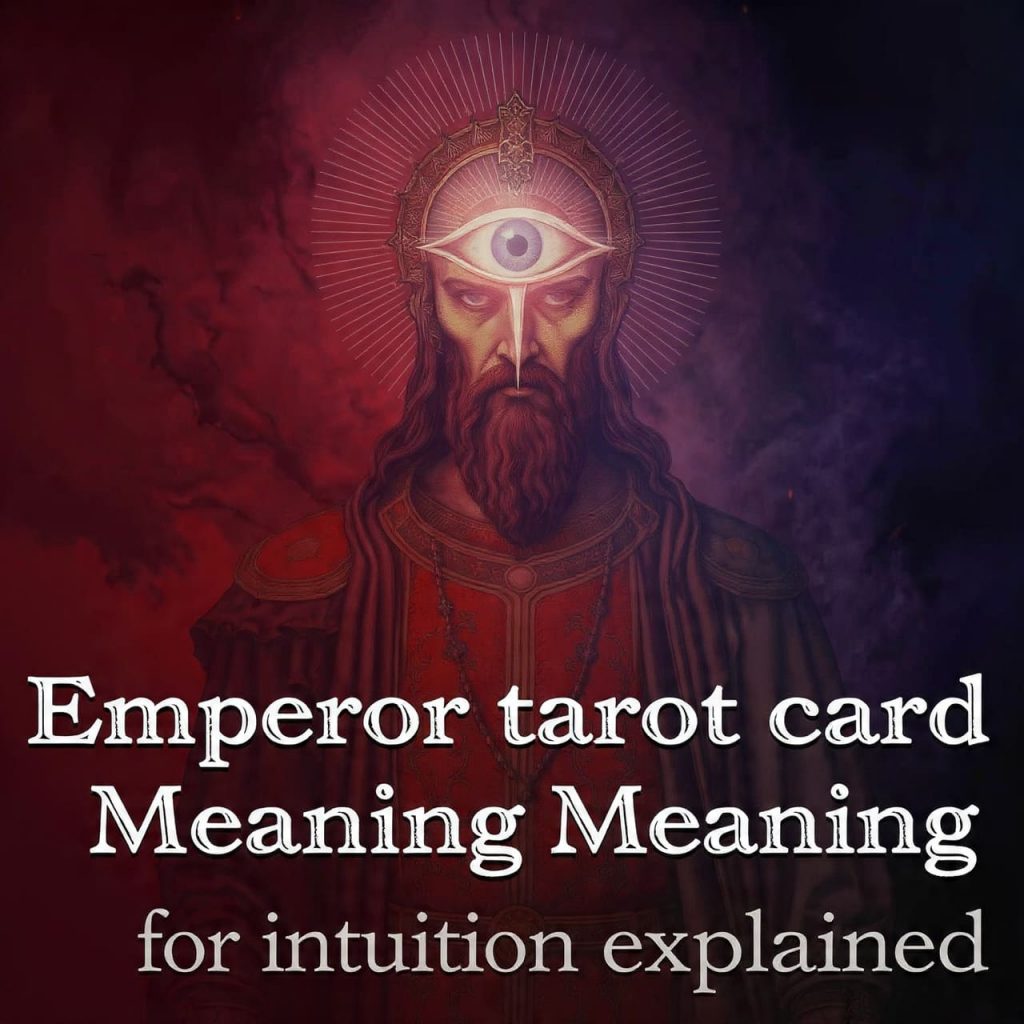
The Emperor tarot card is most commonly associated with structure, authority, logic, and control. Because of this, many people are surprised when it appears in readings related to intuition. Intuition is often viewed as fluid, emotional, or instinctive—qualities that seem at odds with the Emperor’s disciplined and rational nature. This contrast leads to an important question: what does the Emperor really mean when intuition is the focus?

💜 Need a clear answer right now?
CONSULT THE YES OR NO TAROT Free · No registration · Instant resultPractitioners frequently suggest that intuition is not always emotional or mystical in expression. Sometimes, intuition works through grounded awareness, pattern recognition, and inner authority. Interpretive approaches discussed in resources such as cards meanings emphasize that tarot archetypes operate on multiple levels. When read symbolically rather than rigidly, the Emperor offers insight into structured intuition—inner knowing that is stable, reasoned, and reliable.
This article explains the Emperor tarot card’s meaning for intuition, how practitioners interpret its appearance, and how its message can be applied to develop intuitive clarity without losing grounding or discernment.
Understanding the Emperor as an Intuitive Archetype
Core Symbolism and Inner Authority
The Emperor traditionally symbolizes authority, order, boundaries, and leadership. Intuitively, practitioners often interpret this as mastery over one’s internal world. Rather than reacting emotionally, the Emperor listens, assesses, and decides with clarity.
In intuition-focused readings, the Emperor represents confidence in one’s inner judgment—intuition that is trusted because it has been tested over time.
Logic and Intuition Are Not Opposites
A common misconception is that intuition and logic oppose one another. Many practitioners argue the Emperor shows how intuition can operate through logic. This includes recognizing patterns, sensing consequences, and understanding structure intuitively rather than emotionally.
This form of intuition often feels calm and decisive rather than impulsive.
Upright and Reversed Intuitive Interpretations
Upright, the Emperor often indicates intuitive certainty. Practitioners suggest it reflects an inner voice that is firm, grounded, and not easily swayed. Reversed interpretations vary. Some practitioners see reversed Emperor as mistrust of one’s intuition, while others interpret it as rigidity blocking intuitive flow.
In intuitive contexts, reversal often invites balance rather than rejection.
Emperor Energy and the Development of Intuition
Intuition Rooted in Experience
Unlike instinctive intuition, Emperor intuition is built through experience. Practitioners believe this card appears when intuition has matured through learning, observation, and accountability.
This kind of knowing develops slowly but becomes deeply reliable.
Trusting Inner Structure
The Emperor emphasizes internal structure—personal rules, values, and boundaries. Intuitively, this translates into knowing what aligns with one’s principles without second-guessing.
In readings guided by qualified professionals, the Emperor is often framed as encouragement to trust disciplined inner wisdom rather than emotional fluctuation.
The Role of Personal Authority
Spiritually, intuition strengthens when personal authority is claimed. The Emperor reflects this process, reminding individuals that intuition grows clearer when responsibility is accepted rather than avoided.
Is the Emperor a Positive Card for Intuition?
When Intuition Needs Grounding
Many practitioners view the Emperor as a positive sign when intuition feels scattered or overwhelming. The card suggests grounding intuitive insights in reality, structure, and practical application.
This can prevent intuitive overload or confusion.
Situations Where the Message Feels Neutral or Challenging
The Emperor may feel restrictive when intuition seeks emotional expression or flexibility. Practitioners suggest the card may indicate over-control or suppression of intuitive signals.
In such cases, the message is not to abandon structure, but to soften it.
Importance of Credible Interpretation
Because the Emperor can be misread as purely logical, many individuals consult reliable readers who understand how intuition can manifest through authority and discipline rather than emotion alone.
How the Emperor Influences Intuitive Decision-Making
Intuition as Strategic Awareness
The Emperor often appears when intuitive decisions involve leadership or responsibility. Practitioners interpret this as intuition that considers long-term consequences rather than immediate feelings.
This form of intuition is particularly relevant in career, family, or life-direction decisions.
Boundaries and Intuitive Clarity
Boundaries play a key role in intuitive accuracy. The Emperor highlights where boundaries protect intuitive clarity by filtering external noise.
Knowing when to say no is often an intuitive act under Emperor energy.
Differentiating Emotional Signals From Intuition
In emotionally charged situations, intuition can be mistaken for fear or desire. While emotional emphasis is common in love tarot readings, the Emperor reminds practitioners to separate emotional reaction from grounded knowing.
Practical Guidance When the Emperor Appears for Intuition
Strengthening Disciplined Intuition
The Emperor suggests strengthening intuition through consistency rather than spontaneity. Practitioners often recommend routines that support clarity, such as journaling, reflection, or structured meditation.
This builds intuitive trust over time.
Constructive Steps Many Practitioners Suggest
When the Emperor appears in intuition-focused readings, readers often recommend:
- Establishing consistent reflection practices
- Tracking intuitive decisions and outcomes
- Setting boundaries around external influence
- Acting on intuition with measured confidence
These steps support intuition that is both clear and grounded.
Accessing Structured Intuitive Guidance
Because the Emperor values clarity and responsibility, many individuals prefer online tarot sessions that allow for calm, structured discussion rather than emotionally reactive readings.
Emperor Compared to Other Intuition-Related Tarot Cards
Emperor Versus The High Priestess
The High Priestess represents intuitive receptivity, while the Emperor represents intuitive authority. Practitioners often interpret the High Priestess as listening and the Emperor as deciding.
Together, they form a balanced intuitive process.
Emperor Versus The Hierophant
The Hierophant reflects external guidance and tradition, while the Emperor reflects self-governance. Intuitively, the Emperor asks whether inner knowing is being trusted over external rules.
This distinction is crucial for personal intuition development.
Timing and Intuitive Cycles
Some practitioners contextualize Emperor intuition within broader cycles, occasionally referencing horoscope insights to understand periods favoring disciplined action, leadership, or decisive clarity.
Professional Tarot Practices and Intuition Development
How Intuition Readings Are Approached Professionally
Modern tarot practices increasingly integrate psychology and self-leadership. Practitioners frame the Emperor as a card of intuitive responsibility—knowing when to act and when to hold position.
This approach avoids both impulsivity and overthinking.
Reading Formats, Pricing, and Accessibility
Intuition-focused tarot readings involving grounded archetypes like the Emperor are available in several formats.
| Format | Typical Duration | General Cost Range | Best For |
|---|---|---|---|
| Written insight | 20–30 minutes | Lower range | Structured reflection |
| Live voice session | 30–45 minutes | Mid range | Clarifying intuition |
| Interactive video | 45–60 minutes | Higher range | In-depth discussion |
Many individuals prefer video readings for nuanced explanation, while others opt for phone readings when privacy and focus support intuitive openness.
Using Structured Interpretive Frameworks
Experienced readers often rely on layered interpretation systems similar to those discussed in cards meanings. These frameworks ensure that intuition-focused readings involving the Emperor remain balanced rather than rigid.
Frequently Asked Questions
Does the Emperor block intuition?
Most practitioners suggest it does not block intuition, but structures it.
Is the Emperor intuitive or logical?
It is both. The Emperor represents intuition expressed through logic and experience.
What if the Emperor appears reversed for intuition?
It may indicate mistrust of inner authority or excessive rigidity that needs softening.
Is the Emperor good for decision-making?
Yes, especially for decisions requiring responsibility and long-term thinking.
Can the Emperor represent intuitive leadership?
Many practitioners believe so. It reflects confidence in inner guidance.
How does Emperor intuition feel?
It often feels calm, firm, and clear rather than emotional or urgent.
Conclusion
The Emperor tarot card offers a grounded and often overlooked perspective on intuition. Rather than portraying intuition as purely emotional or mystical, it highlights inner authority, structure, and disciplined awareness. Many practitioners view the Emperor as a reminder that intuition becomes most powerful when it is trusted, tested, and acted upon responsibly.
When interpreted thoughtfully and in context, the Emperor reveals that intuition does not always whisper—it sometimes speaks with calm certainty, guiding decisions through clarity, confidence, and inner leadership.
