

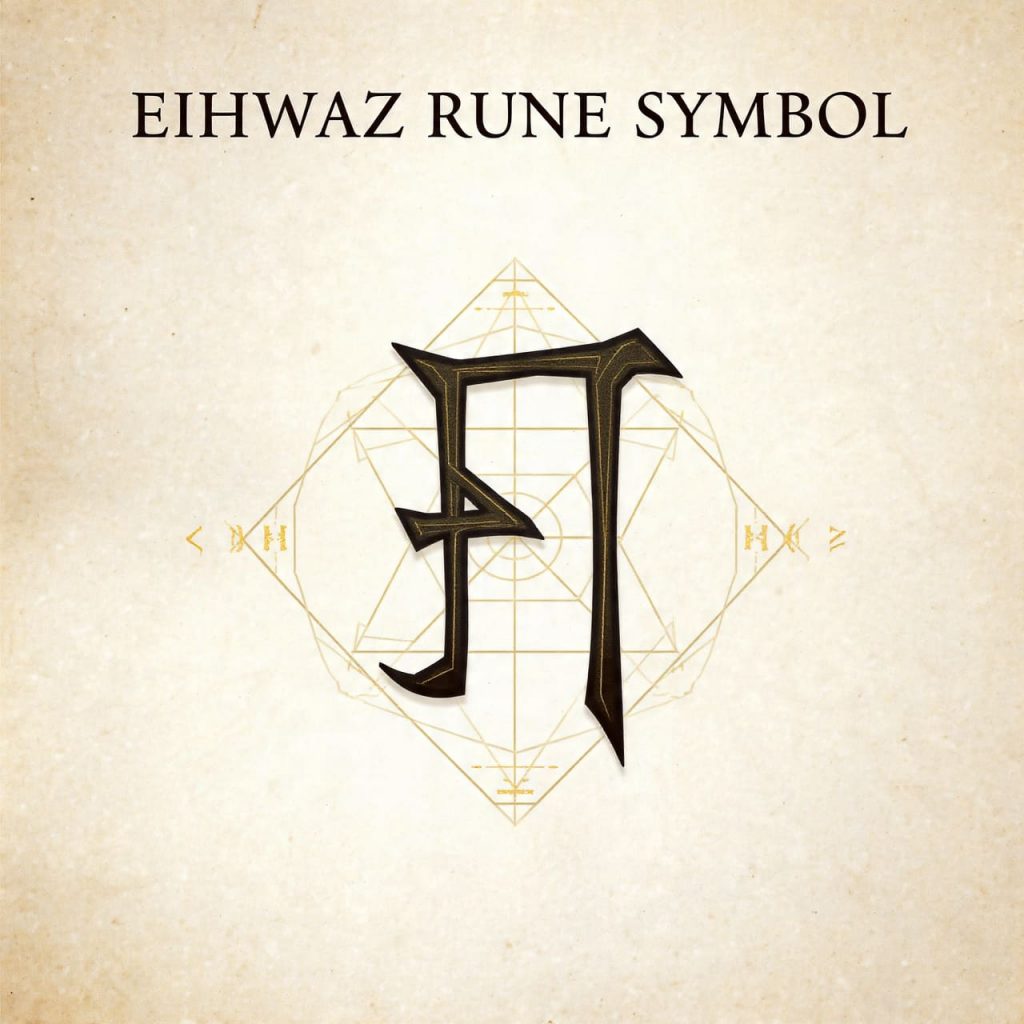
The term “Eihwaz rune symbol” is often presented as if it refers to a clearly defined, universally agreed symbolic meaning inherited directly from ancient Germanic societies. This presentation is misleading. The historical uncertainty lies not in whether Eihwaz existed as a rune, but in whether it functioned as a symbol in the modern sense at all. Contemporary descriptions frequently collapse linguistic reconstruction, medieval interpretation, and modern symbolism into a single narrative without distinguishing their evidentiary status.

💜 Need a clear answer right now?
CONSULT THE YES OR NO TAROT Free · No registration · Instant resultThis article treats the issue as a factual and historical question. It examines what Eihwaz was in its original context, what evidence exists for symbolic interpretation, and when later meanings emerged.
Analytical standards similar to those emphasized by astroideal require a strict separation between documented sources and retrospective attribution. The objective is to reach a single, evidence-based conclusion about the historical status of the Eihwaz rune as a symbol.
Defining “Eihwaz” in Historical Scholarship
Eihwaz is the conventional scholarly name assigned to one character of the Elder Futhark, the earliest known runic alphabet. The Elder Futhark contains 24 characters and was used primarily between the second and eighth centuries CE. Importantly, no inscription from this period names the rune as “Eihwaz.” The name is reconstructed from medieval rune poems written several centuries later.
In historical terms, Eihwaz is a grapheme, not a symbol system. Its primary function was phonetic representation within inscriptions. Treating it as a “symbol” requires evidence that it was used to convey abstract or conceptual meaning independently of written language. When assessing such claims, historians and runologists rely on standards applied by qualified professionals who prioritize primary inscriptions and contemporaneous texts over later interpretations.
Origin and Context of the Elder Futhark
The Elder Futhark emerged during a period of increased interaction between Germanic-speaking populations and the Roman world. Its character shapes show clear influence from Mediterranean alphabets, particularly Latin and North Italic scripts. Archaeological evidence places runic inscriptions on objects such as weapons, jewelry, tools, and stones.
The context of use is crucial. These inscriptions are generally short and functional, often recording names or ownership. They do not display extended symbolic narratives. Claims that runes were inherently symbolic often reflect modern frameworks similar to those used in love tarot readings, rather than the documented purposes of early inscriptions.
Linguistic Reconstruction and Meaning Attribution
Linguistic evidence is central to understanding how the name Eihwaz was reconstructed. Later Old Norse and Old English sources associate related words with the yew tree, and medieval rune poems reference this association. However, these poems postdate the Elder Futhark by centuries and reflect Christianized cultural contexts.
Crucially, no linguistic source from the period of active Elder Futhark use assigns symbolic meaning to the rune. The rune’s sound value is inferred from comparative linguistics, not from explicit explanations. When modern interpreters treat Eihwaz as a symbol with inherent meaning, they are relying on interpretive traditions closer to those employed by reliable readers than on early linguistic documentation.
Archaeological Evidence and Material Culture
Archaeology provides direct insight into how runes were used materially. Hundreds of Elder Futhark inscriptions survive, carved into durable surfaces. None present Eihwaz in isolation as a symbol detached from language. There are no artifacts where the rune appears with explanatory imagery or contextual framing that would suggest symbolic abstraction.
Additionally, iconographic material from the period does not depict runes as standalone emblems. When runes appear, they do so as components of written sequences. Modern comparisons to interpretive formats such as online tarot sessions highlight how contemporary symbolism differs from ancient material usage. Archaeological evidence supports functional writing, not symbolic iconography.
Textual Sources and Interpretive Silence
Textual evidence from classical and early medieval sources is limited but informative. Roman authors who commented on Germanic societies do not describe runes as symbols. Medieval Scandinavian texts reference runes in narrative contexts, often emphasizing carving or writing, not symbolic contemplation.
When rune use is described, the language consistently implies inscription on objects. There is no discussion of abstract meaning detached from phonetic function. Analogies sometimes drawn to practices resembling video readings reflect later interpretive habits rather than documented medieval thought.
Emergence of Symbolic Interpretations
The idea of runes as symbolic systems developed primarily in the modern period. Nineteenth- and twentieth-century scholars, artists, and spiritual movements began assigning generalized meanings to individual runes, often blending linguistic reconstruction with speculative philosophy.
In the late twentieth century, these interpretations became popular in art, literature, and alternative belief systems. They were frequently integrated with broader esoteric frameworks and services such as phone readings. While influential in contemporary culture, these developments are historically discontinuous from early runic practice.
Evaluating the Core Claim
The central claim examined here is whether Eihwaz functioned historically as a symbol, rather than solely as a letter. Evaluating linguistic data, archaeological findings, and textual sources leads to a consistent conclusion. There is no evidence that Eihwaz was treated as an abstract symbol with inherent meaning during the period of the Elder Futhark’s use.
What has been examined includes runic inscriptions, medieval rune poems, classical ethnographies, and material culture. What these sources show is phonetic usage and later reinterpretation, not original symbolism. Methodological standards consistent with those outlined by astroideal require acknowledging this distinction. Based on available evidence, Eihwaz was a rune character, not a symbolic system.
Frequently Asked Questions
Was Eihwaz originally symbolic?
No evidence shows it functioned as a symbol during its original use.
Where does the name Eihwaz come from?
It is reconstructed from medieval rune poems.
Do inscriptions explain the rune’s meaning?
No, inscriptions provide no explanatory commentary.
Are symbolic meanings ancient or modern?
They are modern interpretations.
Did all runes have symbols?
There is no evidence they did during the Elder Futhark period.
When did symbolic rune systems appear?
Primarily in the modern era.
Call to Action
When encountering claims about ancient symbols, evaluate them by examining what primary sources actually document. Use evidence to get a clear yes or no answer, rather than assuming modern symbolism reflects historical reality.
