

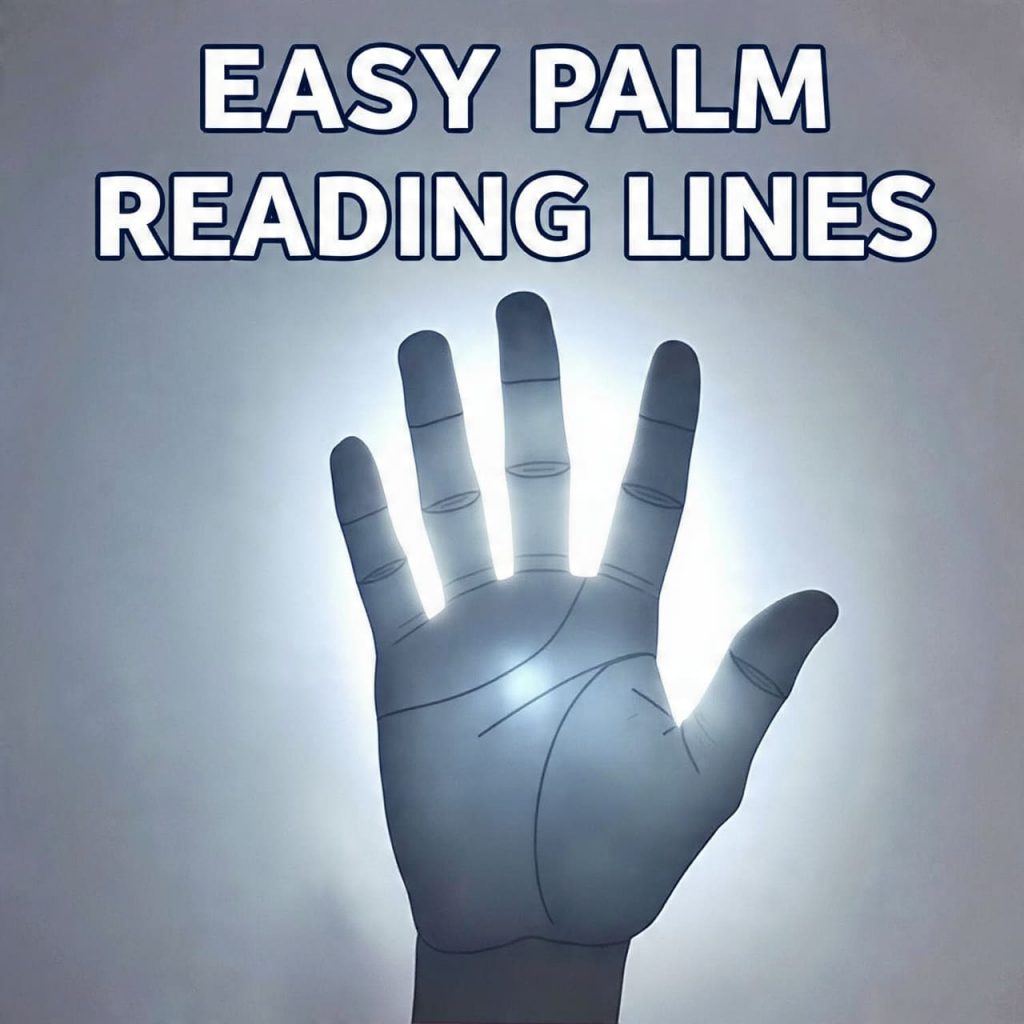
Easy palm reading lines are often the starting point for people who want to understand palmistry without feeling overwhelmed. Palm reading can appear complex at first, with its many lines, mounts, and hand shapes, but practitioners suggest that learning a few core lines is enough to begin meaningful observation. These basic lines offer insight into emotional tendencies, thinking styles, and personal energy rather than fixed predictions.

💜 Need a clear answer right now?
CONSULT THE YES OR NO TAROT Free · No registration · Instant resultMany believe palmistry works best when approached gradually. Instead of trying to memorize every marking, focusing on easy palm reading lines allows beginners to build confidence and awareness step by step. This simplified approach keeps palm reading practical, reflective, and accessible.
This article provides a detailed, informative guide to easy palm reading lines. It explains the most important lines beginners should learn, how to recognize them, what they commonly represent, and how to read them responsibly. The goal is clarity and credibility, presenting palmistry as a tool for self-understanding rather than certainty.
What Makes Palm Reading “Easy” for Beginners
Simplicity over completeness
Easy palm reading does not mean inaccurate palm reading. It means starting with the most visible and commonly interpreted lines rather than advanced markings. Practitioners suggest that beginners benefit most from learning a small number of core elements thoroughly instead of many elements superficially.
The three major palm lines are usually enough to begin meaningful interpretation.
Observation before interpretation
One reason palm reading can feel difficult is rushing into meaning. Easy palm reading emphasizes observation first: noticing line placement, depth, and clarity before assigning interpretation.
This approach reduces confusion and encourages thoughtful analysis.
Reflective rather than predictive focus
Palmistry becomes easier when it is understood as reflective. Easy palm reading lines are interpreted as tendencies and patterns, not as guarantees about the future.
This mindset keeps learning grounded and ethical.
The Three Easiest Palm Reading Lines to Learn
The life line
The life line is one of the easiest palm reading lines to identify. It curves around the base of the thumb and is usually clearly visible. Despite common myths, it does not indicate lifespan.
Practitioners suggest the life line reflects vitality, resilience, and how a person responds to change. A clear line may suggest steady energy, while variations often point to transitions rather than negative outcomes.
The head line
The head line runs horizontally across the palm, usually starting near the life line. It is associated with thinking style, decision-making, and mental focus.
Straight head lines are often linked with logical thinking, while curved head lines may suggest creativity or imagination. Easy palm reading focuses on overall direction rather than fine detail.
The heart (love) line
The heart line, located near the top of the palm, reflects emotional expression and relationship style. It is one of the most commonly explored lines in beginner palmistry.
Rather than predicting relationships, practitioners suggest the heart line shows how emotions are expressed and processed.
How to Identify Palm Lines Correctly
Locating lines on the palm
For beginners, identifying lines accurately is more important than interpreting them deeply. The life line curves around the thumb, the head line runs across the middle of the palm, and the heart line runs closer to the fingers.
Using diagrams or mirrors can help build confidence in identification.
Dominant versus non-dominant hand
Most practitioners read both hands. The non-dominant hand is often associated with inherited tendencies, while the dominant hand reflects current expression and choices.
Easy palm reading may begin with the dominant hand for simplicity.
Line depth and clarity
Easy palm reading focuses on whether lines are clear or faint rather than complex markings. Clear lines are often associated with consistency, while faint lines suggest adaptability or evolving tendencies.
Simple Meanings Behind Easy Palm Reading Lines
Understanding line length
Beginners often focus on length, but practitioners suggest length should be interpreted cautiously. A long line may reflect sustained focus, while a shorter one may indicate selectiveness.
Length alone does not determine meaning.
Curves and straightness
Curved lines are often associated with flexibility and expression, while straighter lines may suggest structure or restraint. Easy palm reading focuses on overall shape rather than precise angles.
Breaks and changes
Breaks in lines can look alarming to beginners, but they are usually interpreted as periods of change or learning. Easy palm reading frames breaks as transitions rather than negative signs.
Easy Palm Reading Lines and Emotional Insight
The heart line and emotional style
The heart line is commonly used to explore emotional openness and boundaries. Easy interpretations focus on whether emotions are expressed freely or cautiously.
Some people explore palmistry alongside love tarot readings to reflect on emotional patterns from different symbolic systems.
Avoiding relationship predictions
Beginners are often tempted to predict relationships. Practitioners suggest easy palm reading should focus on emotional tendencies rather than outcomes or other people’s actions.
This keeps interpretation ethical and grounded.
Learning Palm Reading Through Free and Simple Formats
Free palm reading resources
Free resources often focus on easy palm reading lines, making them ideal for beginners. These materials usually explain the life, head, and heart lines without advanced detail.
Even qualified professionals may recommend starting with free, simple explanations before deeper study.
Benefits of beginner-friendly formats
Simple formats reduce overwhelm. They allow learners to build confidence and familiarity with palmistry concepts at a comfortable pace.
Many people find this approach more sustainable than intensive study.
Limitations of simplified readings
Easy palm reading does not capture full complexity. Practitioners suggest viewing simplified readings as foundations rather than complete interpretations.
Digital Access to Easy Palm Reading
Online palm reading tools
Many people learn easy palm reading lines through online tarot sessions that also include palmistry guides. These platforms often provide visual references and basic explanations.
Digital access makes learning more convenient and interactive.
Video demonstrations for beginners
Visual learners often benefit from video readings that demonstrate how to locate and read basic palm lines. Seeing examples helps reduce confusion.
Phone-based explanations
Some prefer phone readings, where basic palm reading concepts are explained verbally. This format emphasizes understanding over visual detail.
Comparing Easy Palm Reading With Advanced Palmistry
Beginner versus advanced focus
Easy palm reading emphasizes major lines, while advanced palmistry includes mounts, minor lines, and detailed markings. Both have value, but beginners benefit from simplicity.
Trying to learn everything at once often leads to frustration.
Depth comparison table
| Approach | Focus | Complexity | Best For |
|---|---|---|---|
| Easy palm reading | Major lines | Low | Beginners |
| Intermediate palmistry | Lines and mounts | Moderate | Continued learning |
| Advanced palmistry | Full hand analysis | High | Experienced readers |
Integrating Easy Palm Reading With Other Practices
Palmistry and tarot
Palmistry focuses on physical features, while tarot uses symbolic imagery. Some beginners combine easy palm reading with tarot for broader reflection.
Exploring palmistry alongside reliable readers across systems can offer balanced perspective.
Palm reading and astrology
Astrology explores cycles and timing, while palm reading reflects lived tendencies. Combining easy palm reading with horoscope insights can add broader context without complexity.
Journaling and reflection
Writing observations about palm lines helps beginners track patterns and learning progress. Reflection deepens understanding over time.
Common Beginner Mistakes in Palm Reading
Overinterpreting small details
Beginners often focus on tiny marks. Easy palm reading suggests ignoring minor details until major lines are understood.
Taking meanings literally
Palm lines are symbolic. Literal interpretation leads to misunderstanding. Practitioners emphasize metaphor and context.
Comparing hands with others
Every hand is unique. Comparing palms can distract from individual understanding.
Developing Confidence With Easy Palm Reading Lines
Practice on familiar hands
Practicing on your own hands builds comfort and awareness. Familiarity makes learning less intimidating.
Observing changes gradually
Palm lines can change slowly. Observing them over time reinforces the idea that palmistry reflects growth rather than fixed fate.
Expanding learning at your own pace
Once comfortable with easy palm reading lines, learners can gradually explore additional elements without pressure.
Using strategies explained in palm reading for clearer questions can help beginners focus their learning and interpretation more effectively.
Preparing for an Easy Palm Reading Session
Creating a calm mindset
A relaxed mindset improves observation. Easy palm reading benefits from patience rather than urgency.
Framing simple intentions
Before reading, consider what you want to understand about yourself. Simple intentions guide attention without overcomplicating interpretation.
Using strategies explained in palm reading for clearer questions supports focused and meaningful beginner practice.
Keeping expectations realistic
Easy palm reading offers insight, not certainty. Understanding this keeps learning positive and ethical.
Frequently Asked Questions
Are easy palm reading lines accurate?
They offer general insight based on tendencies, not predictions.
Can beginners read palm lines correctly?
Yes, basic palm lines are accessible with practice.
Do palm lines change over time?
They can change gradually, reflecting life experience.
Which hand should beginners read?
Often the dominant hand is used first for simplicity.
Is palm reading safe?
It is generally safe when used reflectively.
Can easy palm reading show relationships?
It reflects emotional tendencies rather than outcomes.
How often should palm lines be read?
Occasionally, with time for reflection between readings.
Conclusion
Easy palm reading lines provide an accessible entry point into palmistry. By focusing on the life line, head line, and heart line, beginners can gain meaningful insight without becoming overwhelmed. This simplified approach emphasizes observation, reflection, and gradual learning rather than certainty.
When practiced responsibly, easy palm reading supports self-awareness and personal growth. By building confidence with basic lines and expanding understanding at a comfortable pace, palmistry becomes a practical and thoughtful tool for exploring personal patterns over time.
