

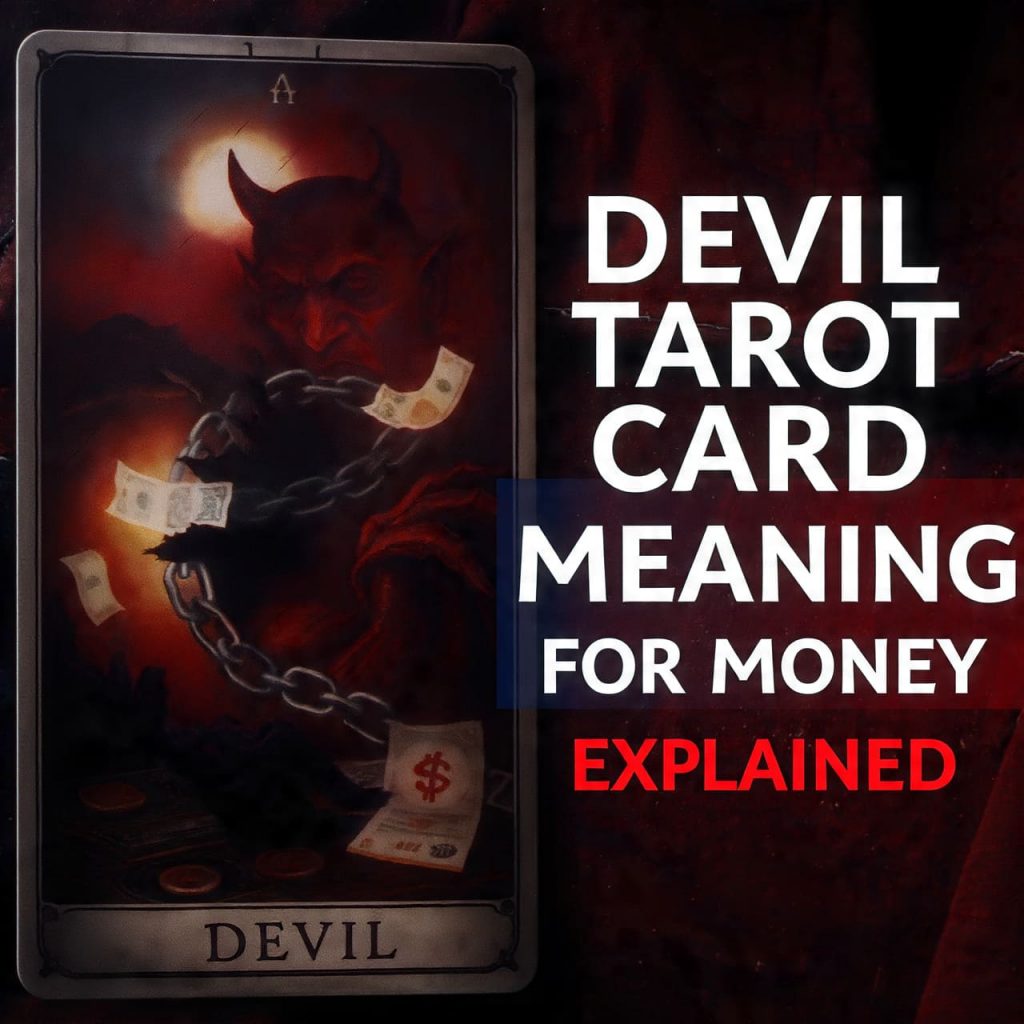
Money questions often bring up strong emotions—security, desire, fear, and power. When the Devil tarot card appears in financial readings, it can immediately feel alarming. Traditionally associated with temptation, attachment, and restriction, the Devil is frequently misunderstood as a sign of inevitable loss or wrongdoing. Many practitioners, however, interpret the Devil in money matters as a card of awareness rather than punishment. Spiritually, it highlights unhealthy financial patterns, hidden motivations, and the psychological relationship one has with money. Interpreting this card responsibly benefits from symbolic layering and contextual analysis, approaches commonly discussed in interpretive frameworks such as those outlined in cards meanings.

💜 Need a clear answer right now?
CONSULT THE YES OR NO TAROT Free · No registration · Instant resultThis article explains the Devil tarot card meaning for money in a balanced, informative way. It explores core symbolism, upright and reversed interpretations, emotional and spiritual lessons, timing considerations, and ethical reading practices. The aim is to replace fear-based interpretations with clarity and self-awareness.
Core Symbolism of the Devil Tarot Card in Money
Attachment and Financial Dependency
At its core, the Devil represents attachment. In money readings, many practitioners interpret this as financial dependency—on income, status, debt, lifestyle, or external validation. Spiritually, the card suggests that money may be holding more power over emotional wellbeing than is healthy.
Readers trained by qualified professionals often emphasize that the Devil does not create bondage; it reveals where bondage already exists.
Desire, Temptation, and Material Focus
The Devil is closely linked to desire. In financial contexts, this may involve temptation toward excess spending, risky investments, or prioritizing material gain over long-term stability.
This does not imply immorality, but it does suggest imbalance.
Perceived Limitation Versus Actual Limitation
One of the Devil’s most important spiritual lessons is that the chains it represents are often loose. Financial restrictions may feel absolute, but many practitioners believe the card highlights perceived limitation rather than permanent reality.
Is the Devil a Bad Sign for Money?
Redefining Negativity in Financial Tarot
Whether the Devil is “bad” depends on interpretation. Many practitioners view it as constructive but confronting. It exposes patterns that may be draining financial energy, such as compulsive spending, fear-based hoarding, or money-driven self-worth.
In this sense, the Devil is a diagnostic card rather than a verdict.
Awareness Before Change
The Devil often appears before meaningful financial change can occur. Awareness must come before release. In emotionally reflective love tarot readings, similar themes appear when emotional attachment blocks healthy growth.
Money, like love, reflects inner patterns.
Power Reclaimed Through Insight
Spiritually, the Devil can be empowering. Once unhealthy financial attachments are recognized, conscious choice becomes possible.
Upright Devil Tarot Card Meaning for Money
Upright Meaning: Financial Attachment and Control
When upright, the Devil is commonly interpreted as attachment influencing money decisions. This may involve debt cycles, lifestyle inflation, or equating self-worth with financial success.
Money may feel controlling rather than supportive.
Fear-Based Financial Choices
Upright Devil energy often reflects fear-driven behavior—working excessively to avoid insecurity, spending to cope with stress, or avoiding financial reality altogether.
These patterns are understandable, but they limit freedom.
Indicators of Upright Devil Energy in Money
Practitioners frequently associate upright Devil energy with:
- Compulsive spending or overworking
- Financial stress despite adequate income
- Feeling “trapped” by money obligations
The Devil and Debt, Obligation, and Control
Debt as Psychological Weight
In money readings, the Devil often appears around debt—not just financial debt, but emotional debt. Obligations may feel overwhelming or shame-based.
Spiritually, the card invites honest assessment rather than avoidance.
Control Dynamics in Shared Finances
In shared financial situations, the Devil may reflect control imbalances. One person may dominate financial decisions, or money may be used as leverage.
Consulting reliable readers can help clarify whether these dynamics are conscious or unexamined.
Breaking Cycles Through Awareness
The Devil rarely suggests immediate escape, but it does highlight where change must begin. Awareness weakens unhealthy cycles.
Reversed Devil Tarot Card Meaning in Money
Release From Financial Bondage
Reversed, the Devil is often interpreted as release. In money readings, this may reflect breaking free from debt cycles, compulsive habits, or fear-based thinking.
Change may already be underway.
Reclaiming Financial Agency
Another reversed meaning involves reclaiming agency. Individuals may begin setting boundaries, seeking education, or redefining success on their own terms.
This shift often feels empowering.
Reversal as Conscious Choice
Rather than luck, reversed Devil energy reflects conscious choice. Old patterns lose power when they are named and challenged.
Spiritual Lessons of the Devil in Money
Money as a Mirror of Inner Patterns
Spiritually, many practitioners believe money mirrors inner beliefs. The Devil highlights where fear, shame, or desire drive financial behavior.
Changing the inner relationship changes the outer experience.
Detaching Self-Worth From Wealth
One of the Devil’s core lessons is separating self-worth from net worth. When identity becomes tied to money, anxiety increases.
Detachment restores balance.
Freedom Through Responsibility
Ironically, the Devil teaches freedom through responsibility. Facing financial reality honestly often reduces fear and restores control.
Timing and the Devil in Financial Readings
Timing as “As Long as the Pattern Persists”
The Devil is not a traditional timing card. Many practitioners interpret its timing as conditional: financial stress continues as long as the underlying pattern remains unaddressed.
Change begins when awareness leads to action.
This perspective aligns with reflective approaches often emphasized in online tarot sessions, where internal shifts precede external results.
Gradual Rather Than Instant Release
Breaking Devil patterns often takes time. Small, consistent changes tend to be more effective than dramatic gestures.
Signs Timing Is Shifting
Practitioners often look for:
- Reduced financial shame
- Increased clarity around habits
- Willingness to seek support or structure
The Devil and Career-Driven Money Pressure
Overwork and Burnout
The Devil frequently appears when income is tied to overwork. Financial security may come at the cost of wellbeing.
Spiritually, the card questions whether the trade-off is sustainable.
Fear-Based Career Choices
Career paths driven solely by fear of scarcity often reflect Devil energy. Security may exist, but fulfillment is limited.
This does not require abandoning responsibility, but it does invite reassessment.
Redefining Success
Many practitioners believe the Devil challenges narrow definitions of success. Financial achievement without balance often leads to dissatisfaction.
Practical Reading Formats for Money Insight
Common Tarot Formats Used
Different formats influence how Devil-related money messages are processed. The table below outlines commonly used options.
| Format | Depth of Insight | Interaction Style | Best For |
|---|---|---|---|
| Video | High | Visual and conversational | Deep pattern recognition |
| Phone | Medium to high | Voice-focused | Privacy and sensitive topics |
| Written | Moderate | Reflective | Reviewing habits and beliefs |
Many seekers find video readings helpful when working with confronting cards like the Devil, as visual explanation supports grounding and perspective.
Ethical Interpretation of Financial Shadow Cards
Practitioners emphasize that the Devil should not be used to shame or frighten. Ethical readings focus on empowerment, choice, and self-awareness.
Pricing and Duration Expectations
While costs vary, general expectations for money-focused readings are outlined below.
| Session Length | Typical Cost Range | Focus |
|---|---|---|
| 20–30 minutes | Lower range | Identifying core issues |
| 45–60 minutes | Mid range | Breaking financial patterns |
| Extended sessions | Higher range | Long-term money mindset work |
Emotional Patterns Around Money and the Devil
Shame and Avoidance
The Devil often appears where shame exists. Avoiding bank statements, budgets, or conversations may increase anxiety.
Awareness reduces shame’s grip.
Control Through Excess or Restriction
Extreme spending or extreme saving can both reflect Devil energy. Balance restores freedom.
Empowerment Through Transparency
Transparency—with oneself or others—often weakens Devil patterns more than forceful discipline.
Integrating Broader Perspective in Financial Growth
Financial Cycles and Shadow Work
The Devil often reflects a shadow phase in financial growth. Some practitioners integrate this understanding with broader reflective perspectives, sometimes considering themes alongside horoscope insights to contextualize financial challenges without deterministic claims.
Structured Interpretation for Clarity
Applying structured strategies such as symbolic layering and situational context discussed in cards meanings helps ensure the Devil is interpreted as awareness and opportunity rather than doom.
Accessibility, Boundaries, and Financial Healing
Emotional Readiness for Devil Readings
Devil-related money readings require honesty. Practitioners suggest approaching them with openness rather than defensiveness.
Setting Healthy Financial Boundaries
Boundaries weaken unhealthy attachment. Clear limits around spending, work hours, or financial obligations restore agency.
Accessible Support Options
For those seeking discretion and grounding, phone readings are often considered accessible and supportive when discussing sensitive financial concerns.
Frequently Asked Questions
Is the Devil a bad card for money?
Most practitioners view it as challenging but constructive, highlighting patterns that need awareness.
Does the Devil mean financial loss?
Not necessarily. It more often reflects unhealthy attachment or fear-based behavior.
Can the Devil indicate debt?
It can, especially emotional or psychological attachment to debt cycles.
What does reversed Devil mean financially?
It often suggests release, empowerment, or breaking free from limiting patterns.
How long does Devil energy last in money readings?
Its influence continues until underlying patterns are addressed consciously.
What format works best for Devil money readings?
Supportive or interactive formats often help with sensitive financial themes.
Conclusion
The Devil tarot card meaning for money centers on awareness, attachment, and the psychological relationship one has with financial security and desire. Rather than predicting loss or punishment, many practitioners believe it exposes hidden patterns that limit freedom—fear, shame, compulsion, or over-identification with wealth.
When interpreted thoughtfully and ethically, the Devil becomes a powerful catalyst for financial liberation. By bringing unconscious habits into conscious awareness, it invites individuals to reclaim agency, redefine success, and build a healthier, more balanced relationship with money.
