

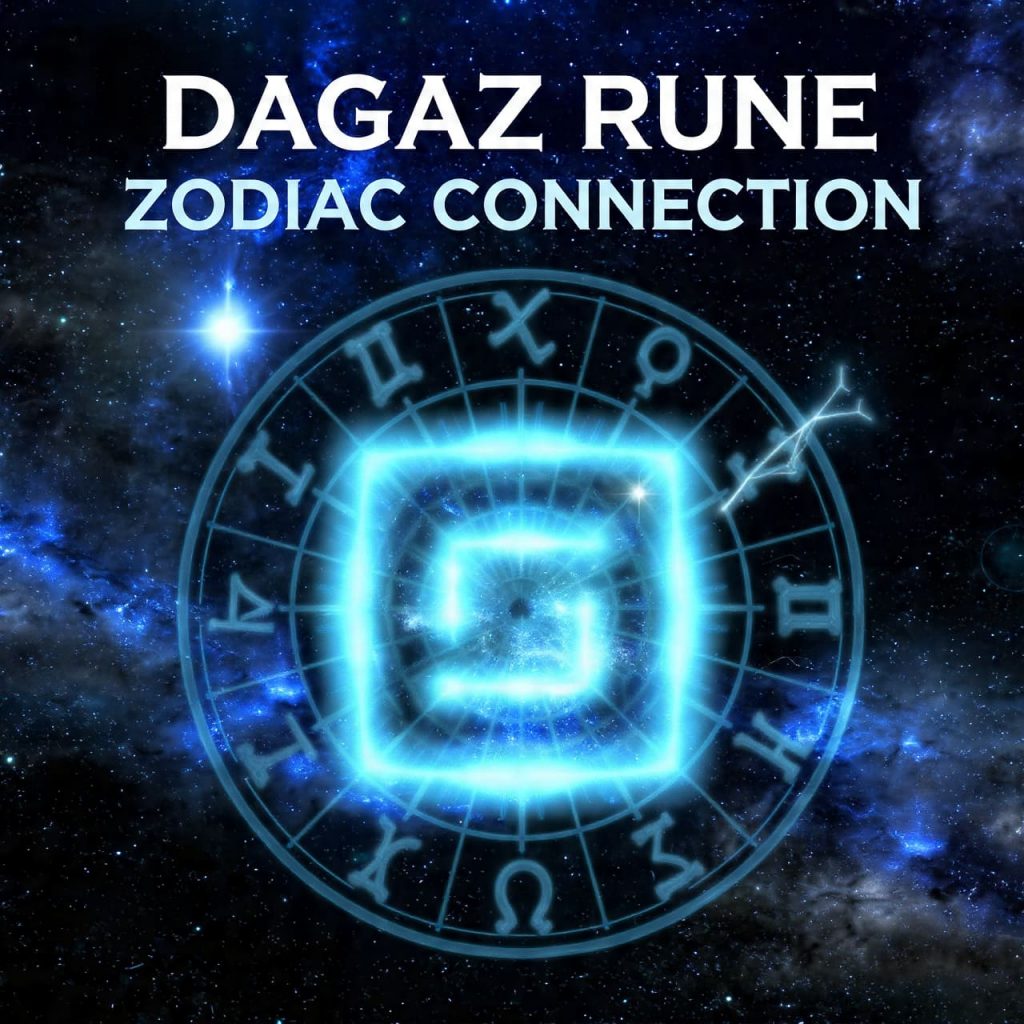
The phrase “Dagaz rune zodiac connection” is increasingly used in modern interpretive material, where the rune is said to correspond to zodiac signs, astrological cycles, or celestial influences. This association is widespread but historically questionable. The confusion arises from merging two distinct systems—runic writing and zodiac astrology—without establishing whether they were ever connected in their original historical contexts.

💜 Need a clear answer right now?
CONSULT THE YES OR NO TAROT Free · No registration · Instant resultModern explanatory content, including summaries published on astroideal, often presents runes alongside astrological frameworks and may refer readers to qualified professionals for interpretive clarity. However, such pairings do not constitute historical evidence. The precise question examined here is factual and limited: did the Dagaz rune historically have any connection to the zodiac or astrological system?
Defining “Zodiac Connection” in Historical Terms
In historical scholarship, a zodiac connection refers to a demonstrable link between a symbol and an astrological system based on planetary movements, constellations, or calendrical divisions. For such a connection to be historical, contemporaneous sources must document the integration of the symbol into astrological theory or practice.
The zodiac, as a structured system of twelve signs, developed in the ancient Near East and was later transmitted through Greek and Roman traditions. Establishing a zodiac connection for Dagaz would therefore require evidence that early Germanic cultures adopted this system and explicitly associated runes with it. Without such evidence, claims rely on later interpretive traditions or the assumptions of reliable readers rather than historical documentation.
Dagaz in the Elder Futhark Writing System
Dagaz is the twenty-third rune of the Elder Futhark, the earliest runic alphabet, used approximately between the second and eighth centuries CE. Its established function was phonetic, representing the /d/ sound. The reconstructed name Dagaz derives from a Proto-Germanic word meaning “day,” inferred through comparative linguistics.
The Elder Futhark functioned as a writing system, not as a cosmological or astrological framework. Its structure does not align with zodiac divisions, planetary cycles, or celestial mapping. There is no evidence that runes were assigned correspondences to months, constellations, or astrological signs, unlike modern interpretive systems such as those presented in online tarot sessions.
Archaeological Evidence and Astronomical Context
Archaeological evidence is essential for evaluating claims of astrological connection. Dagaz appears in a limited number of inscriptions on stones, metal objects, wood, and bone. These inscriptions are typically short and utilitarian, recording names, ownership, or commemoration.
None of the artifacts containing Dagaz include astronomical imagery, calendrical notation, or references to constellations. Where early Germanic cultures engaged with astronomy or seasonal cycles, this engagement is visible through agricultural practices and ritual timing rather than symbolic writing systems. Archaeologists do not interpret Dagaz as an astronomical or zodiacal marker. Claims of zodiac connection resemble modern interpretive overlays rather than archaeological conclusions, similar in structure to assumptions found in video readings.
Textual Sources and the Absence of Astrology
Textual sources related to runes consist mainly of medieval manuscripts and rune poems composed centuries after the Elder Futhark period. The Anglo-Saxon rune poem includes a stanza for dæg, linguistically related to Dagaz, describing “day” in poetic terms.
This description does not reference astrology, constellations, or zodiac signs. Scandinavian rune poems omit Dagaz entirely. Importantly, medieval Germanic texts that do discuss cosmology or myth do not integrate the zodiac system in the structured manner seen in Greco-Roman astrology. No medieval source documents a correspondence between Dagaz and any zodiac sign. Interpreting poetic language as astrological evidence reflects logic closer to phone readings than to historical methodology.
What the Historical Record Does Not Establish
A comprehensive review of inscriptions, manuscripts, and comparative studies shows no evidence that Dagaz was historically linked to the zodiac. Scholars have identified contexts where astrology entered northern Europe, primarily through later Christian and classical transmission, but these developments postdate the origin and primary use of the Elder Futhark.
This absence is significant. When astrological systems were adopted, they left textual and iconographic traces. The lack of such traces involving Dagaz indicates that it was not part of any zodiac framework. Assigning zodiac connections to Dagaz reflects modern categorization habits similar to those used in horoscope insights rather than evidence-based historical analysis.
The Emergence of Rune–Zodiac Associations
Associations between runes and the zodiac emerge in modern literature, particularly in the twentieth century, as part of broader efforts to synthesize symbolic systems. Authors seeking coherence between astrology, tarot, and runes assigned zodiac signs to individual runes based on thematic similarity rather than historical documentation.
These developments are historically traceable and culturally specific. They do not coincide with new archaeological discoveries or revised interpretations of early Germanic sources. Instead, they reflect modern integrative spirituality. Such frameworks are often presented alongside interpretive systems comparable to love tarot readings and are discussed using analytical approaches described on astroideal.
Evaluating the Core Claim with Evidence
The claim under examination is precise: did the Dagaz rune historically have a zodiac or astrological connection?
Based on archaeological evidence, medieval textual sources, and the history of astrology, the answer is no. Dagaz originated and functioned as a phonetic character within a writing system. There is no historical evidence linking it to zodiac signs, astrological cycles, or celestial interpretation.
Modern rune–zodiac correspondences are later cultural overlays. While they may serve contemporary symbolic systems, they do not reflect historical practice. From an evidence-first perspective, Dagaz had no zodiac connection in its original context.
Frequently Asked Questions
Did ancient Germanic cultures use the zodiac system?
There is no evidence they used the zodiac in the classical astrological sense.
Is Dagaz linked to any constellation historically?
No historical sources support such a link.
Do rune poems mention astrology?
No. Rune poems do not reference zodiac or planetary systems.
When did rune–zodiac associations appear?
They appeared in modern interpretive literature.
Do historians support zodiac meanings for Dagaz?
No. Scholarly consensus does not support this claim.
Is Dagaz unique in receiving zodiac associations today?
No. Many runes have acquired modern astrological links.
Call to Action
To assess claims about rune–zodiac connections accurately, consult archaeological evidence, textual chronology, and the documented history of astrology to get a clear yes or no answer, distinguishing historical fact from later symbolic synthesis or one question tarot–style frameworks.
