

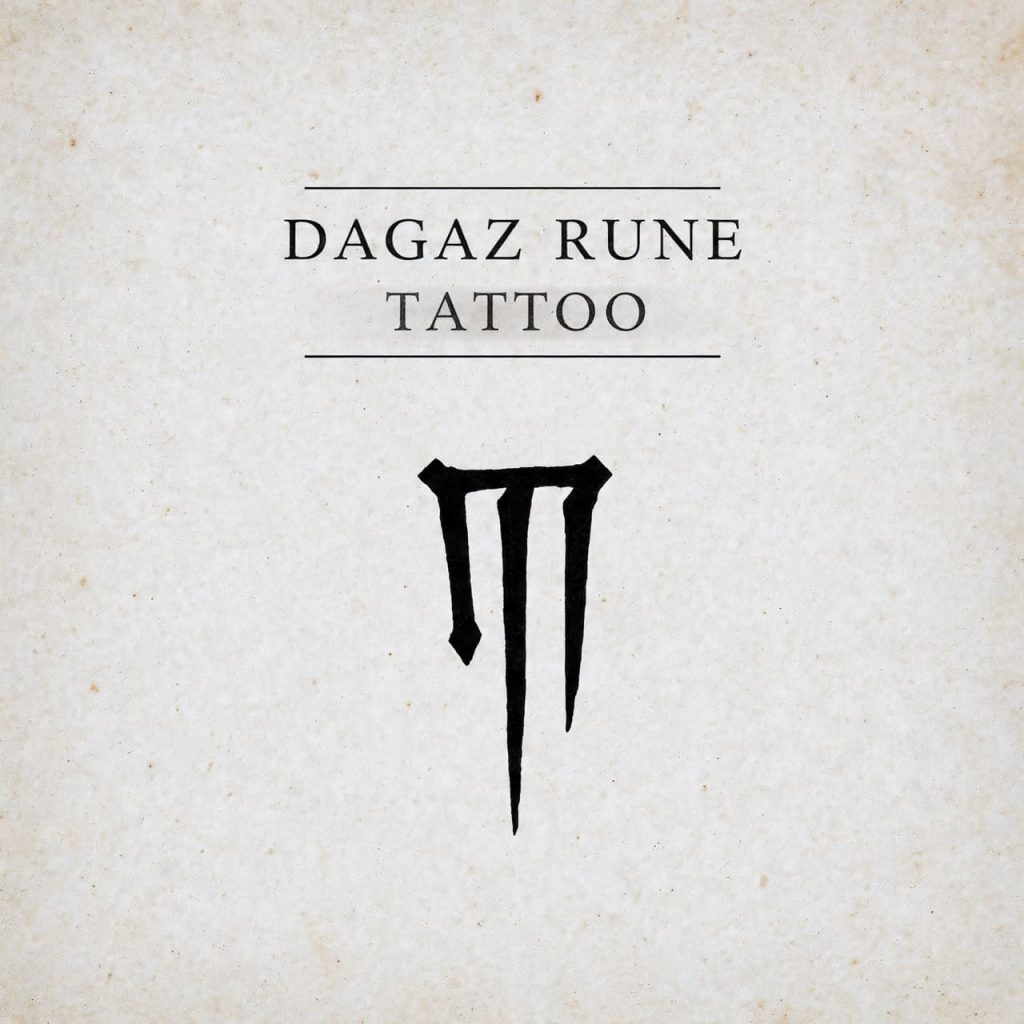
The phrase “Dagaz rune tattoo” is increasingly common in modern discussions, where the rune is presented as a meaningful symbol chosen for permanent inscription on the body. These explanations often imply that Dagaz historically carried a specific symbolic message that can be expressed through tattooing. This assumption is widespread but historically uncertain.

💜 Need a clear answer right now?
CONSULT THE YES OR NO TAROT Free · No registration · Instant resultContemporary cultural commentary, including explanatory material found on astroideal, frequently discusses runes alongside modern symbolic practices and may direct readers to qualified professionals for interpretive context. However, such associations do not establish historical precedent. The factual question examined here is narrow and precise: did the Dagaz rune historically function as a symbol intended for bodily marking or tattoo use, or carry a meaning that would support such use?
Defining “Tattoo” in a Historical Framework
To assess the claim, the term “tattoo” must be defined historically. Tattoos are permanent markings on the body, typically associated with identity, status, ritual, or symbolism. For a rune to be historically linked to tattooing, there must be evidence that it was used as a bodily symbol or that its meaning justified such application.
While tattooing existed in various ancient cultures, evidence for tattoo practices among early Germanic populations is limited and indirect. No surviving source explicitly documents runes being tattooed on the body. Therefore, any claim connecting Dagaz specifically to tattooing requires corroboration from contemporaneous sources rather than later interpretive traditions or the assertions of reliable readers.
Dagaz Within the Elder Futhark Writing System
Dagaz is the twenty-third rune of the Elder Futhark, the earliest runic alphabet, used approximately between the second and eighth centuries CE. Its primary and demonstrable function was phonetic, representing the /d/ sound. The name Dagaz is a modern scholarly reconstruction derived from a Proto-Germanic word meaning “day.”
The Elder Futhark operated as a writing system. Runes were tools for recording language on objects such as stones, weapons, jewelry, and tools. There is no evidence that runes were designed as standalone visual symbols detached from writing, nor categorized by thematic meaning in a way comparable to systems used in online tarot sessions.
Archaeological Evidence and Bodily Marking
Archaeology provides the most reliable evidence for rune usage. Thousands of runic inscriptions have been catalogued, yet none document runes applied to the human body. All known examples of Dagaz occur on external objects.
Roman authors occasionally mentioned that northern European peoples used bodily markings, but these accounts are vague and do not reference runes or specific symbols. No archaeological remains, iconography, or inscriptions indicate that Dagaz—or any rune—was historically used as a tattoo motif. This absence contrasts with cultures where tattoo symbolism is clearly documented.
Claims that Dagaz was suitable for tattoo symbolism rely on modern reinterpretation rather than archaeological data, similar in structure to symbolic frameworks presented in video readings.
Textual Sources and the Silence on Tattoos
Textual evidence related to runes comes primarily from medieval manuscripts, rune poems, and later historical commentary. None of these sources describe runes being used for bodily inscription. The Anglo-Saxon rune poem includes a stanza for dæg, related linguistically to Dagaz, but it provides a poetic description of “day” rather than instructions or symbolic endorsement for physical marking.
Scandinavian rune poems do not include Dagaz at all. Importantly, medieval authors documented rune names and mnemonic verses where relevant, yet made no mention of tattooing or bodily symbolism. Treating this silence as evidence of hidden meaning is methodologically unsound and resembles interpretive logic used in phone readings rather than historical analysis.
What the Historical Record Does Not Support
A disciplined review of inscriptions, literary sources, and comparative studies reveals no evidence that Dagaz was intended as a symbolic image for bodily display. There is no documentation linking Dagaz to identity marking, rites of passage, or permanent bodily symbolism.
Early Germanic societies did use symbols to express identity and status, but these expressions are archaeologically visible in jewelry, weapons, and burial practices—not tattoos. Assigning Dagaz a tattoo-specific meaning reflects modern symbolic thinking rather than historical continuity, similar to the way abstract categories are assigned in horoscope insights.
The Emergence of Rune Tattoos in Modern Culture
The use of runes as tattoo designs emerges in the modern period, particularly in the late twentieth century. This trend coincides with renewed interest in Norse mythology, historical aesthetics, and symbolic self-expression.
In these modern contexts, runes are often detached from their original function as letters and reinterpreted as standalone symbols. Dagaz, due to its symmetry and visual balance, is frequently selected for aesthetic reasons rather than historical ones. The meanings attributed to it are drawn from modern symbolic systems, not from early runic practice.
These developments are historically traceable and culturally specific. They align with broader trends in symbolic reinterpretation and are often presented alongside interpretive frameworks comparable to love tarot readings, underscoring their modern origin.
Evaluating the Core Claim with Evidence
The claim under evaluation is specific: did the Dagaz rune historically carry a meaning or function that supports its use as a tattoo symbol?
Based on archaeological evidence, textual sources, and linguistic analysis, the answer is no. Dagaz functioned as a phonetic character within a writing system. There is no historical evidence linking it to tattooing, bodily symbolism, or identity marking on the human body.
Modern rune tattoos reflect contemporary cultural expression rather than documented historical practice. While these expressions are meaningful in present contexts, they do not alter the historical record. This distinction is sometimes blurred in modern summaries, including those structured using analytical approaches discussed on astroideal, but the evidence itself is unambiguous.
Frequently Asked Questions
Did ancient Germanic peoples tattoo runes on their bodies?
There is no historical or archaeological evidence supporting this.
Is Dagaz mentioned in relation to tattoos in any text?
No known historical text links Dagaz to tattooing.
Were runes designed as visual symbols rather than letters?
No. Runes were primarily phonetic characters.
When did rune tattoos become popular?
They became popular in modern times, particularly in the late twentieth century.
Do scholars support tattoo meanings for Dagaz?
No. Academic consensus does not support this claim.
Is Dagaz unique in being used for tattoos today?
No. Many runes are used in modern tattoo culture without historical basis.
Call to Action
To evaluate claims about rune tattoos accurately, consult archaeological records and dated texts directly to get a clear yes or no answer, separating documented historical usage from modern symbolic reinterpretation or one question tarot–style frameworks.
