

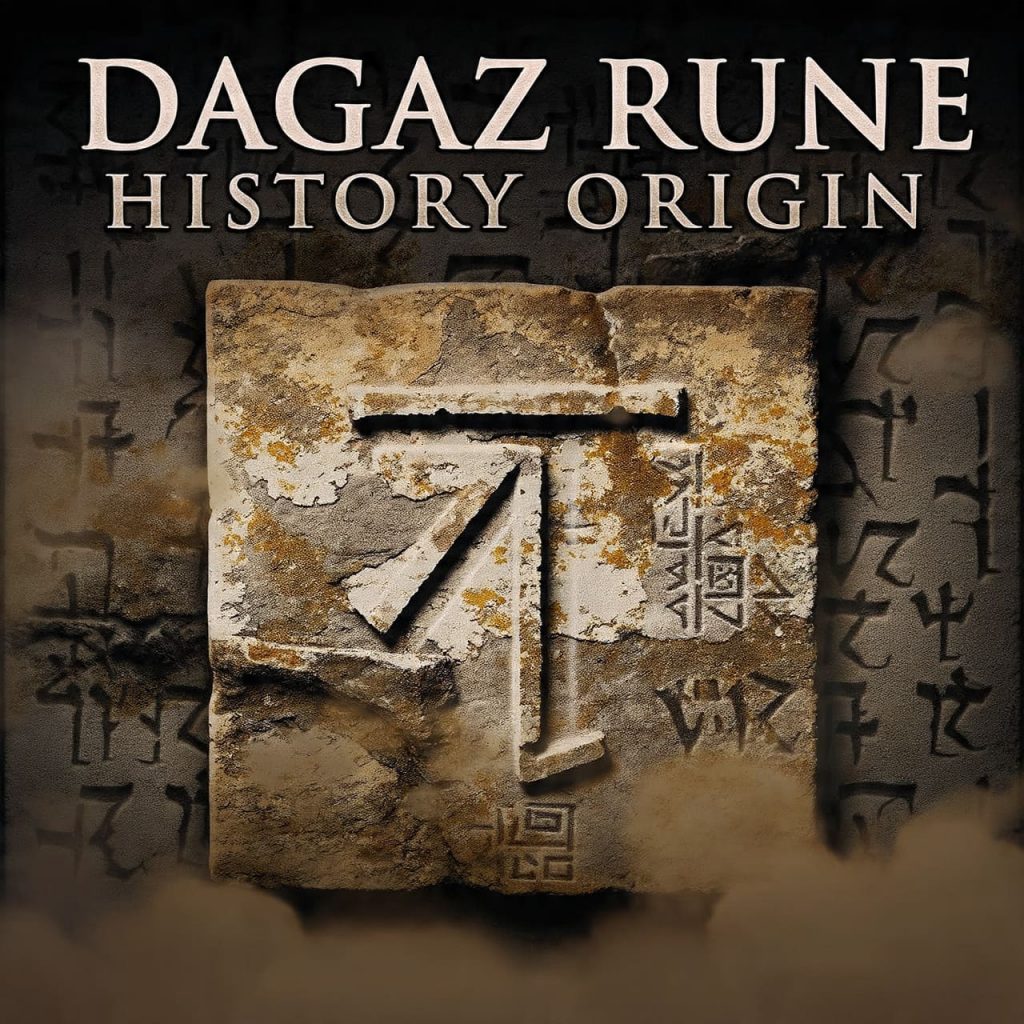
The phrase “Dagaz rune history origin” is frequently used in modern explanations that claim to describe where the rune came from and what it originally represented. These explanations often blend linguistic facts, archaeological evidence, and later symbolic interpretations into a single narrative. This blending creates confusion because it obscures the distinction between what can be historically demonstrated and what was added much later.

💜 Need a clear answer right now?
CONSULT THE YES OR NO TAROT Free · No registration · Instant resultModern summaries, including those published on astroideal, often situate runes within broader interpretive frameworks and may direct readers to qualified professionals for deeper understanding. However, such contextualization does not establish historical origin. The precise question examined in this article is factual and limited: what is the historically verifiable origin of the Dagaz rune, and what evidence supports it?
Defining “Origin” in Historical Scholarship
In historical and archaeological research, “origin” refers to demonstrable emergence: when a form first appears, in what context, and with what function. Establishing origin requires material evidence such as dated inscriptions, comparative script analysis, and linguistic reconstruction.
For Dagaz, this means identifying when the rune entered use, how it fits within the runic alphabet, and what its earliest function was. Claims that extend beyond these criteria—such as symbolic, spiritual, or functional roles—require separate evidence. Without it, they rely on later interpretive traditions or the assumptions of reliable readers rather than disciplined historical method.
Dagaz Within the Elder Futhark Alphabet
Dagaz is the twenty-third rune of the Elder Futhark, the earliest known runic alphabet. The Elder Futhark is generally dated to approximately the second through eighth centuries CE and consists of 24 runes arranged in a consistent order.
The rune’s primary and historically demonstrable function was phonetic. Dagaz represented the /d/ sound. Its placement within the rune row is stable across inscriptions, which indicates that it was part of a standardized writing system rather than an ad hoc symbolic set.
The name “Dagaz” itself is not preserved in Elder Futhark inscriptions. It is a modern scholarly reconstruction derived from Proto-Germanic dagaz, meaning “day.” This reconstruction is based on later Germanic languages and medieval rune poems. The rune’s origin, therefore, lies firmly within the development of alphabetic literacy rather than symbolic systems such as those used in online tarot sessions.
Archaeological Evidence for Dagaz’s Emergence
Archaeological evidence provides the most direct insight into the origin of Dagaz. The rune appears in a limited number of Elder Futhark inscriptions found on stone, metal, wood, and bone. These inscriptions are geographically concentrated in northern and central Europe.
Dating of these objects places Dagaz’s use within the broader emergence of runic writing, likely influenced by earlier Italic and Latin alphabets. Comparative analysis shows structural similarities between runes and Mediterranean scripts, supporting the scholarly consensus that runes developed as an adapted alphabet rather than as an indigenous symbolic system.
No artifact identifies Dagaz as a symbol with independent meaning at its point of origin. Archaeologists interpret its presence as linguistic, not emblematic. Claims that Dagaz originated as a conceptual symbol resemble modern interpretive frameworks more than archaeological conclusions, similar in structure to assumptions made in video readings.
Linguistic Reconstruction and Name Attribution
The attribution of the name Dagaz comes from historical linguistics, not from contemporary documentation. Linguists reconstructed Proto-Germanic dagaz by comparing cognate words such as Old English dæg and Old Norse dagr.
This reconstruction helps explain why later traditions associated the rune with the concept of “day,” but it does not demonstrate that early users conceived of the rune symbolically. Linguistic reconstruction explains sound and vocabulary development, not cultural intent.
It is therefore essential to separate the rune’s phonetic origin from later interpretive naming. Treating the reconstructed name as evidence of original meaning mirrors interpretive overreach more commonly seen in phone readings than in historical linguistics.
Textual Sources and Their Chronological Distance
Textual references to rune names appear primarily in medieval sources, centuries after the Elder Futhark fell out of common use. The Anglo-Saxon rune poem includes a stanza for dæg, linguistically related to Dagaz, describing “day” in poetic terms.
However, these poems do not document origin. They reflect medieval mnemonic traditions, not early runic development. Scandinavian rune poems omit Dagaz entirely. No surviving text from the period of Dagaz’s origin explains why it was created, what it symbolized, or how it was conceptualized beyond its phonetic role.
Interpreting these later texts as evidence of origin reflects modern narrative construction rather than chronological rigor, a pattern also seen in interpretive models aligned with horoscope insights.
What the Historical Record Does Not Establish
A systematic review of archaeological, linguistic, and textual evidence shows no indication that Dagaz originated as a symbolic or ritual sign. Its emergence aligns with the creation of a functional alphabet designed to represent spoken language.
There is no evidence that Dagaz originated as:
- A religious symbol
- A spiritual emblem
- A protective or magical sign
These associations appear only in later reinterpretations. The absence of such roles at the point of origin is significant because early Germanic cultures documented symbolic practices clearly where they existed.
Assigning symbolic origin to Dagaz reflects modern interpretive habits rather than historically verifiable development, similar to categorical meaning systems used in love tarot readings.
Modern Reinterpretations of Dagaz’s Origin
Modern accounts of Dagaz’s origin often combine its reconstructed name, later poetic descriptions, and contemporary symbolic frameworks into a single narrative. These narratives typically emerge from nineteenth- and twentieth-century Romantic and occult movements.
This reinterpretation is historically traceable and culturally specific. It does not arise from new archaeological discoveries or revised dating of inscriptions. Instead, it reflects a modern desire to attribute deeper origin stories to ancient scripts.
Such narratives are frequently presented using analytical approaches discussed on astroideal, but they should be understood as modern constructs rather than historical conclusions.
Evaluating the Core Claim with Evidence
The claim under examination is precise: what is the historical origin of the Dagaz rune?
Based on archaeological inscriptions, comparative script analysis, and linguistic reconstruction, the answer is clear. Dagaz originated as a phonetic character within the Elder Futhark alphabet, developed during the early centuries CE as part of a writing system influenced by earlier alphabets.
There is no evidence that it originated as a symbol with independent conceptual meaning. Its origin is linguistic and functional, not symbolic.
Frequently Asked Questions
When did Dagaz first appear historically?
It appeared during the Elder Futhark period, roughly between the 2nd and 8th centuries CE.
Is the name Dagaz historically attested?
No. It is a reconstructed scholarly name.
Did Dagaz originate as a symbol?
There is no evidence supporting this.
What influenced the creation of runes?
Earlier Italic and Latin alphabets.
Do medieval texts explain Dagaz’s origin?
No. They postdate its origin by centuries.
Is there academic consensus on Dagaz’s origin?
Yes. Scholars agree it originated as a phonetic rune.
Call to Action
To understand rune origins accurately, examine archaeological dating, comparative scripts, and linguistic reconstruction directly to get a clear yes or no answer, distinguishing documented historical development from later interpretive or one question tarot–style narratives.
