

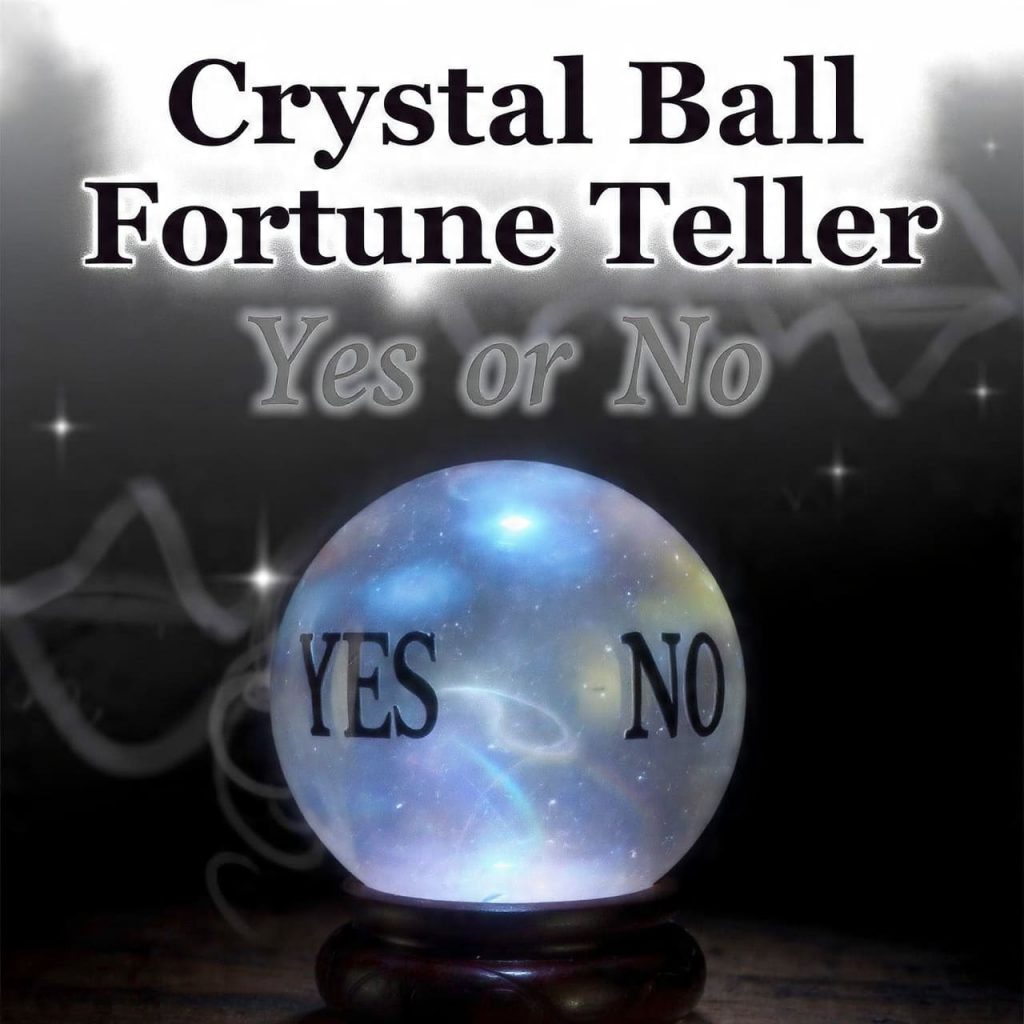
The idea of a crystal ball fortune teller yes or no reading is deeply rooted in popular culture. Images of a fortune teller gazing into a crystal ball and delivering a simple “yes” or “no” answer have appeared in stories, films, and folklore for generations. Today, many people still search for this type of reading, often hoping for quick clarity when facing uncertainty.

💜 Need a clear answer right now?
CONSULT THE YES OR NO TAROT Free · No registration · Instant resultMany believe crystal ball readings are most useful when understood as symbolic and reflective tools, not as devices that reveal fixed truths. Practitioners suggest that yes-or-no questions work best when they encourage reflection rather than demand certainty. When approached with realistic expectations, crystal ball fortune telling can offer perspective without removing personal responsibility.
This article explores crystal ball fortune teller yes-or-no readings in depth. It explains how they work, what yes-or-no answers actually represent, historical context, modern formats, benefits and limitations, and how to use this method thoughtfully and ethically.
What Is a Crystal Ball Fortune Teller Yes or No Reading?
The symbolism of the crystal ball
A crystal ball is traditionally used as a visual focal point. Rather than displaying literal images, it encourages symbolic interpretation through reflection, light, and imagination.
Practitioners suggest the crystal ball acts as a mirror for intuition rather than a source of factual information.
Understanding yes-or-no fortune telling
Yes-or-no readings are designed to simplify complex questions into directional guidance. Instead of detailed explanations, the response is condensed into a symbolic “yes,” “no,” or sometimes “uncertain.”
This format prioritizes clarity over depth.
Why people seek yes-or-no answers
Many people turn to yes-or-no readings when feeling overwhelmed. The appeal lies in simplicity, especially when decisions feel emotionally charged.
Historical Roots of Crystal Ball Fortune Telling
Origins in scrying traditions
Crystal ball fortune telling originates from scrying, an ancient practice involving reflective surfaces like water, mirrors, or polished stones. The goal was not prediction, but interpretation of impressions.
This tradition emphasizes observation and symbolism.
Cultural interpretations over time
Different cultures used scrying differently, often as a spiritual or ceremonial activity. The crystal ball became popular in Europe as a symbol of mystery and insight.
Its cultural image grew stronger than its practical claims.
Evolution into yes-or-no readings
Yes-or-no formats emerged as simplified adaptations, making fortune telling more accessible but also more symbolic.
How Crystal Ball Yes-or-No Readings Are Interpreted
Interpretation rather than vision
Contrary to popular belief, practitioners do not usually “see” answers inside the crystal ball. Instead, impressions, emotions, or intuitive thoughts are interpreted.
Meaning comes from reflection, not imagery.
The role of the question
Clear, focused questions influence how the reading feels. Practitioners often recommend using strategies explained in fortune teller to frame yes-or-no questions in a grounded, emotionally aware way.
Better questions often lead to more useful insight.
Why answers may feel ambiguous
Sometimes a crystal ball reading does not feel like a clear yes or no. This ambiguity is often intentional, encouraging further reflection rather than closure.
Modern Crystal Ball Yes-or-No Readings
Digital and online formats
Today, crystal ball fortune telling is often adapted into digital tools or online sessions. Many people explore symbolic guidance through online tarot sessions that also include crystal-based or intuitive elements.
These formats emphasize accessibility.
Video-based crystal ball readings
Some users prefer visual formats, such as video readings, where the practitioner demonstrates the process and explains interpretations in real time.
Visual context adds clarity.
Phone-based yes-or-no readings
Others choose phone readings, focusing on conversation and explanation without visuals. This format suits those who prefer verbal reflection.
Who Offers Crystal Ball Fortune Teller Readings?
Individual practitioners
Crystal ball readings are often offered by independent fortune tellers. Many people look for qualified professionals who emphasize ethics, boundaries, and explanation rather than certainty.
Experience and communication style matter more than tools.
Platform-based readers
Some platforms host multiple intuitive readers and provide structure, moderation, and transparency. This can increase confidence for first-time users.
Accountability is often valued.
Evaluating trust and credibility
People tend to trust services associated with reliable readers who clearly state limitations and avoid absolute claims.
Transparency builds trust.
What “Yes” or “No” Really Means in Crystal Ball Readings
Symbolic direction, not decisions
A “yes” or “no” response is often symbolic, reflecting emotional readiness, hesitation, or alignment rather than an outcome.
Practitioners suggest it should not replace decision-making.
Emotional resonance over prediction
Many believe the value lies in how the answer resonates emotionally. If a “yes” feels uncomfortable, that reaction itself may be meaningful.
Reflection matters more than the word itself.
The role of uncertainty
Some readings produce a neutral or unclear response. This often signals that more information or reflection is needed.
Crystal Ball Readings Compared With Other Reflective Tools
Crystal ball vs tarot
Tarot provides structured symbolism through cards, while crystal ball readings rely on open-ended interpretation. Some people combine crystal ball insight with love tarot readings to explore emotional themes more deeply.
Each tool offers a different perspective.
Crystal ball vs astrology
Astrology focuses on cycles and timing, while crystal ball readings focus on intuitive reflection. Some individuals use horoscope insights alongside crystal ball sessions for broader context.
Neither approach offers guarantees.
Benefits of Crystal Ball Yes-or-No Readings
- Encourages quick reflection during uncertainty
- Simple format reduces emotional overload
- Symbolic answers prompt self-awareness
- Adaptable to modern online formats
Limitations and Realistic Expectations
Oversimplification risk
Yes-or-no readings can oversimplify complex situations. They are best used as prompts, not conclusions.
Subjective interpretation
Interpretations vary widely between practitioners and individuals. There is no universal meaning.
Not a substitute for real-world judgment
Crystal ball readings should not replace communication, planning, or professional advice.
Using Crystal Ball Yes-or-No Readings Responsibly
Framing thoughtful questions
The quality of insight depends on the question. Practitioners often recommend using strategies explained in fortune teller to avoid emotionally loaded or absolute phrasing.
This approach keeps readings grounded.
Avoiding repeated questioning
Repeating the same yes-or-no question can increase anxiety rather than clarity. Reflection between readings is healthier.
Maintaining personal agency
Insights should support personal responsibility, not override it.
Comparison Table: Crystal Ball Yes-or-No Readings
| Aspect | Crystal Ball Yes/No |
|---|---|
| Purpose | Directional reflection |
| Depth | Limited |
| Interpretation | Symbolic |
| Best Use | Quick emotional insight |
| Predictive claims | No |
Frequently Asked Questions
Are crystal ball yes-or-no readings accurate?
Accuracy is subjective and usually measured by emotional relevance, not prediction.
Can crystal balls really show answers?
No. Practitioners interpret impressions rather than seeing literal images.
Are yes-or-no readings suitable for big decisions?
They are better used as reflection tools, not decision-makers.
Can crystal ball readings be done online?
Yes. Many formats are adapted for online use.
Are crystal ball readings safe?
They are generally safe when approached reflectively and without dependency.
Do crystal ball readings work for beginners?
Yes. Their simplicity makes them accessible.
Conclusion
A crystal ball fortune teller yes or no reading is best understood as a symbolic and reflective practice rather than a method for predicting outcomes. Its simplicity can be helpful during moments of uncertainty, offering emotional direction rather than answers carved in stone.
When used thoughtfully, with clear questions and realistic expectations, crystal ball yes-or-no readings can encourage introspection and awareness. Their true value lies not in certainty, but in the space they create for reflection, choice, and personal understanding.
