

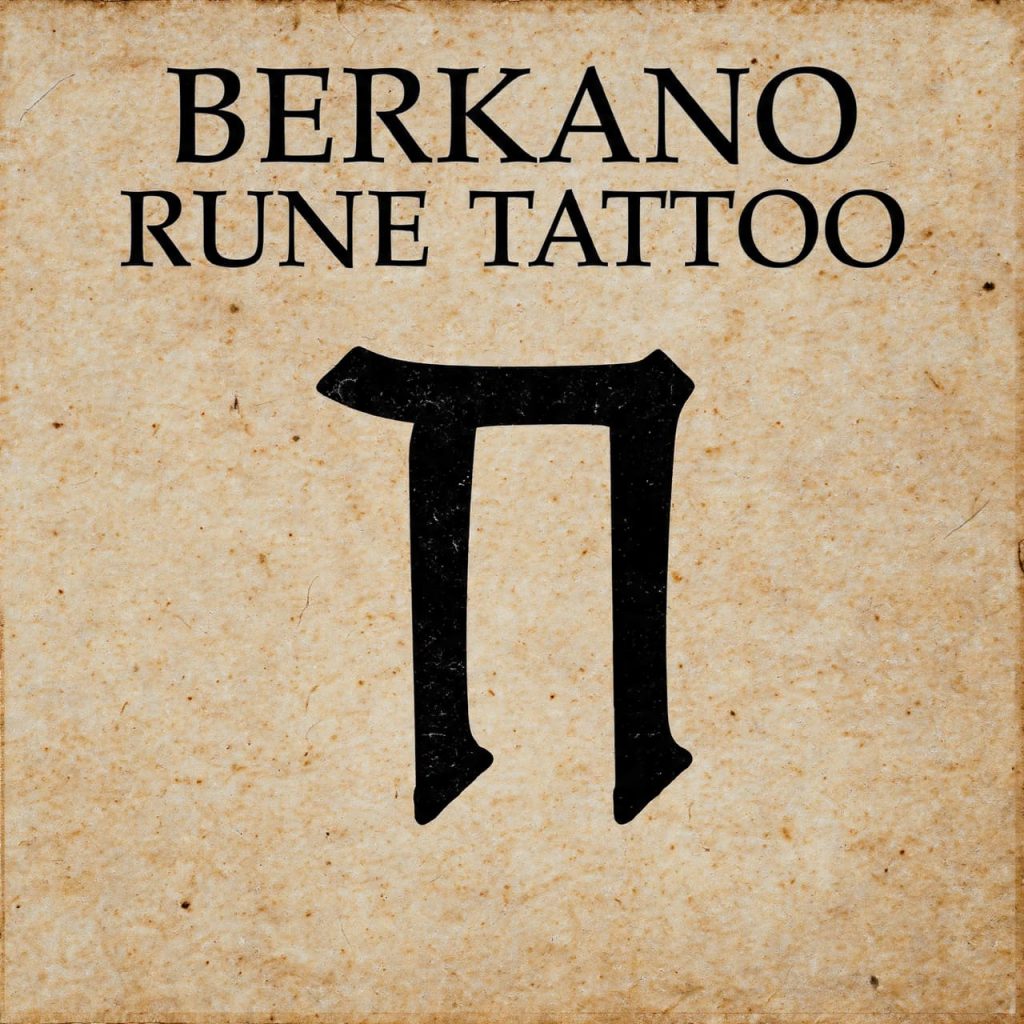
The Berkano rune is frequently chosen for tattoos and is often described online as carrying specific meanings, including growth, femininity, protection, or emotional significance. Tattoo-focused explanations commonly imply that these meanings are ancient and historically grounded. This creates a persistent misunderstanding: the belief that choosing a Berkano rune tattoo reflects a meaning that was recognized and intended by early rune users.

💜 Need a clear answer right now?
CONSULT THE YES OR NO TAROT Free · No registration · Instant resultThis article examines “Berkano rune tattoo” strictly as a historical and factual issue. The question is not whether modern people assign meaning to tattoos, but whether historical evidence supports the idea that Berkano functioned as a symbolic or semantic mark suitable for personal inscription on the body. Using the same evidence-first methodology emphasized by astroideal, the article evaluates what is known from archaeology, linguistics, and textual sources. Claims encountered through qualified professionals often blur the line between historical usage and modern symbolism; this analysis clarifies that boundary.
The conclusion is binary: either Berkano historically functioned as a symbolic mark comparable to modern tattoo meanings, or it did not.
Defining Tattoos in a Historical Context
To evaluate the claim properly, it is necessary to define what a “tattoo” represents in historical terms. A tattoo, as understood today, is a permanent body marking chosen for symbolic, aesthetic, or personal reasons. It assumes individual autonomy, symbolic intention, and visual communication of identity.
There is limited and contested evidence for tattooing practices in early Germanic societies. While tattooing existed in some ancient cultures, no archaeological or textual sources demonstrate that runes were used as tattoos during the Elder Futhark period. Without evidence of rune tattoos as a cultural practice, any claim about the meaning of a Berkano rune tattoo must be treated cautiously.
Importantly, even if tattooing occurred, that does not imply that individual runes carried fixed symbolic meanings suitable for bodily inscription.
Berkano’s Origin and Function as a Rune
Berkano is part of the Elder Futhark, used approximately between the 2nd and 8th centuries CE. Linguistic reconstruction identifies its name as deriving from berkanan, meaning birch. This reconstruction is based on comparative Germanic linguistics and is widely accepted in academic scholarship.
Functionally, Berkano was a phonetic character representing a “b” sound. Runes were primarily used as letters, not as standalone symbols with abstract meanings. Their appearance on objects reflects literacy practices rather than symbolic branding.
There is no evidence that Berkano was designed, selected, or conceptualized as an emblem for display on the human body. Modern explanations encountered via reliable readers often treat runes as symbolic icons, but this framework does not reflect historical usage.
Archaeological Evidence and Material Use
Archaeological evidence is central to evaluating claims about rune tattoos. Hundreds of Elder Futhark inscriptions survive, carved or engraved into stone, metal, bone, wood, and jewelry. These materials preserve runes because they endure over time.
Human skin does not preserve inscriptions archaeologically. Therefore, evidence for rune tattoos would have to come from indirect sources, such as descriptions in texts or depictions in art. No such sources exist for Berkano or any other rune.
Additionally, the inscriptions we do have show runes used in words and names, not isolated as symbolic units. Berkano appears only as part of phonetic sequences. There is no precedent for its use as a standalone emblem comparable to a modern tattoo design. Claims repeated in online tarot sessions that present runes as body symbols lack archaeological corroboration.
Textual Sources and Their Silence on Tattoos
Early Germanic societies left no contemporary written descriptions of tattooing with runes. Later medieval sources, including rune poems and sagas, do not mention runes being inscribed on the body.
The medieval rune poems, often cited for symbolic meaning, assign mnemonic verses to runes but do not describe bodily use. Even within these poems, Berkano is associated with natural imagery rather than personal marking or identity display.
The absence of textual evidence is notable. If rune tattooing had been a meaningful or widespread practice, some reference would be expected in literary or historical records. No such reference exists, and modern interpretations presented in video readings do not address this evidentiary gap.
Modern Tattoo Meanings and Their Origins
The association between Berkano and tattoo symbolism is a modern phenomenon. During the 20th century, runes were adopted into New Age and neo-pagan systems, where they were reframed as symbolic units similar to tarot cards or sigils.
Within these systems, Berkano is often assigned themes such as growth or identity, which are then transferred into tattoo culture. This transfer is aesthetic and personal, not historical. It reflects contemporary symbolic creativity rather than documented ancient practice.
Tattoo culture values individual meaning, which explains the popularity of runes as designs. However, popularity does not establish historical continuity. Commercial narratives encountered in phone readings often imply ancient legitimacy, but these implications are not supported by evidence.
Evaluating the Core Claim with Evidence
The core claim is that Berkano historically functioned as a symbolic mark comparable to a modern tattoo. To evaluate this, archaeological materials, linguistic data, textual sources, and scholarly research were examined.
The evidence shows that Berkano was a phonetic rune used in writing. There is no evidence that it was used on the human body, no evidence that it carried fixed symbolic meanings suitable for tattooing, and no evidence that early Germanic societies treated runes as personal emblems.
Therefore, the conclusion is clear: there is no historical basis for the concept of a Berkano rune tattoo as an ancient or traditional practice. Modern tattoo meanings are contemporary interpretations without historical grounding. This distinction is essential when comparing symbolic systems, including those often paired with horoscope insights in modern explanatory frameworks, and it aligns with the evidence-focused standards promoted by astroideal.
Frequently Asked Questions
Frequently Asked Questions
Did ancient Germanic people tattoo runes on their bodies?
There is no archaeological or textual evidence that runes were tattooed on the body in ancient Germanic societies.
Is Berkano documented as a standalone symbol in history?
No. Berkano appears only as a phonetic character within inscriptions, not as an isolated symbol.
Do any historical texts describe rune tattoos?
No. Neither early inscriptions nor medieval texts mention runes used as tattoos.
When did rune tattoos become popular?
Rune tattoos became popular in the 20th century through modern cultural and aesthetic movements.
Are tattoo meanings of Berkano based on historical sources?
No. These meanings originate in modern interpretive systems, not historical evidence.
Do scholars support the idea of ancient rune tattoos?
No. Academic research does not support the existence of rune tattoo traditions.
Call to Action
When evaluating claims about ancient symbols in modern contexts, examine what evidence exists and what is absent. Applying historical standards allows you to get a clear yes or no answer without relying on assumptions or repetition.
