

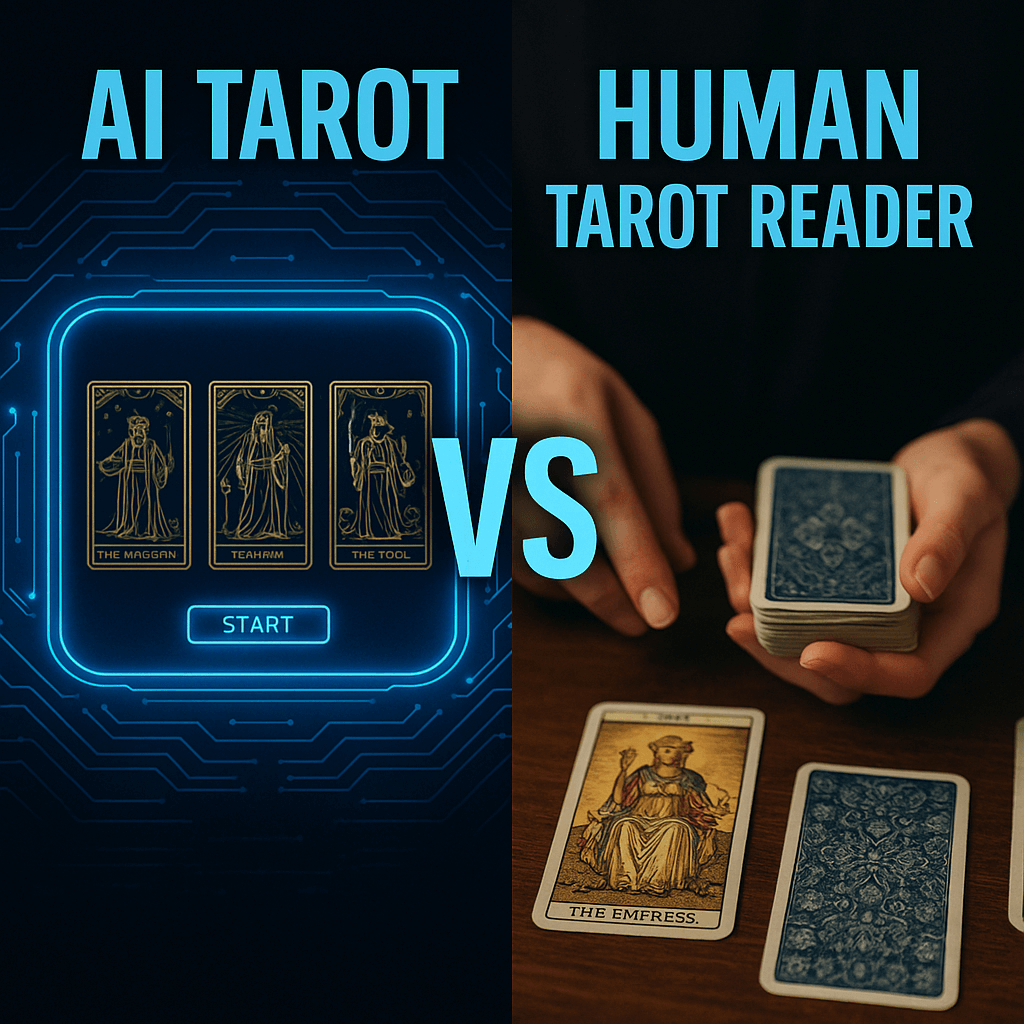
As artificial intelligence becomes more accessible, many people are comparing AI-generated tarot readings with traditional human tarot consultations. Both approaches aim to offer insight, reflection, and emotional clarity, yet they differ significantly in depth, communication style, and interpretive nuance. AI readings focus on pattern recognition, symbolism, and structured interpretations, while human readers offer emotional presence, intuitive perception, and relational guidance. Practitioners suggest that neither option is universally better—it depends on your goals, your comfort level, and the type of support you’re seeking.

💜 Need a clear answer right now?
CONSULT THE YES OR NO TAROT Free · No registration · Instant resultThis comprehensive guide explores the strengths and limitations of AI tarot versus human tarot readers across accuracy, emotional resonance, structure, cost, privacy, and accessibility. You’ll find comparison tables, practical tips, recommended use cases, and advice for choosing the right option based on your needs.
For those who enjoy face-to-face guidance, many sessions are available through local tarot options, which can be found using community resources like local tarot options. Others prefer digital flexibility and use structured tools such as online tarot sessions. Throughout this article, you’ll learn how both reading styles can contribute to thoughtful self-reflection without assuming predictions or guaranteed results.
What Is an AI Tarot Reading?
How AI Tarot Works
AI tarot systems rely on symbolism databases, card meanings, and pattern-matching algorithms. Many believe AI excels at consistency and structure because it draws from predefined interpretations.
Benefits of AI Readings
AI readings offer instant access, privacy, and affordability. Some find them useful for daily guidance or quick emotional check-ins.
Key Advantages of AI Tarot
- Instant availability
- Zero pressure or judgment
- Ideal for beginners
- Consistent card interpretations
What Is a Human Tarot Reading?
How Human Readers Interpret
Human tarot readers combine symbolism, intuition, emotional tone, body language, and contextual cues. Practitioners suggest human interpretation feels more flexible and emotionally aware.
Benefits of Human Readers
Human readers provide dialogue, empathy, clarification, and supportive presence. When discussing relational topics, some individuals also integrate tools like love tarot readings.
Key Advantages of Human Tarot
- Emotional resonance
- Personalized guidance
- Ability to adapt to tone and expression
- Intuitive depth
AI Tarot vs Human Tarot: Core Differences
Emotional Depth
AI delivers structured interpretation, but humans offer emotional nuance. Many clients appreciate compassionate presence during sensitive topics, which is something AI cannot replicate fully.
Flexibility & Personalization
AI systems follow formulas, while human readers adapt based on your mood, questions, and reactions.
Table: AI Tarot vs Human Tarot Overview
Table 1: Key Differences Between AI & Human Tarot
| Feature | AI Tarot | Human Tarot |
|---|---|---|
| Personalization | Limited | High |
| Emotional Insight | Structured only | Deep, intuitive |
| Cost | Free–Low | Low–High |
| Interaction | None | Real conversation |
| Consistency | Strong | Variable |
| Flexibility | Moderate | High |
Reading Formats for AI vs Human Tarot
Digital & Automated AI Tarot
AI readings are typically delivered through websites, apps, and digital tools. These formats are easy to access and ideal for quick symbolic insights.
Human Readings Across Formats
Human readers work across phone, video, online chat, and in-person sessions. Many who prefer seeing spreads visually choose formats like video readings, while others prefer privacy through phone readings.
Format Differences
- AI: instant, automated, consistent
- Human online: structured and interactive
- Human in-person: ritual-like and grounding
- Human video: expressive and visual
Some individuals choose human readers who are experienced interpreters, such as qualified professionals.
AI Tarot: Strengths & Limitations
Strengths of AI Tarot
AI systems excel at delivering structured meanings. They are especially helpful for:
When AI Works Best
- Daily guidance
- Quick card pulls
- Learning symbolism
- Private reflection
Limitations of AI Tarot
AI cannot respond to emotional tone or evolving conversation. It cannot detect hesitation, sadness, or excitement.
AI also cannot provide intuition comparable to supportive advisors such as reliable readers, who address sensitive or layered topics more gently.
Human Tarot Readers: Strengths & Limitations
Strengths of Human Readers
Human readers offer empathy, context, and emotional intelligence. Many believe this deepens the reflective experience.
Limitations of Human Readers
Interpretation style varies. Some readers may be overly intuitive, while others may be too structured. Communication is key.
When Human Tarot Works Best
- Relationship questions
- Emotional healing
- Life transitions
- Deep personal reflection
For those who enjoy in-person energy, sessions are often available through local tarot options, accessible via local tarot options.
Privacy, Comfort & Accessibility
Privacy Considerations
AI is extremely private, as there is no human interaction. People dealing with sensitive emotions sometimes prefer this.
Comfort Level
Some feel more comfortable with a caring human voice; others prefer AI because there is no judgment.
Accessibility Differences
AI is available 24/7. Human readers require scheduling, though many offer flexible online formats such as online tarot sessions.
Pricing & Value Comparison
AI Tarot Pricing
Most AI readings are free or extremely affordable.
Human Tarot Pricing
Costs vary based on length, experience, and format.
Table 2: AI vs Human Pricing Overview
| Format | AI Tarot | Human Tarot |
|---|---|---|
| Online | Free–$10 | $20–$60 |
| Phone | N/A | $20–$45 |
| Video | N/A | $25–$75 |
| In-Person | N/A | $40–$120 |
| Extended Readings | Free–$15 | $75–$150 |
Value Considerations
AI offers consistency and low cost, while human readers provide depth, nuance, and emotional clarity.
How Interpretation Style Differs
AI Interpretation
AI interpretations rely heavily on databases and structured keywords.
Human Interpretation
Human readers combine symbolism with tone, mood, and intuition. Some individuals consult tools such as their horoscope insights to expand symbolic meaning.
Differences You’ll Notice
- AI = structured explanation
- Human = intuitive conversation
- AI = fast
- Human = emotionally adaptive
Narrative Flow
Humans tend to build a narrative, whereas AI tends to provide linear, segmented interpretations.
When to Choose AI Tarot
You Want a Quick Answer
AI readings are ideal for rapid symbolic insight.
You Prefer No Emotional Interaction
Some clients find AI easier because it requires no vulnerability.
Best Uses for AI Tarot
- Daily cards
- Light reflection
- Learning meanings
- Experimentation
AI works well for people who enjoy symbolic self-guidance and prefer logical explanations.
When to Choose a Human Tarot Reader
You Need Emotional Clarity
Human readers excel when questions involve relationships, boundaries, or personal growth.
You Want an Interactive Session
Many believe human readers create a more meaningful dialogue that supports deeper questions.
Best Uses for Human Tarot
- Love and connection
- Career changes
- Life transitions
- Emotional healing
For relationship insights, some clients also explore tools such as love tarot readings.
How to Prepare for AI and Human Readings
Preparing for an AI Reading
Keep your questions open-ended and avoid yes/no phrasing. Many refine questions using strategies found in resources like local tarot options.
Preparing for a Human Reading
Reflect on what you want to explore emotionally. Human readers respond well to intention and honesty.
Preparation Tips
- Reflect on your goals
- Write 1–3 themes or questions
- Stay open to symbolic interpretation
- Avoid expecting predictions
Integrating Insights From Both Reading Types
Journaling Your Insights
Many believe journaling helps identify recurring themes across AI and human readings.
Monthly Reflection
Some clients compare tarot messages with their horoscope insights for symbolic layering.
Using Both Systems Together
AI for quick guidance
Human readers for deep exploration
Helpful Integration Practices
- Note repeating cards
- Track emotional patterns
- Revisit spreads during transitions
- Allow interpretations to evolve
Frequently Asked Questions
Are AI tarot readings accurate?
They provide structured symbolism but lack emotional nuance. Effectiveness depends on interpretation rather than prediction.
Are human tarot readers always better?
Not always. Human readers offer emotional clarity, but AI can be more consistent and private.
Do AI readings predict the future?
No. AI offers symbolic guidance, not predictions.
Are human readings more personal?
Yes. Human readers adapt to tone, context, and emotional cues.
Is AI better for beginners?
Often yes, because AI provides clear explanations and fast access.
Do human readers require preparation?
Basic intention or questions help, but it’s not required.
Can you combine AI and human tarot?
Absolutely. Many people use AI daily and human readings for deeper insight.
Which option is more affordable?
AI is usually free; human readings vary widely in price.
Conclusion
Both AI tarot and human tarot readers offer meaningful pathways to reflection, clarity, and emotional exploration. Many believe AI is ideal for quick, affordable, and private guidance, especially when learning symbolism or checking in with simple questions. Human readers, by contrast, provide emotional depth, intuitive support, and adaptable interpretation that can help with complex or sensitive topics.
Choosing between AI and human tarot readers depends on your goals, comfort level, and the type of insight you’re seeking. When used intentionally—separately or together—both approaches can contribute to personal awareness and balanced decision-making.
