

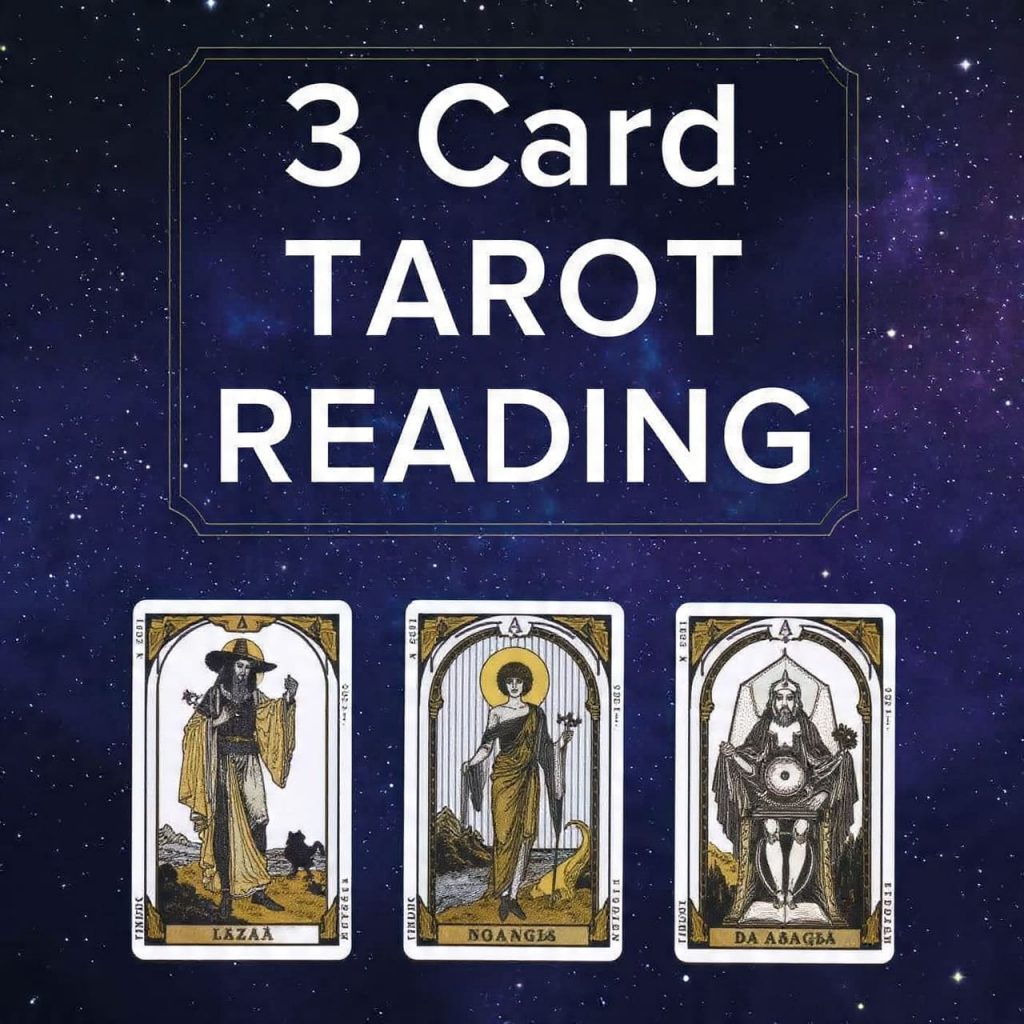
A 3 card tarot reading is one of the most widely used and enduring formats in tarot practice. Its appeal lies in balance: it offers more depth than a single-card draw while remaining far more approachable than large, complex spreads. Many believe the three-card structure creates a natural narrative, helping people understand how different influences relate to one another without overwhelming interpretation.

💜 Need a clear answer right now?
CONSULT THE YES OR NO TAROT Free · No registration · Instant resultPractitioners suggest that the three-card spread works well because it mirrors how humans process experience. We naturally think in sequences, contrasts, and relationships. Whether framed as past–present–future or situation–challenge–advice, the format provides structure while leaving room for intuition and reflection.
This article presents a detailed, informative exploration of the 3 card tarot reading. It explains how the spread works, the most common variations, benefits and limitations, practical interpretation guidance, and responsible use. The aim is clarity and credibility, positioning tarot as a reflective tool rather than a system of guaranteed answers.
What Is a 3 Card Tarot Reading?
Core structure and purpose
A 3 card tarot reading involves drawing three cards and assigning each one a specific position or role. These positions define how the cards are interpreted individually and in relation to each other. Many believe this structure brings coherence, turning three separate symbols into a meaningful narrative.
Practitioners often describe the three-card spread as a foundation for tarot learning. It introduces positional meaning, relational interpretation, and progression without requiring extensive memorization or advanced technique.
Why three cards are effective
Three is considered a practical number in tarot because it allows comparison and movement. One card introduces a theme, the second adds context or tension, and the third suggests direction or resolution. This dynamic makes the spread adaptable to many questions.
Unlike larger spreads, the three-card format encourages focus. Each card carries weight, which helps prevent scattered or overly complex interpretation.
Common situations where it is used
A 3 card tarot reading is commonly used for personal reflection, decision-making, emotional clarity, and learning tarot fundamentals. Its versatility makes it suitable for beginners and experienced readers alike.
Common 3 Card Tarot Spread Variations
Past, present, and future
The past–present–future spread is the most recognizable three-card layout. The first card reflects influences or experiences that have shaped the situation, the second represents current dynamics, and the third suggests a possible direction forward.
Practitioners emphasize that the “future” card reflects potential rather than certainty. Outcomes remain flexible and influenced by personal choice.
Situation, challenge, and advice
This variation focuses on understanding and response. The first card describes the current situation, the second highlights obstacles or tensions, and the third offers guidance on how to approach the issue.
Many believe this format is especially useful when seeking practical insight rather than prediction.
Mind, body, and spirit
Some readers use the three-card spread to explore internal balance. Each card represents a different aspect of experience, helping individuals reflect holistically rather than focusing on a single issue.
This variation is often used in personal growth or self-awareness readings.
How a 3 Card Tarot Reading Is Performed
Setting intention before drawing cards
A meaningful 3 card tarot reading begins with intention. Practitioners suggest clarifying the focus of the reading, whether it concerns a situation, emotion, or decision. Intention acts as a lens through which the cards are interpreted.
Using strategies explained in instant tarot for clearer questions helps ensure each card position remains relevant and grounded.
Drawing and placing the cards
After shuffling, three cards are drawn and placed in order, usually from left to right. Each position is assigned meaning before interpretation begins, which prevents retrofitting meanings to preferred outcomes.
This positional clarity supports consistent and ethical interpretation.
Interpreting the cards together
Interpretation involves more than reading each card individually. Practitioners emphasize observing how the cards interact, repeat themes, or contrast with one another. Progression and tension between cards often reveal the most insight.
Benefits of a 3 Card Tarot Reading
Balanced depth and simplicity
One of the main advantages of a three-card reading is balance. It offers enough depth to explore context while remaining manageable for focused reflection.
Many believe this balance makes the format ideal for both daily practice and more intentional readings.
Strong learning tool for beginners
For those learning tarot, the three-card spread introduces essential skills: positional meaning, narrative interpretation, and pattern recognition. Even qualified professionals often recommend this format as a foundation before moving to larger spreads.
Repeated use builds confidence and familiarity with card relationships.
Versatility across topics
The three-card format adapts easily to many topics, including emotions, decisions, and personal growth. Its flexibility allows readers to tailor spreads to specific needs without inventing complex layouts.
Limitations and Responsible Use
Why three cards cannot answer everything
Although versatile, a 3 card tarot reading has limits. Highly complex situations involving many variables may require more expansive exploration. Practitioners suggest viewing the three-card spread as a focused snapshot rather than a complete map.
Understanding this limitation helps manage expectations and avoid overinterpretation.
Avoiding dependency on repeated readings
Because three-card readings are relatively quick, some people may repeat them frequently for reassurance. Ethical tarot practice encourages reflection and action between readings rather than constant consultation.
Tarot works best as a support for awareness, not a replacement for judgment.
Knowing when to explore further
If a question remains unresolved, it may be appropriate to use a different spread or seek additional perspective. The three-card reading often serves as a starting point rather than a final answer.
3 Card Tarot Readings and Relationships
Reflective rather than predictive use
Relationship-focused three-card readings often explore dynamics, communication, or emotional patterns. Practitioners suggest framing questions around understanding rather than outcomes.
When used thoughtfully, love tarot readings within a three-card structure encourage self-awareness and emotional clarity.
Setting ethical boundaries
Interpreting cards about other people requires care. Ethical readers avoid making absolute claims about another person’s intentions or future actions.
The focus remains on the seeker’s perspective and choices.
Accessing 3 Card Tarot Readings Digitally
Online tarot platforms
Three-card tarot readings are widely available through online tarot sessions. These platforms often provide automated or guided interpretations that introduce the spread clearly.
Many believe digital formats are useful for learning and reflection when used thoughtfully.
Video-based interpretations
Some readers offer three-card explanations through video readings, allowing viewers to see the cards and hear interpretations simultaneously. This format can enhance understanding of imagery and symbolism.
Visual learners often find this approach especially helpful.
Phone-based tarot readings
Others prefer phone readings, where interpretation is communicated through conversation alone. Practitioners suggest this format emphasizes listening and conceptual understanding rather than visual cues.
Comparing 3 Card Readings With Other Formats
Three cards versus one card
One-card readings emphasize focus, while three-card readings add context and progression. Both formats are valuable depending on the situation.
The table below outlines key differences.
| Aspect | One Card Reading | 3 Card Tarot Reading |
|---|---|---|
| Number of cards | One | Three |
| Depth | Very focused | Moderate |
| Context | Limited | Clear progression |
| Best for | Daily insight | Situational clarity |
Three cards versus larger spreads
Larger spreads offer greater detail but require more time and interpretive skill. Three-card readings provide efficiency without sacrificing coherence.
Many practitioners view the three-card format as the most practical all-purpose spread.
Integrating 3 Card Tarot With Other Practices
Tarot and journaling
Journaling alongside three-card readings helps capture insights and track recurring themes. Writing interpretations often reveals connections that are not immediately obvious.
This practice supports long-term learning and reflection.
Tarot and astrology
Some people combine three-card tarot readings with horoscope insights to explore situational insight alongside broader cycles. This integration adds context without replacing tarot’s symbolic focus.
Building reflective routines
Because three-card readings are adaptable, they fit well into regular reflective routines. Weekly or monthly readings are common, allowing space for reflection between sessions.
Choosing Credible Interpretation and Guidance
Importance of reader ethics
When seeking interpretation beyond personal practice, transparency and ethical standards matter. Many people look for reliable readers who explain symbolism clearly and avoid exaggerated claims.
Credibility is often demonstrated through balanced language and respect for personal agency.
Learning from different interpretive styles
Observing how different readers interpret the same three-card spread can broaden understanding. Tarot’s flexibility becomes clearer when multiple perspectives are considered.
Preparing for a Meaningful 3 Card Tarot Reading
Framing effective questions
Clear questions support clearer interpretation. Practitioners suggest open-ended questions that focus on understanding rather than certainty.
Using strategies explained in instant tarot for clearer questions helps align the spread with tarot’s reflective strengths.
Creating a focused mindset
A brief pause before drawing cards can improve attention and reduce distraction. Even small moments of focus often enhance clarity.
Simple steps many practitioners suggest
Before beginning a three-card reading, consider the following.
- Clarify the question or theme
- Choose an appropriate spread structure
- Draw and place cards deliberately
- Interpret cards individually and together
These steps emphasize mindfulness and coherence.
Frequently Asked Questions
How long does a 3 card tarot reading take?
Most three-card readings take between 5 and 15 minutes, depending on depth of interpretation.
Are 3 card readings accurate?
Accuracy is subjective and usually measured by relevance and clarity rather than prediction.
Can beginners use a 3 card spread?
Yes, it is widely considered one of the best formats for beginners.
Is a three-card reading enough for serious questions?
It can provide perspective, but complex issues may benefit from deeper exploration.
Can three-card readings be done online?
Yes, they are commonly offered through digital platforms.
Should reversed cards be used?
This is optional and depends on personal preference.
How often should I do a 3 card reading?
Frequency varies, but reflection between readings is generally encouraged.
Conclusion
A 3 card tarot reading remains one of the most effective and versatile formats in tarot practice. Its strength lies in balance, offering enough structure to create meaningful narratives while remaining accessible and focused. When used responsibly, it supports reflection, learning, and perspective rather than certainty.
By understanding how three-card readings work, recognizing their benefits and limitations, and framing thoughtful questions, individuals can use this format as a reliable reflective tool. Whether practiced independently or with guidance, the three-card tarot spread continues to serve as a cornerstone of meaningful tarot interpretation.
