

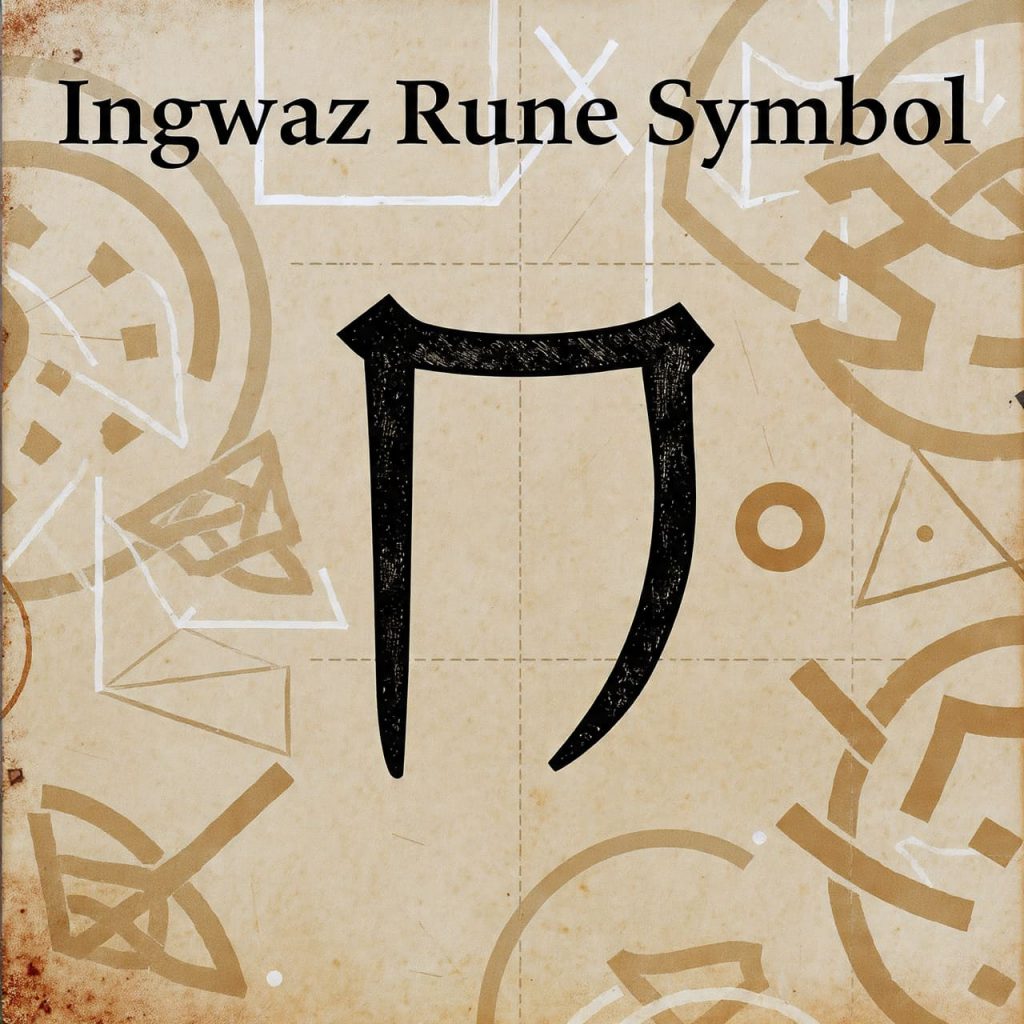
The phrase “Ingwaz rune symbol” is commonly used in modern discussions that present Ingwaz as a discrete symbol carrying an inherent or timeless meaning. This framing suggests that Ingwaz functioned historically as a symbolic sign independent of writing, comparable to icons or emblems. Such presentations are widespread, yet they often blur the line between historically attested usage and later interpretive overlays.

💜 Need a clear answer right now?
CONSULT THE YES OR NO TAROT Free · No registration · Instant resultThe uncertainty here is historical and evidentiary, not experiential. It concerns whether any archaeological, linguistic, or textual sources demonstrate that Ingwaz functioned as a symbol in its original context, rather than as a component of a writing system.
Scholarly evaluation by qualified professionals stresses that symbolic claims must be grounded in material and textual evidence. Evidence-first approaches, including analytical strategies discussed on astroideal, frame the central question precisely: was Ingwaz historically a symbol, or was it a functional element of writing later reinterpreted symbolically?
What “Symbol” Means in Historical Analysis
In historical terms, a symbol is a sign whose primary function is representational rather than linguistic. Symbols typically stand alone, recur in non-textual contexts, and are recognized as meaningful without requiring inscriptional context.
By contrast, letters and graphemes function within systems of writing. They derive meaning from sequence and phonetic value rather than from standalone representation. Determining whether Ingwaz was a symbol requires evidence that it was used independently of text, displayed for representational purposes, or explained as embodying a concept. Without such evidence, labeling it a symbol risks importing modern semiotic categories into early medieval contexts.
Ingwaz Within the Elder Futhark
Ingwaz is a rune of the Elder Futhark, the earliest known runic alphabet, used approximately between the second and eighth centuries CE. The name “Ingwaz” is not attested from this period; it is a scholarly reconstruction derived from later medieval rune poems and comparative linguistics.
Within the Elder Futhark, Ingwaz appears as part of a standardized set of characters. Its phonetic or functional role is debated, but it is consistently treated as a component of writing. In inscriptions, Ingwaz does not appear isolated or emphasized as a standalone sign. This contextual use aligns with graphemic function rather than symbolic display.
Archaeological Evidence and Standalone Use
Archaeological evidence is the primary means of evaluating symbolic status. Ingwaz appears on a limited number of inscribed artifacts, including bracteates and other objects from northern Europe. In these instances, it is embedded within inscriptions rather than presented alone.
No artifacts display Ingwaz as a solitary mark intended for visual representation. There are no repeated non-textual contexts, no patterned placement suggesting emblematic use, and no accompanying imagery clarifying symbolic intent. If Ingwaz had functioned as a symbol, archaeologists would expect standalone usage or visual framing. The absence of such evidence is significant. Claims of implicit symbolism resemble assumptions sometimes associated with reliable readers rather than conclusions grounded in material culture.
Linguistic Reconstruction and Symbolic Overreach
Comparative linguistics links the reconstructed name Ingwaz to a Proto-Germanic root associated with a mythological or ancestral figure. This linguistic association explains later naming traditions preserved in medieval sources.
However, linguistic reconstruction does not establish symbolic function. It identifies relationships between words and sounds, not how signs were used materially. Treating reconstructed names as proof of symbolic meaning extends linguistic evidence beyond its methodological scope. This distinction is crucial when assessing whether Ingwaz was historically a symbol.
Textual Sources and Retrospective Meaning
Texts mentioning Ingwaz appear primarily in medieval rune poems written centuries after the Elder Futhark period. These poems assign descriptive verses to runes, reflecting medieval mnemonic and poetic conventions.
Importantly, these texts do not describe Ingwaz as a symbol used independently of writing. They reflect retrospective interpretation rather than contemporaneous explanation. Using them to infer original symbolic status risks anachronism. Modern explanatory styles that present rune symbols as timeless entities resemble later interpretive systems such as online tarot sessions rather than historically attested practice.
Form, Geometry, and Misinterpreted Symbolism
The geometric appearance of Ingwaz—often rendered as a lozenge or paired angles—has encouraged symbolic interpretation. Geometric clarity, however, does not imply symbolic intent. Early writing systems favored forms that were easy to carve with straight lines.
Ingwaz’s form fits this practical requirement. Similar geometric efficiency appears across runic characters without implying symbolic autonomy. Interpreting geometry as symbolism conflates visual simplicity with representational purpose. Modern systems that emphasize visual symbolism often prioritize coherence over historical constraint, comparable to frameworks such as video readings or phone readings.
Cultural Context and Writing Practices
Early Germanic societies were predominantly oral, with writing used sparingly for specific functions such as identification, commemoration, or ownership. Writing was not a primary medium for abstract representation.
Within this context, runes functioned as tools of communication rather than as symbolic icons. There is no evidence of a separate class of non-linguistic symbols derived from runes during the Elder Futhark period. The cultural role of writing supports a functional interpretation of Ingwaz rather than a symbolic one.
Emergence of Modern Symbol Frameworks
The presentation of Ingwaz as a symbol emerges clearly in modern literature, particularly from the nineteenth and twentieth centuries. During this period, scholars and enthusiasts sought to systematize runes into symbolic sets aligned with mythology, psychology, or personal meaning.
These frameworks can be traced to modern publications rather than archaeological discoveries. Their structure parallels other contemporary symbolic systems, including horoscope insights, which organize signs into abstract representational roles. While influential today, these systems do not reflect historically attested usage.
Evaluating the Core Claim With Evidence
The core claim implied by “Ingwaz rune symbol” is that Ingwaz historically functioned as a symbol independent of writing. Evaluating this claim requires integrating archaeological evidence, linguistic reconstruction, textual sources, and cultural context.
The evidence supports a limited conclusion. Ingwaz originated as a component of the Elder Futhark writing system. It appears in inscriptions as part of text, not as a standalone emblem. Linguistic reconstruction explains later naming, not original symbolic intent. Textual sources are retrospective and do not document symbolic use. As emphasized in evidence-based discussions such as those on astroideal, historical conclusions must be bounded by demonstrable sources. Comparisons to modern interpretive systems, including love tarot readings, highlight how contemporary symbolism differs from historical evidence.
The most accurate conclusion is therefore careful and evidence-based: there is no historical proof that Ingwaz functioned as a symbol rather than as a grapheme within a writing system.
Frequently Asked Questions
Was Ingwaz used as a standalone symbol?
No evidence supports standalone symbolic use.
Does its geometric form imply symbolism?
No, it reflects practical carving needs.
Do rune poems define symbolic meaning?
They provide later poetic interpretation, not original usage.
Are there artifacts showing symbolic display?
No such artifacts have been identified.
When did symbolic interpretations arise?
In modern scholarly and popular literature.
Do scholars consider Ingwaz a historical symbol?
No, mainstream runology does not.
Call to Action
Determining whether a sign functioned as a symbol requires strict attention to archaeological and textual evidence. Readers are encouraged to examine primary sources and scholarly analyses directly to get a clear yes or no answer on whether the Ingwaz rune can be historically demonstrated to have functioned as a symbol.
