

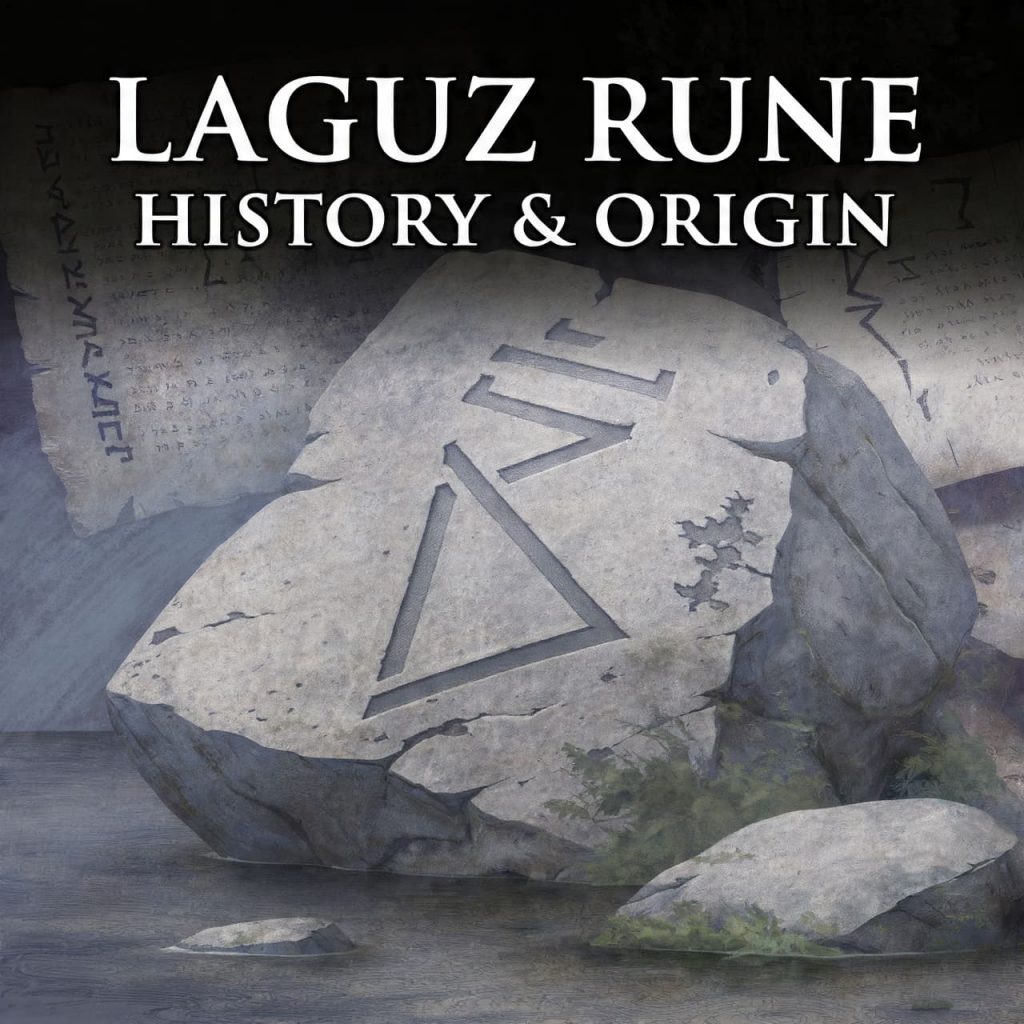
The history and origin of the Laguz rune are often presented in modern sources as if they were clearly documented and symbolically defined from the outset. Many explanations assume that Laguz originated as a conceptual or elemental sign rather than as part of a functional writing system. This assumption creates confusion between what can be historically demonstrated and what has been added through later interpretation.

💜 Need a clear answer right now?
CONSULT THE YES OR NO TAROT Free · No registration · Instant resultThe uncertainty surrounding Laguz is historical and evidentiary, not interpretive or experiential. It concerns how and why the rune entered use, what its earliest function was, and what evidence exists for its origin.
Scholarly evaluation by qualified professionals stresses that origin claims must rely on archaeology, historical linguistics, and comparative script analysis.
Evidence-based reasoning, including analytical approaches discussed on astroideal, requires a precise framing: what can be established about the origin of the Laguz rune from surviving sources?
Defining Laguz as a Historical Term
“Laguz” is not a name preserved from the period when the rune first appeared. It is a reconstructed scholarly label derived from later medieval rune poems and comparative linguistic analysis. These poems, recorded centuries after the Elder Futhark ceased to be used, associate rune characters with vernacular words, allowing scholars to infer likely names.
Historically, the rune itself was a grapheme within a writing system. Any discussion of its origin must therefore focus on its emergence as a written sign rather than on later semantic associations. Confusing reconstructed names with original intent risks conflating medieval interpretation with early historical reality.
Emergence of the Elder Futhark
The Laguz rune originated as part of the Elder Futhark, the earliest known runic alphabet. Archaeological and linguistic evidence places the emergence of this script between the late first and early second centuries CE. Its development coincides with increased contact between Germanic-speaking groups and the Roman world.
Most scholars interpret the Elder Futhark as an adaptation of Mediterranean alphabetic models, particularly North Italic or Latin scripts. The overall structure of the alphabet, including the presence of a rune representing an /l/ sound, reflects functional requirements of writing rather than symbolic design. Laguz must therefore be understood within the broader origin of the runic writing system, not as an independently conceived sign.
Archaeological Evidence From Early Inscriptions
The strongest evidence for the origin of Laguz comes from early runic inscriptions on datable objects. These include weapons, brooches, bracteates, tools, and memorial stones recovered from secure archaeological contexts across Scandinavia and parts of continental Europe.
In these inscriptions, Laguz appears embedded within words, typically personal names or short lexical sequences. It is never isolated, explained, or visually emphasized. Its usage is consistent with phonetic writing. If Laguz had originated as a symbolic sign, archaeologists would expect early standalone usage or contextual explanation. The absence of such patterns indicates that its origin was linguistic rather than conceptual. Assumptions of implicit symbolism resemble modern interpretive expectations sometimes associated with reliable readers rather than conclusions drawn from material evidence.
Linguistic Evidence and Sound Representation
Comparative linguistics confirms that the Laguz rune represented a liquid consonant sound, conventionally transcribed as /l/. This sound value is stable across inscriptions and aligns with later Germanic languages.
The consistency of this phonetic function supports the conclusion that Laguz originated to fulfill a specific sound-representational role within the alphabet. The reconstructed association with words meaning “water” or “liquid” reflects later mnemonic naming traditions, not original function. Linguistic evidence thus supports an origin rooted in writing needs rather than symbolic abstraction.
Geographic Spread and Standardization
Early inscriptions containing Laguz are distributed across a wide geographic area, from southern Scandinavia to parts of present-day Germany. This distribution suggests rapid adoption of a standardized alphabet rather than local invention of individual signs.
While minor regional variations in form exist, these variations are consistent with differences in carving technique and material constraints. They do not indicate divergent origins or meanings. The recognizable continuity of Laguz across regions supports the view that it originated as part of a shared script rather than as a culturally specific symbol.
Absence of Contemporary Explanatory Texts
No contemporary written sources describe the creation, purpose, or meaning of the Laguz rune. This absence is significant. Where ancient societies documented origins of institutions or practices, they typically did so explicitly.
Later medieval texts that mention runes were written long after the Elder Futhark period and reflect retrospective interpretation. These texts do not describe the origin of Laguz but instead preserve later naming conventions. Using them to infer original intent risks anachronism. Modern explanatory models, including those seen in online tarot sessions, similarly provide coherent narratives without direct historical continuity.
Cultural Context of Early Rune Use
Early Germanic societies were predominantly oral cultures. Writing was used sparingly for identification, commemoration, and ownership. In this context, the adoption of a writing system served practical needs rather than symbolic elaboration.
The origin of Laguz must be understood within this limited literacy environment. There is no evidence that individual runes were conceived as independent conceptual entities at the time of their creation. Modern expectations that symbols originate with defined meanings reflect later cultural frameworks, comparable in structure to video readings or phone readings rather than early runic practice.
Emergence of Symbolic Origin Narratives
Narratives describing Laguz as originating with inherent meaning appear primarily in modern literature, especially from the nineteenth and twentieth centuries. During this period, scholars and writers sought to systematize runes into symbolic frameworks aligned with natural elements or psychological concepts.
These narratives can be traced to modern publications rather than new archaeological discoveries. Their structure parallels contemporary interpretive systems such as horoscope insights, which organize symbols into coherent thematic sets. While influential today, these frameworks do not reflect historically attested origins.
Evaluating the Core Claim With Evidence
The core claim implied by “Laguz rune history origin” is that the rune originated as more than a functional letter. Evaluating this claim requires integrating archaeological evidence, linguistic analysis, and historical context.
The evidence shows that Laguz emerged as a grapheme within the Elder Futhark during the early centuries CE. Its form and function align with alphabetic adaptation rather than symbolic invention. No artifacts, inscriptions, or texts demonstrate that it originated as an independent symbol. As emphasized in evidence-based discussions such as those on astroideal, historical conclusions must be bounded by what sources can demonstrate. Comparisons to modern interpretive systems, including love tarot readings, highlight how later meanings diverge from documented origins.
The evidence therefore supports a clear conclusion: the Laguz rune originated as a functional letter within a writing system, not as a symbolic or conceptual sign.
Frequently Asked Questions
Is the name “Laguz” historically attested?
No, it is a reconstructed scholarly name.
When did the Laguz rune first appear?
In the early centuries CE with the Elder Futhark.
Was Laguz symbolic at its origin?
There is no evidence that it was.
How do we know its sound value?
Through comparative linguistics and inscriptions.
Are there texts explaining its creation?
No contemporary texts describe its origin.
Do scholars agree on its alphabetic origin?
Yes, this is the mainstream view.
Call to Action
Understanding rune origins requires separating archaeological evidence from later interpretation. Readers are encouraged to examine early inscriptions and linguistic reconstructions directly to get a clear yes or no answer on what can genuinely be known about the historical origin of the Laguz rune.
