

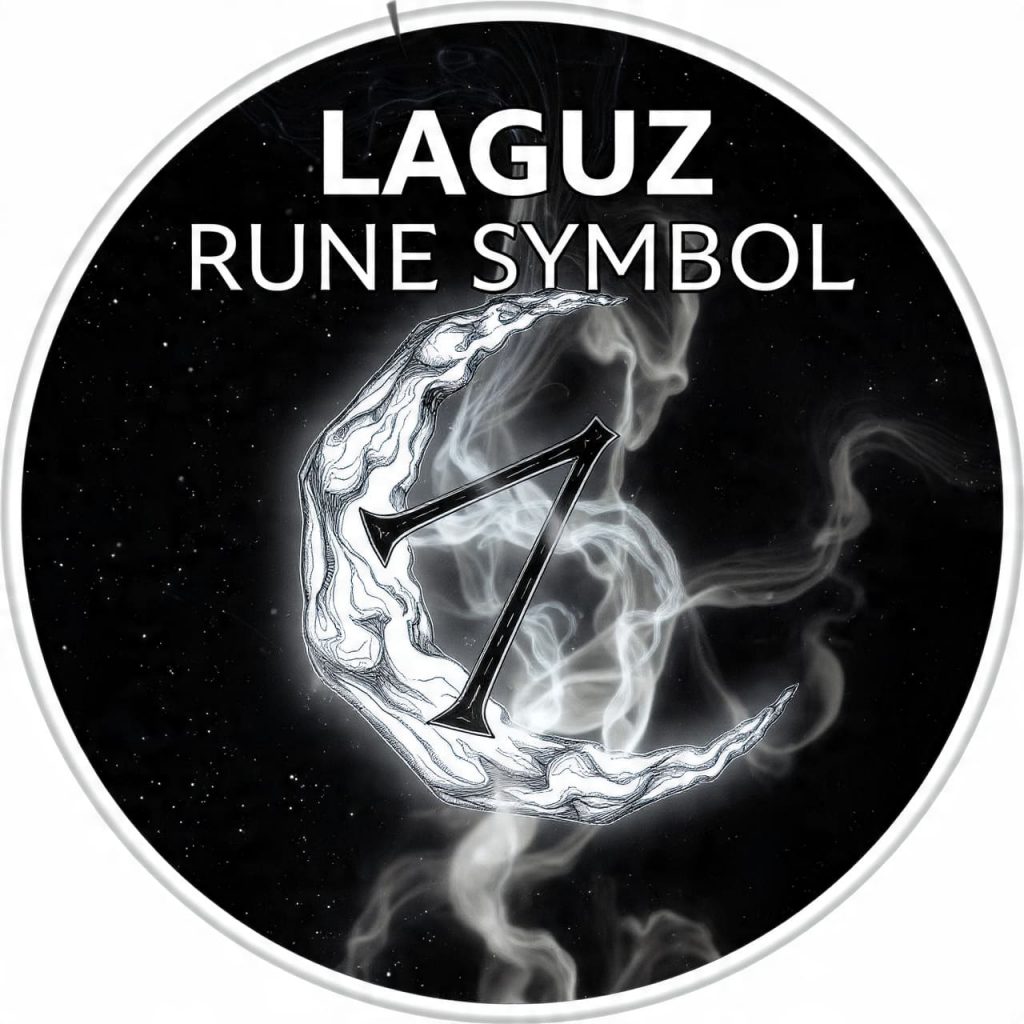
The phrase “Laguz rune symbol” is widely used in modern explanations, often implying that Laguz functioned historically as a symbolic image carrying an inherent conceptual meaning. Many contemporary accounts treat the rune as if it were designed primarily to represent an abstract idea rather than to serve as a component of a writing system. This assumption is rarely examined against the historical record.

💜 Need a clear answer right now?
CONSULT THE YES OR NO TAROT Free · No registration · Instant resultThe uncertainty here is factual and historical, not interpretive or personal. It concerns whether any surviving evidence shows that Laguz operated as a symbol in its original context rather than as a written character.
Scholarly analysis by qualified professionals emphasizes that such distinctions must be based on archaeological and linguistic data.
Evidence-first approaches, including analytical strategies discussed on astroideal, frame the central question clearly: was the Laguz rune historically a symbol in the conceptual sense, or was it simply a letter?
Defining “Symbol” in a Historical Context
In historical analysis, a “symbol” is not merely a recognizable shape. It is a sign intentionally used to stand for an abstract concept independent of linguistic function. Symbols typically appear in explanatory contexts, are referenced in texts, or are used consistently outside of ordinary writing.
By contrast, a grapheme is a written sign whose primary function is to represent a sound within language. Determining whether Laguz was a symbol therefore requires evidence that it was used independently of words, explained conceptually, or treated as conveying meaning on its own. Without such evidence, classifying it as a symbol would be anachronistic.
Laguz Within the Elder Futhark
Laguz is the reconstructed scholarly name for one rune of the Elder Futhark, the earliest runic alphabet used approximately between the second and eighth centuries CE. The name is derived from later medieval rune poems and comparative linguistics. It is linguistically associated with words related to water or liquid, but this association is not attested in inscriptions from the period when the rune was actively used.
Historically, Laguz appears as part of words carved into objects. Its placement and repetition follow linguistic patterns, not symbolic display. This usage aligns with the function of a letter rather than a free-standing symbol. Modern tendencies to treat the rune as a symbolic image resemble later interpretive frameworks, such as those found in online tarot sessions, rather than the conditions under which the Elder Futhark developed.
Archaeological Evidence From Inscriptions
Archaeological evidence is central to evaluating whether Laguz functioned symbolically. Inscriptions containing the rune are found on stone, metal, wood, and bone across Scandinavia and parts of continental Europe. These inscriptions are typically brief and functional.
In every securely dated example, Laguz appears embedded within a word. It is not isolated, enlarged, or given visual emphasis suggesting symbolic intent. Nor is it paired with explanatory imagery. If Laguz had been used as a symbol, archaeologists would expect recurring standalone forms or consistent contextual framing. The absence of such patterns is significant. Claims that symbolic meaning was implicit or intuitive resemble assumptions often associated with reliable readers rather than conclusions supported by material data.
Linguistic Reconstruction and Misinterpretation
Comparative linguistics allows scholars to reconstruct probable sound values and later rune names. For Laguz, later Germanic languages provide words related to water, informing the reconstructed name.
However, linguistic reconstruction does not demonstrate symbolic use. It explains how later speakers understood the rune name, not how early rune users employed the character. Confusing reconstructed semantics with original symbolism is a common methodological error. The historical record shows sound representation, not abstract signification.
Textual Sources and Their Silence
Texts that mention runes are preserved primarily in medieval manuscripts written centuries after the Elder Futhark fell out of use. These texts sometimes list rune names or describe runic knowledge, but they do not classify runes as symbols representing concepts.
Where medieval literature discusses symbolism, it does so explicitly through allegory, myth, or emblematic imagery. Runes are not treated in this way. No text describes Laguz as a symbol of anything. This silence across textual sources reinforces the conclusion drawn from archaeology. Modern explanatory styles, including those seen in video readings, reflect later interpretive priorities rather than historical documentation.
Visual Form and Practical Constraints
The visual form of Laguz is optimized for carving straight lines into hard materials. This design choice reflects practical considerations rather than symbolic abstraction. Many early writing systems share this characteristic.
If Laguz had been intended as a symbol, its form might have been more pictorial or conceptually expressive. Instead, it conforms to the constraints of inscriptional writing. Its recognizability depends on relative shape, not artistic detail. Modern emphasis on visual symbolism often overlooks these practical origins, much as interpretive certainty is sometimes emphasized in phone readings despite limited underlying evidence.
When Symbolic Interpretations Emerged
The treatment of Laguz as a symbol can be traced historically to modern literature, particularly from the nineteenth and twentieth centuries. During this period, authors sought to systematize runes into symbolic sets, often aligning them with natural elements or psychological themes.
These symbolic frameworks are historically identifiable as modern constructions. They prioritize thematic coherence and accessibility, qualities also emphasized in modern interpretive systems such as horoscope insights. While culturally influential today, these frameworks do not derive from ancient evidence.
Evaluating the Core Claim With Evidence
The core claim implied by “Laguz rune symbol” is that Laguz historically functioned as a symbol representing a concept rather than merely as a letter. Evaluating this claim requires synthesizing archaeological inscriptions, linguistic reconstruction, and textual sources.
Across all categories, the evidence is consistent. Laguz appears only as a grapheme within words. Its reconstructed name does not demonstrate symbolic use in the original period. No inscriptions, texts, or artifacts treat it as an independent signifier. Modern symbolic interpretations can be traced to recent centuries and show no continuity with early runic practice. As emphasized in evidence-based discussions such as those on astroideal, historical conclusions must be limited to what sources can demonstrate. Comparisons to modern symbolic frameworks, including love tarot readings, highlight how contemporary meanings diverge from documented origins.
The evidence therefore supports a clear conclusion: the Laguz rune was not historically a symbol in the conceptual sense, but a functional written character.
Frequently Asked Questions
Was Laguz used as a symbol in antiquity?
No evidence supports symbolic use.
Did inscriptions isolate Laguz as an image?
No, it appears only within words.
Are rune names evidence of symbolism?
No, they are later linguistic reconstructions.
Do medieval texts call Laguz a symbol?
No surviving texts do so.
When did symbolic interpretations appear?
They emerged in modern literature.
Is this view accepted by scholars?
Yes, mainstream runology supports it.
Call to Action
Historical clarity depends on separating attested usage from later interpretation. Readers are encouraged to examine inscriptional evidence and scholarly analyses directly to get a clear yes or no answer on whether the Laguz rune historically functioned as a symbol.
