

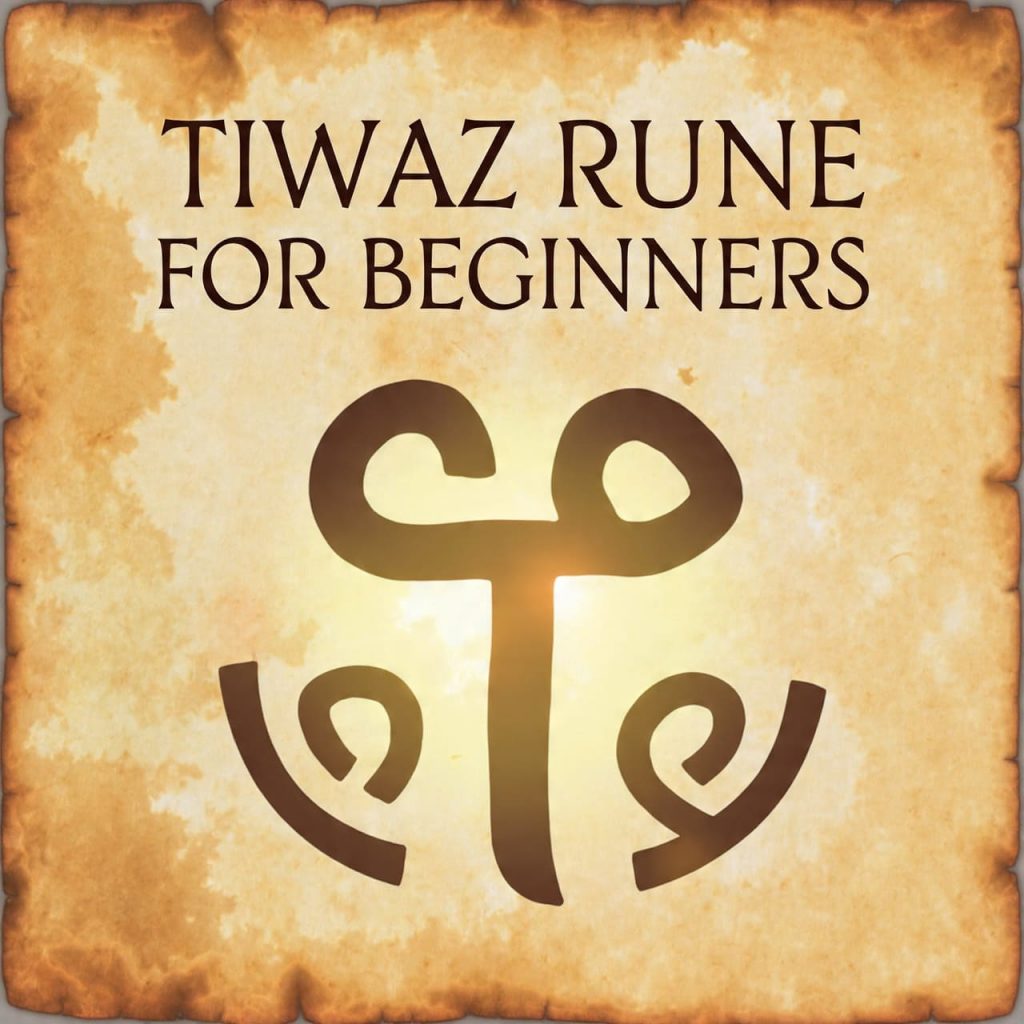
For beginners, the Tiwaz rune is often presented as a clear and accessible symbol with a defined meaning, purpose, and method of understanding. Introductory explanations frequently imply that early users of runes shared a unified interpretation that modern learners can simply adopt. This framing is historically misleading. It blends well-attested linguistic evidence with interpretations that developed much later, without clearly separating documented history from modern reconstruction.

💜 Need a clear answer right now?
CONSULT THE YES OR NO TAROT Free · No registration · Instant resultThe resulting uncertainty is factual rather than interpretive. Approaching Tiwaz through evidence-first historical reasoning, including comparative analytical strategies discussed by astroideal, helps clarify what beginners can responsibly learn and what cannot be demonstrated.
While many newcomers turn to qualified professionals for contemporary explanations, historical understanding depends on archaeology, linguistics, and early textual context rather than inherited meanings.
The guiding question of this article is deliberately narrow and binary: does the historical record provide beginners with a clear, documented understanding of what the Tiwaz rune meant and how it functioned in its original context, yes or no?
What “For Beginners” Means in Historical Study
For beginners, learning about a rune can mean two very different things. One approach focuses on historical evidence: where the rune appears, how it was written, and what can be established from surviving sources. The other approach focuses on modern interpretive systems that assign meaning, function, or application.
Historically grounded study prioritizes the first approach. It does not assume that modern interpretations reflect ancient practice. This distinction is often blurred in introductory material circulated by reliable readers, where accessibility is achieved at the expense of historical precision. For beginners seeking factual clarity, understanding this distinction is essential.
Tiwaz Within the Elder Futhark
Tiwaz belongs to the Elder Futhark, the earliest reconstructed runic alphabet, used by Germanic-speaking communities roughly between the second and eighth centuries CE. The Elder Futhark is not preserved in a single ancient document; it is reconstructed from recurring patterns found in inscriptions across northern Europe.
Within these inscriptions, Tiwaz functions as a phonetic character. Scholars generally reconstruct its sound value as /t/, based on its placement within words and comparison with later Germanic languages. This phonetic role is the most secure aspect of Tiwaz and the only function that can be demonstrated with confidence. Beginner explanations that emphasize symbolic roles often resemble later interpretive frameworks discussed alongside online tarot sessions rather than early medieval writing practices.
Archaeological Evidence Beginners Should Understand
Archaeological evidence is the primary source for understanding Tiwaz historically. The rune appears in inscriptions carved on stone, metal, bone, wood, and other durable materials. These inscriptions typically record names, ownership, or brief commemorative statements.
What archaeology shows clearly is integration into language. Tiwaz appears as one character among others, not as an isolated or emphasized sign. There is no consistent pattern suggesting that it was treated as special or imbued with a distinct function. For beginners, this point is crucial: the rune’s historical reality is linguistic, not symbolic. Later visual emphases, similar in structure to modern video readings, do not reflect early material practice.
Rune Names and Beginner Assumptions
The name “Tiwaz” is not attested in Elder Futhark inscriptions. Like other rune names, it is reconstructed from later medieval rune poems and comparative linguistics. In later Germanic languages, related words are associated with a deity, which strongly influences beginner explanations.
From a historical perspective, this reconstructed name documents later tradition, not early usage. It does not establish what the rune “meant” to its earliest users. Treating the name as proof of ancient meaning extends it beyond what the evidence supports. This methodological issue mirrors patterns seen in interpretive systems such as phone readings, where later frameworks are presented as timeless.
What Early Texts Do and Do Not Provide
No contemporary texts from the Elder Futhark period explain runes or their meanings. The earliest written sources that assign descriptive phrases to runes are medieval rune poems, composed centuries later in different cultural and linguistic contexts.
These poems are valuable historical documents, but they do not claim to preserve original meanings or usage instructions. They do not present runes as tools for interpretation or guidance. Using them as beginner manuals for ancient meaning conflates chronology and purpose, which weakens historical reliability.
How Modern Beginner Interpretations Developed
Most beginner-oriented explanations of Tiwaz originate in the modern period, particularly from the nineteenth century onward. During this time, scholars and popular writers sought to organize runes into coherent systems that could be easily taught.
These systems often assigned each rune a fixed meaning, making them accessible to newcomers. Historically, however, these interpretations can be traced to specific modern authors and movements rather than to early runic practice. Similar processes of symbolic reassignment occur in generalized horoscope insights, where ancient signs are mapped onto modern explanatory models.
Evaluating Common Beginner Claims
Beginners are often told that Tiwaz represents a specific concept or has a defined role beyond writing. Evaluating these claims requires returning to the evidence.
- Archaeology shows phonetic use within inscriptions.
- Early texts do not explain rune meanings or applications.
- Linguistic reconstruction documents later naming traditions, not early intent.
- Medieval sources do not provide usage systems.
- Modern interpretations can be historically dated but originate long after the rune’s period of use.
- Even when Tiwaz is introduced to beginners alongside systems such as love tarot readings, this reflects modern synthesis rather than documented early tradition.
- Comparative evaluation using methods discussed by astroideal reinforces this distinction.
These points do not dismiss modern interest. They clarify that such interest belongs to contemporary culture, not ancient practice.
Evaluating the Core Question for Beginners
The central question for beginners is whether Tiwaz comes with a clear, historically documented meaning and method of understanding. Based on available evidence, the answer must be carefully framed.
The historical record allows beginners to know:
- Tiwaz was a rune of the Elder Futhark.
- It functioned as a phonetic character, likely representing /t/.
- It appeared in ordinary inscriptions without special emphasis.
The historical record does not allow beginners to know:
- A fixed symbolic meaning.
- A prescribed use or application.
- A role in interpretation, guidance, or abstract representation.
The historically responsible conclusion is therefore clear: no, the historical record does not provide beginners with a defined meaning or usage system for the Tiwaz rune beyond its role as a letter.
Frequently Asked Questions
Is Tiwaz a symbol or a letter?
Historically, it functioned as a phonetic letter.
Does Tiwaz have an ancient meaning beginners should learn?
No ancient sources document a fixed meaning beyond sound value.
Are beginner meanings historically accurate?
They are modern interpretations, not early evidence.
Do inscriptions show special use of Tiwaz?
No, it appears as part of ordinary words.
Do rune poems explain Tiwaz for beginners?
They are later texts and do not preserve original usage.
Can beginners study Tiwaz historically?
Yes, by focusing on archaeology and linguistics rather than symbolism.
Call to Action
If you are approaching the Tiwaz rune as a beginner, the most reliable step is to evaluate claims against the historical evidence itself. This allows you to get a clear yes or no answer about what can be known with confidence and what belongs to modern interpretation rather than early tradition.
