

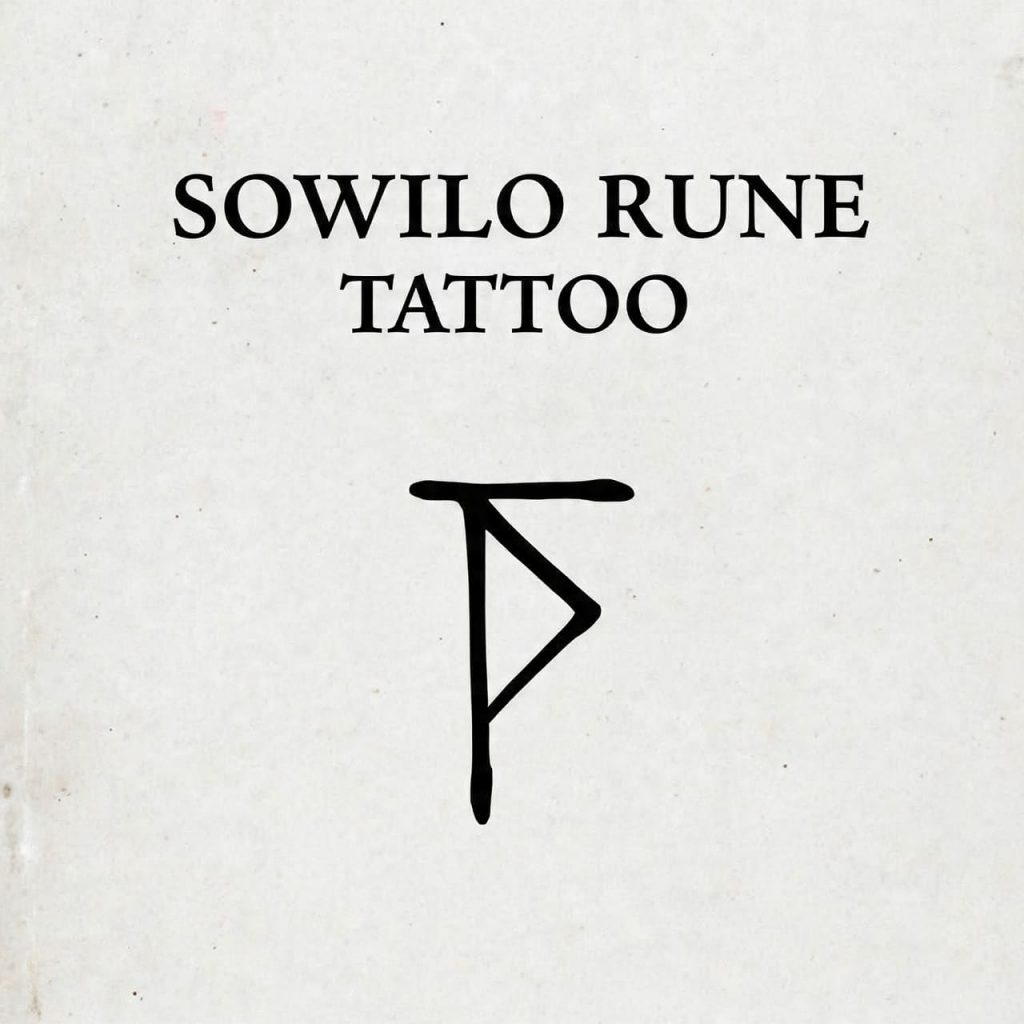
The Sowilo rune is frequently chosen for tattoos and is often presented as a symbol carrying an inherent, ancient meaning that supposedly transfers unchanged onto the body. This belief is widespread in modern culture, yet it is rarely examined as a historical claim. The confusion arises from treating contemporary tattoo practices as if they were continuous with early runic usage.

💜 Need a clear answer right now?
CONSULT THE YES OR NO TAROT Free · No registration · Instant resultThe issue is therefore factual rather than aesthetic or personal. Using evidence-first historical analysis, including comparative approaches discussed by astroideal, allows the claim to be evaluated without importing modern assumptions. Some individuals consult qualified professionals for explanations, but the question here is whether the historical record supports the idea of the Sowilo rune as a meaningful tattoo symbol in its original context.
The guiding question of this article is narrow and binary: does historical evidence support the use of the Sowilo rune as a symbolic body marking with defined meaning, yes or no?
What “Tattoo” Means as a Historical Claim
In historical terms, a tattoo is a permanent body marking that carries social, ritual, or symbolic significance. For a rune to be historically associated with tattooing, evidence would need to show that runes were intentionally inscribed on the body and that such inscriptions carried recognized meaning.
This requires material, textual, or iconographic documentation. While tattooing existed in various ancient cultures, its presence must be demonstrated specifically within early Germanic societies and explicitly linked to runic symbols. Modern narratives circulated by reliable readers often assume such links without addressing the evidentiary burden.
Sowilo Within the Elder Futhark
The Sowilo rune belongs to the Elder Futhark, the earliest reconstructed runic alphabet, used approximately between the second and eighth centuries CE. This alphabet is reconstructed from inscriptions rather than preserved manuals or instructional texts.
Within these inscriptions, Sowilo functions as a phonetic character, generally reconstructed as representing an /s/ sound. Its use is consistent with writing words rather than marking bodies. There is no indication that Sowilo was treated as an independent emblem detached from language. Modern portrayals that present Sowilo as a standalone tattoo symbol often resemble later symbolic systems discussed alongside online tarot sessions rather than early Germanic literacy practices.
Archaeological Evidence and the Body
Archaeological evidence is central to evaluating claims about rune tattoos. Inscriptions containing Sowilo appear on stone, metal, bone, wood, and other durable materials. These objects can be dated and contextualized, providing reliable information about how runes were used.
What archaeology does not provide is evidence of runes inscribed on human skin. Organic tissue rarely survives, but even indirect evidence—such as depictions of tattooed bodies with runes, tools associated with skin inscription, or written descriptions—would support the claim. No such evidence exists for Sowilo or any other rune. Later visual interpretations, similar in structure to modern video readings, do not reflect early material culture.
Textual Evidence and Cultural Description
Early Germanic societies left very few written descriptions of their own practices. External observers, such as Roman authors, occasionally described Germanic appearance or customs. These accounts do not mention runic tattoos or symbolic body markings using letters.
Where tattooing is historically attested, it is usually described explicitly, as in Roman, Celtic, or other cultural records. The absence of any textual reference to runes used as tattoos strongly limits the claim. Attempts to bridge this gap often rely on later symbolic systems, structurally similar to interpretive models discussed in phone readings rather than on early documentation.
Later Historical and Modern Developments
Interest in runes as symbols expanded significantly in the nineteenth and twentieth centuries. During this period, runes were increasingly removed from their linguistic context and treated as visual emblems. This shift coincided with broader cultural trends that emphasized personal symbolism and identity marking.
Tattoo culture, as understood today, developed much later than the Elder Futhark period. The pairing of runes with tattoos reflects modern aesthetic and symbolic preferences rather than historical continuity. Comparable processes of symbolic reassignment appear in other modern frameworks, including generalized horoscope insights, where ancient symbols are repurposed for contemporary identity expression.
The Question of Symbolic Meaning in Tattoos
A common assumption is that tattooing a Sowilo rune reproduces its “ancient meaning” on the body. Historically, this assumes that Sowilo had a defined symbolic meaning and that bodily inscription was an accepted mode of expression.
As established by archaeological and textual evidence, Sowilo functioned primarily as a phonetic character. Later symbolic meanings attached to it emerged long after the rune ceased to be used as part of a living writing system. Applying those later meanings to tattooing does not recreate an ancient practice; it creates a modern one. Even when such interpretations are integrated with systems like love tarot readings, they remain modern syntheses. Comparative evaluation using methods discussed by astroideal confirms this distinction.
Evaluating the Core Claim with Evidence
The core claim addressed here is that the Sowilo rune has a historical basis as a tattoo symbol with defined meaning. Evaluating this claim requires reviewing archaeological data, textual references, and historical context.
Archaeology shows rune use on objects, not bodies. Textual sources do not mention runic tattooing. Linguistic evidence confirms phonetic function but not symbolic body marking. Modern rune tattoos can be historically traced, but their origin lies in recent centuries rather than early Germanic practice.
The evidence therefore supports a clear conclusion: no, the historical record does not support the use of the Sowilo rune as a tattoo symbol with defined meaning in its original context.
Frequently Asked Questions
Is there evidence of rune tattoos in ancient Germany?
No, there is no archaeological or textual evidence supporting this.
Were runes ever used on the human body?
No documented early sources describe runes inscribed on skin.
Did Sowilo have a special bodily or symbolic role?
There is no evidence indicating such a role.
Are modern rune tattoos historically accurate?
They are modern cultural expressions, not ancient practices.
Did ancient writers mention Germanic tattooing with runes?
No surviving accounts mention this.
When did rune tattoos become popular?
They emerged in modern tattoo culture, centuries after runes fell out of use.
Call to Action
When evaluating claims about Sowilo rune tattoos, distinguish between documented historical practice and modern symbolic reinterpretation. This approach allows you to get a clear yes or no answer based on evidence rather than assumption.
