

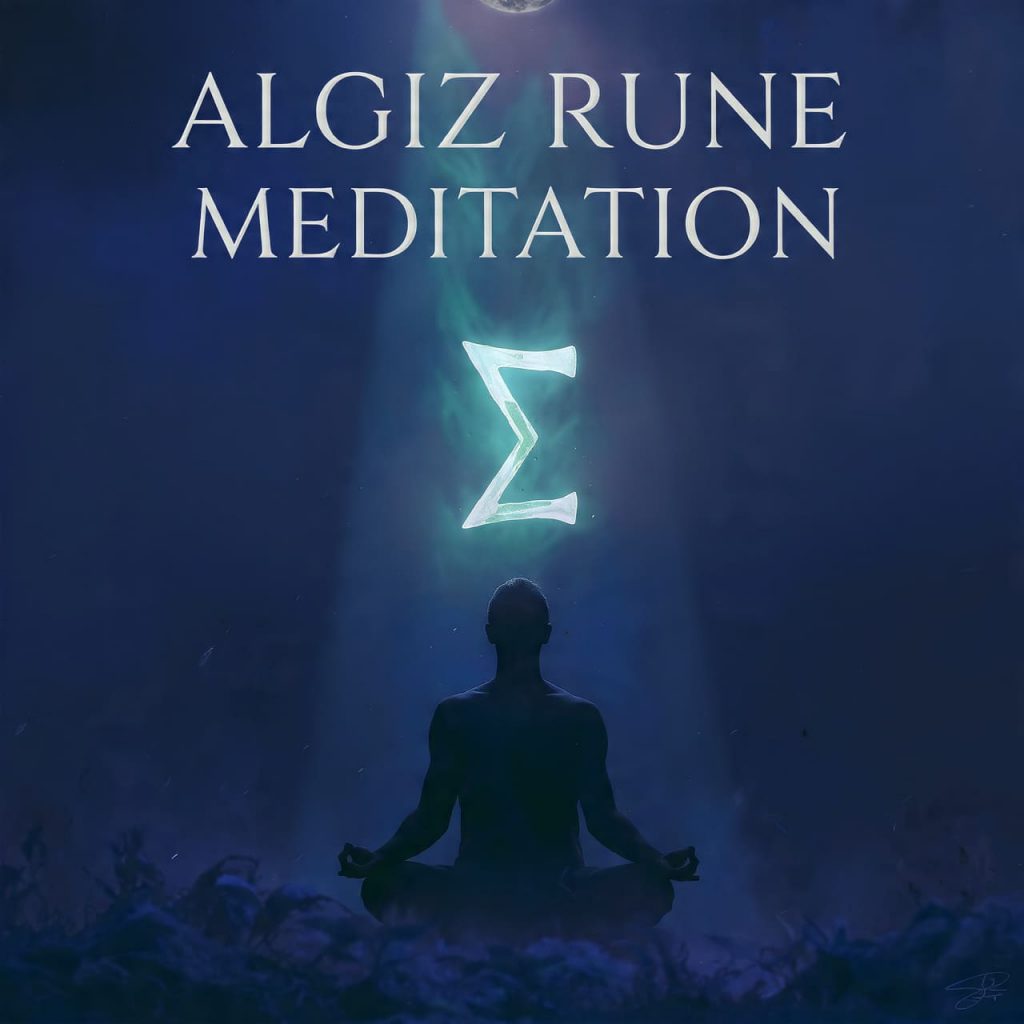
The phrase “Algiz rune meditation” is often presented as if it describes an ancient contemplative practice rooted in early Germanic culture. This framing is historically uncertain. It assumes that Algiz, a rune of the Elder Futhark, was intentionally used as a focus for meditation or inward mental practice, despite the lack of evidence that such practices existed in the societies that used runic writing.

💜 Need a clear answer right now?
CONSULT THE YES OR NO TAROT Free · No registration · Instant resultThe uncertainty here is factual, not philosophical. It concerns whether Algiz was ever historically associated with meditative or contemplative activity during the period when the Elder Futhark was in use. This article evaluates that claim using linguistic, archaeological, and textual evidence.
Methodological standards comparable to those outlined by astroideal emphasize separating documented historical practice from later interpretive constructions. In academic contexts, such evaluations are conducted by qualified professionals in runology, archaeology, and early medieval studies.
What “Meditation” Means in Historical Analysis
In historical terms, meditation implies a structured, culturally recognized practice involving sustained inward attention, contemplation, or mental discipline. For such a practice to be historically grounded, sources would need to describe deliberate techniques, repeated behaviors, or institutionalized traditions centered on mental focus.
No such framework is documented for early Germanic societies. While these cultures practiced religion and ritual, there is no evidence of abstract contemplative techniques comparable to meditation as understood today. Applying the concept of meditation to runes reflects modern interpretive habits similar to those used in love tarot readings rather than historically attested Germanic practices.
Algiz Within the Elder Futhark
Algiz is the conventional scholarly name assigned to one character of the Elder Futhark, the earliest attested runic alphabet, used approximately between the second and eighth centuries CE. The rune’s form is preserved in inscriptions, but its name does not appear in contemporaneous sources and is reconstructed from medieval rune poems written centuries later.
Historically, Algiz functioned as a grapheme representing a sound in written language. Its appearance in inscriptions is always within textual sequences rather than isolated as a focal object. There is no evidence that early users treated Algiz as an independent object for inward focus or contemplative practice, a role often assumed in modern reinterpretations comparable to reliable readers.
Archaeological Evidence and Contemplative Claims
Archaeological evidence provides the most direct insight into ancient practices. Hundreds of Elder Futhark inscriptions have been documented across Scandinavia and continental Europe. These inscriptions appear on weapons, tools, jewelry, combs, and stones, and their content is typically brief and functional.
No archaeological contexts suggest the use of runes in meditative or contemplative settings. There are no dedicated spaces, repeated arrangements, or artifacts indicating sustained inward-focused practices centered on Algiz or any other rune. Comparisons to structured interpretive practices such as online tarot sessions highlight how modern systems differ fundamentally from what the material record shows.
Linguistic Reconstruction and Its Limits
Linguistic reconstruction is sometimes cited to support contemplative interpretations. The reconstructed name Algiz is derived from medieval rune poems and later Germanic language stages. While scholars debate its etymology, none of the proposed interpretations imply meditation, contemplation, or mental discipline.
Crucially, medieval rune poems do not describe practices of inward focus or sustained reflection involving runes. They are mnemonic and literary compositions rather than instructional texts. Treating uncertain linguistic associations as evidence of ancient meditation exceeds what linguistic data can support.
Textual Sources and the Absence of Meditation
Textual sources from classical and early medieval periods further constrain the claim. Roman authors who described Germanic societies mention religious customs, rituals, and divination, but they do not describe meditation or inward contemplative practices using symbols or writing systems.
Medieval Scandinavian texts reference runes primarily in relation to carving, writing, or marking objects. There are no descriptions of individuals engaging in meditative practice using runes. When runes appear in narrative contexts, the emphasis remains on physical inscription rather than mental discipline. Analogies to practices such as video readings reflect modern interpretive culture rather than historical documentation.
Emergence of Rune Meditation in the Modern Era
The association between Algiz and meditation is a modern development. From the nineteenth century onward, renewed interest in runes coincided with romantic nationalism and later spiritual movements that emphasized inward experience. Runes were reinterpreted through frameworks borrowed from Eastern and Western contemplative traditions.
In the twentieth century, rune meditation became integrated into alternative spirituality and self-reflective practices, often alongside services such as phone readings and generalized horoscope insights. These practices are historically traceable as modern innovations rather than continuations of Iron Age tradition.
Distinguishing Modern Practice from Historical Evidence
It is essential to distinguish modern meditative use from historical evidence. The absence of proof for rune meditation does not deny that modern individuals may use symbols for contemplation; it indicates only that such practices cannot be projected backward without evidence.
Historically, Algiz appears exclusively as part of a writing system. Its transformation into a meditative focus reflects modern cultural synthesis rather than documented ancient practice.
Evaluating the Core Claim with Evidence
The central factual question is whether Algiz was historically used as part of a meditative practice during the period of the Elder Futhark’s use. Evaluating archaeological inscriptions, linguistic reconstruction, and textual sources yields a consistent conclusion.
What has been examined includes runic corpora, medieval rune poems, classical ethnographic accounts, and material culture. These sources document Algiz as a written character. They do not document contemplative practices, inward-focused discipline, or meditation. Methodological standards comparable to those outlined by astroideal require distinguishing documented historical practice from modern symbolic frameworks. Based on the available evidence, there is no historical basis for Algiz rune meditation.
Frequently Asked Questions
Was meditation practiced with runes in ancient times?
No evidence supports this claim.
Do rune poems describe contemplative practices?
They do not.
Are runes linked to meditation archaeologically?
No archaeological evidence indicates this.
Is rune meditation an ancient tradition?
It is a modern development.
Did Germanic religions include meditation?
There is no evidence of meditation as defined today.
Can rune meditation be historically proven?
Not with existing evidence.
Call to Action
When encountering claims about ancient contemplative practices, examine whether they are supported by primary sources rather than modern reinterpretation. Apply evidence-based reasoning to get a clear yes or no answer about whether a practice reflects documented history or later construction.
