

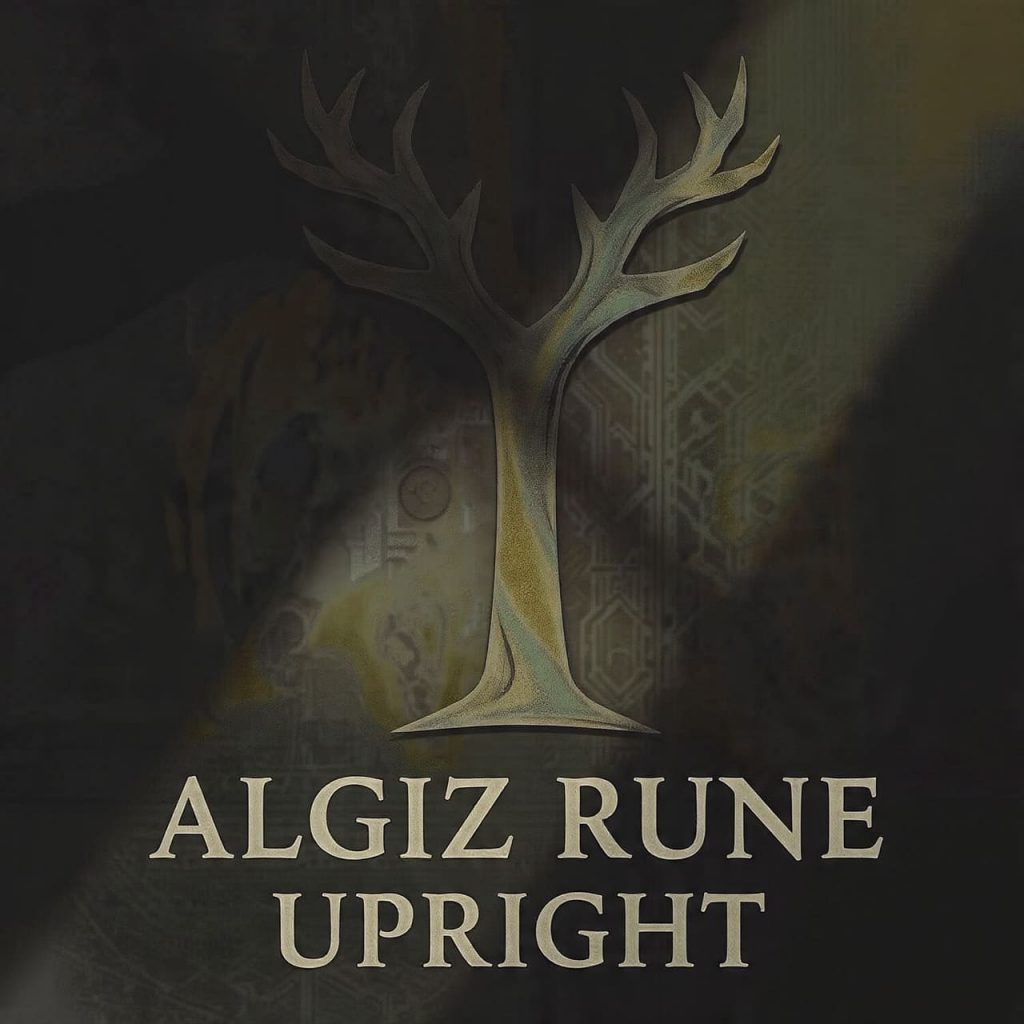
The phrase “Algiz rune upright” is commonly used as if it refers to a historically established orientation with a specific, recognized meaning. This framing is misleading. It assumes that early users of the Elder Futhark distinguished between an “upright” and a non-upright state and that such orientation carried interpretive significance. The uncertainty here is factual: whether any historical evidence demonstrates that Algiz had an “upright” condition with a distinct meaning during the period of its use.

💜 Need a clear answer right now?
CONSULT THE YES OR NO TAROT Free · No registration · Instant resultThis article evaluates that claim using an evidence-first approach. It examines archaeological inscriptions, linguistic reconstruction, and textual sources to determine whether orientation-based meaning for Algiz is historically supported.
Methodological standards comparable to those outlined by astroideal emphasize separating documented practice from later symbolic frameworks. In academic contexts, such evaluations are conducted by qualified professionals in runology, archaeology, and historical linguistics.
What “Upright” Means in Historical Analysis
In historical scholarship, an “upright” sign presupposes a standardized orientation that was consistently recognized by users. For an upright meaning to exist, there must be evidence that a rune had a preferred orientation and that this orientation affected interpretation.
No such system is documented for the Elder Futhark. Early inscriptions demonstrate flexibility in layout and direction, shaped by material constraints rather than symbolic orientation. The idea of an upright meaning reflects modern interpretive structures comparable to those used in reliable readers, not early Germanic writing conventions.
Algiz Within the Elder Futhark
Algiz is the conventional scholarly name assigned to one character of the Elder Futhark, the earliest known runic alphabet, used approximately between the second and eighth centuries CE. While the rune’s form is attested in inscriptions, its name is not recorded in contemporaneous sources and is reconstructed from medieval rune poems written centuries later.
Historically, Algiz functioned as a grapheme representing a sound. Its role was linguistic, not symbolic. There is no evidence that early users treated Algiz as an independent sign whose orientation carried interpretive weight.
Archaeological Evidence and Orientation Variability
Archaeological evidence provides the most direct insight into rune orientation. Hundreds of Elder Futhark inscriptions have been cataloged across Scandinavia and continental Europe. These inscriptions show wide variation in orientation, including left-to-right, right-to-left, vertical, and curved arrangements.
Algiz appears within these inscriptions without any indication that one orientation was preferred or meaningful. Its placement follows practical considerations of space and surface. Claims of an upright Algiz impose a rigidity not supported by material evidence, resembling interpretive authority associated with online tarot sessions rather than archaeological method.
Linguistic Evidence and the Absence of Directional Semantics
Linguistic reconstruction focuses on sound values and later name associations, not visual orientation. The reconstructed name Algiz derives from medieval rune poems, which do not discuss orientation or positional semantics.
No linguistic source indicates that rotating or inverting Algiz altered pronunciation or meaning. Language-based evidence treats Algiz as a functional letter. Orientation-based interpretation reflects modern symbolic systems more akin to video readings than to historical linguistics.
Textual Sources and What They Do Not Indicate
Textual references to runes from classical and early medieval sources emphasize carving and writing, not interpretive positioning. Roman authors who described Germanic societies do not mention rune orientation. Medieval Scandinavian texts reference runes primarily as written characters.
No surviving text describes Algiz—or any rune—having an upright or non-upright meaning. The consistent absence of such references suggests that orientation was not an interpretive variable. Comparisons to modern interpretive practices reflect contemporary habits rather than historical documentation.
Emergence of Upright Meanings in Modern Systems
The concept of upright meaning emerged in the modern period as runes were incorporated into symbolic and divinatory systems influenced by card-based models. These systems rely on orientation to generate contrast and meaning.
Algiz’s later symbolic associations made it a frequent subject of such interpretation. In the twentieth century, upright meanings became common in popular literature, often alongside services such as phone readings and generalized horoscope insights. These developments are historically traceable as modern constructions rather than continuations of Iron Age practice.
Evaluating the Core Claim with Evidence
The central factual question is whether Algiz had a historically recognized upright orientation with a distinct meaning during the period of the Elder Futhark’s use. Evaluating archaeological inscriptions, linguistic reconstruction, and textual sources yields a consistent conclusion.
What has been examined includes runic corpora, comparative analysis of inscription layouts, medieval rune poems, and classical ethnographic accounts. These sources document Algiz as a rune used in writing with flexible orientation. They do not document orientation-based interpretation. Methodological standards comparable to those outlined by astroideal require distinguishing documented historical practice from modern symbolic overlays. Based on available evidence, there is no historical basis for an “upright” meaning of Algiz.
Frequently Asked Questions
Did Algiz have an upright meaning in ancient times?
No evidence supports this claim.
Was rune orientation standardized?
No, orientation varied by context and surface.
Do inscriptions show intentional upright placement?
They do not indicate interpretive intent.
Are upright meanings ancient or modern?
They are modern additions.
Do texts discuss rune orientation?
No surviving texts do.
Can an upright meaning be historically proven?
Not with current evidence.
Call to Action
When encountering claims about positional meanings of ancient symbols, evaluate whether they are supported by primary sources rather than later interpretive frameworks. Apply evidence-based reasoning to get a clear yes or no answer about whether a claim reflects documented history or modern reinterpretation, as is often assumed in love tarot readings.
