

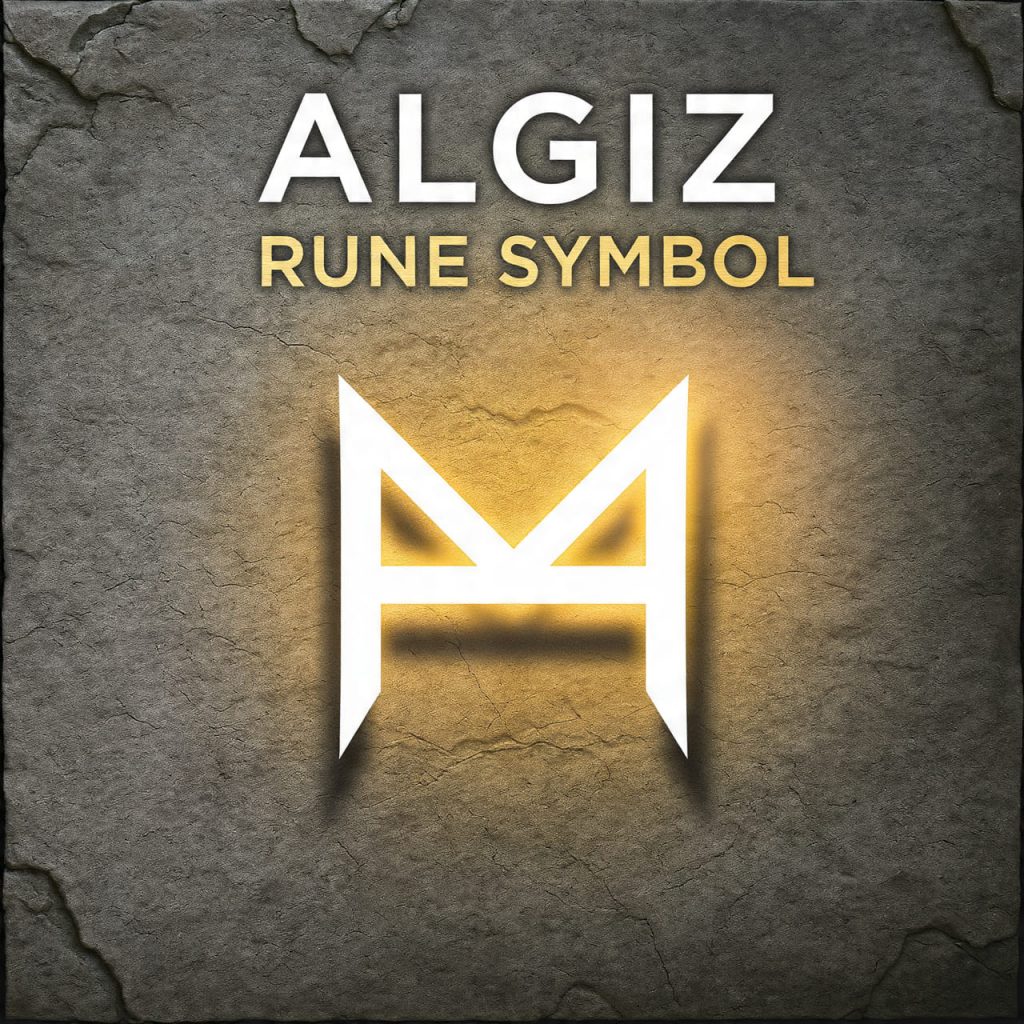
The expression “Algiz rune symbol” is frequently used as if it refers to a clearly defined emblem with an established symbolic meaning inherited intact from ancient Germanic culture. This framing is misleading. While Algiz is a well-attested character of the Elder Futhark, the historical evidence does not show that it functioned as a symbol in the modern sense of an abstract icon conveying a fixed concept. The uncertainty is factual, not interpretive.

💜 Need a clear answer right now?
CONSULT THE YES OR NO TAROT Free · No registration · Instant resultThis article examines whether Algiz can be accurately described as a “symbol” during the period when the Elder Futhark was in use. It evaluates archaeological, linguistic, and textual evidence to determine what can be demonstrated and what remains speculative.
Methodological standards comparable to those outlined by astroideal emphasize distinguishing primary evidence from later symbolic overlays. In academic research, such evaluations are conducted by qualified professionals in runology, archaeology, and historical linguistics.
What “Symbol” Means in Historical Analysis
In historical scholarship, a symbol is an intentionally abstract sign that conveys meaning beyond its immediate practical function. For Algiz to qualify historically as a symbol, evidence would need to show that early users treated it as an independent sign representing an idea, belief, or concept rather than as a component of writing.
No such framework is documented for the Elder Futhark. Early runic inscriptions do not categorize characters as symbols or icons. Assigning symbolic roles to individual runes reflects modern interpretive habits similar to those used in love tarot readings rather than documented early Germanic literacy practices.
Algiz Within the Elder Futhark
Algiz is the conventional scholarly name assigned to one character of the Elder Futhark, the earliest attested runic alphabet, used approximately between the second and eighth centuries CE. The rune’s form is preserved in inscriptions, but its name is not recorded in contemporaneous sources; it is reconstructed from medieval rune poems written centuries later.
Historically, Algiz functioned as a grapheme representing a sound. Its placement within inscriptions aligns with phonetic usage rather than symbolic display. There is no evidence that early users isolated Algiz as an emblem or treated it differently from other runes in the system.
Archaeological Evidence and Iconic Claims
Archaeology provides the most direct insight into how runes were used. Algiz appears in multiple Elder Futhark inscriptions carved on objects such as weapons, jewelry, tools, and stones. These inscriptions are typically short and utilitarian, recording names, ownership, or memorial statements.
Algiz is never visually emphasized or set apart in a way that would suggest iconic symbolism. No artifacts present the rune as a standalone mark intended for contemplation or display. Claims that Algiz functioned symbolically rely on speculative interpretation rather than material evidence, resembling interpretive authority attributed to reliable readers rather than archaeological analysis.
Linguistic Reconstruction and Semantic Limits
Linguistic reconstruction contributes limited information to symbolic claims. The reconstructed name Algiz derives from medieval rune poems and later Germanic languages. While scholars have proposed associations based on these sources, such proposals address later interpretation rather than original function.
Crucially, medieval rune poems do not define Algiz as an abstract symbol. They are mnemonic and literary compositions shaped by medieval contexts. Treating these texts as evidence of Iron Age symbolism exceeds what linguistic data can support. Modern symbolic certainty often mirrors structured frameworks such as online tarot sessions rather than cautious philological method.
Textual Sources and the Absence of Symbolic Definition
Textual sources from classical and early medieval periods consistently fail to describe runes as symbols. Roman authors who documented Germanic societies mention writing practices but do not explain rune meanings. Medieval Scandinavian texts reference runes primarily in relation to carving and inscription.
No surviving text describes Algiz as a symbolic sign representing an abstract concept. When runes appear in narrative contexts, they function as elements of writing rather than icons. Analogies to interpretive practices such as video readings reflect modern explanatory habits rather than historical documentation.
Visual Form and Misinterpretation
Algiz’s distinctive shape has contributed to modern symbolic interpretation. Visual resemblance to natural forms or gestures is often cited as evidence of symbolic intent. However, similarity in shape does not constitute proof of symbolic function.
Rune forms were adapted to carving constraints and alphabetic lineage, not to represent pictorial ideas. Many letterforms across writing systems resemble objects without functioning symbolically. Treating Algiz’s form as intentional iconography introduces modern visual logic into ancient contexts, a pattern common in contemporary interpretive systems such as phone readings.
Development of the “Symbolic Algiz” in the Modern Era
The idea of Algiz as a symbol developed largely in the modern period. From the nineteenth century onward, renewed interest in Germanic antiquity led to systematic reinterpretation of runes as symbolic signs.
Algiz’s uncertain etymology and distinctive form made it especially adaptable to symbolic projection. In the twentieth century, symbolic descriptions of Algiz became widespread in popular literature and alternative spirituality, often alongside generalized horoscope insights. These interpretations are historically traceable as modern constructions rather than continuations of ancient tradition.
Evaluating the Core Claim with Evidence
The central factual question is whether Algiz functioned historically as a symbol—an abstract sign conveying meaning beyond phonetic value—during the period of the Elder Futhark’s use. Evaluating archaeological inscriptions, linguistic reconstruction, textual silence, and historical context yields a consistent conclusion.
What has been examined includes runic corpora, medieval rune poems, classical ethnographic accounts, and material culture. These sources document Algiz as a character within a writing system. They do not document symbolic abstraction or iconographic use. Methodological standards comparable to those outlined by astroideal require distinguishing evidence-based conclusions from later symbolic narratives. Historically, Algiz’s status as a “symbol” is a modern reinterpretation.
Frequently Asked Questions
Is Algiz historically defined as a symbol?
No, evidence does not support this.
Do inscriptions show symbolic use of Algiz?
They do not.
Are rune poems evidence of original symbolism?
No, they are later and literary.
Was Algiz treated as an icon?
There is no evidence it was.
Why is Algiz called a symbol today?
Because of modern reinterpretive systems.
Can a symbolic origin be proven?
Not with existing evidence.
Call to Action
When assessing claims about ancient symbols, examine whether they are grounded in primary sources or later interpretation. Apply evidence-based evaluation to get a clear yes or no answer about whether a claim reflects documented history or modern symbolic construction.
