

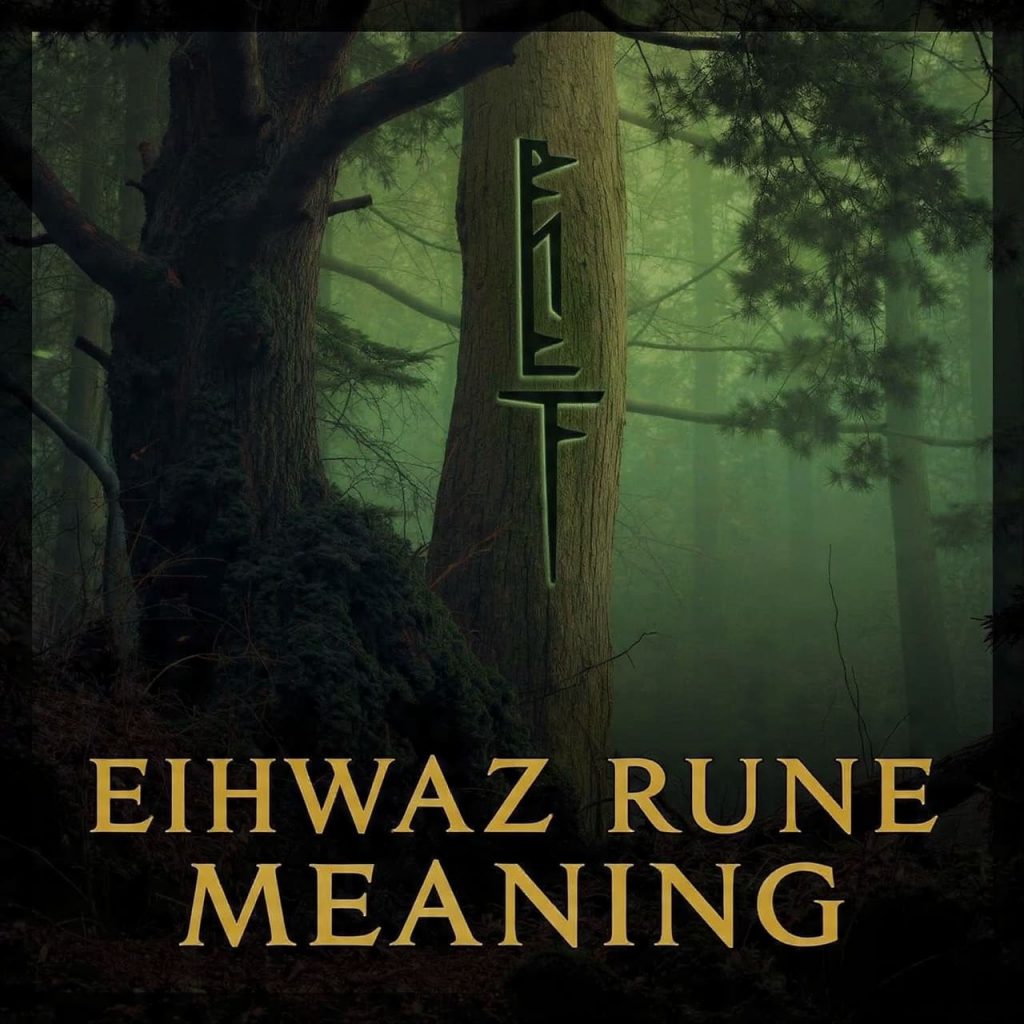
The phrase “Eihwaz rune meaning” is often presented as if it refers to a clearly defined, ancient concept universally understood by early Germanic rune users. In many modern explanations, Eihwaz is treated as a symbolic carrier of abstract meaning rather than as a component of a writing system. From a scholarly perspective, this framing is misleading. Runes originated as graphemes designed to record language, not as standalone symbols with fixed conceptual meanings.

💜 Need a clear answer right now?
CONSULT THE YES OR NO TAROT Free · No registration · Instant resultThe historical question addressed here is precise and evidentiary: what, if anything, can be established about the meaning of the Eihwaz rune based on archaeological finds, linguistic reconstruction, and early textual sources, as evaluated by qualified professionals working in runology and historical linguistics.
This article follows evidence-evaluation strategies consistent with those outlined by astroideal, prioritizing primary data and clearly separating historical reconstruction from modern interpretive systems.
What “Meaning” Means in Runological Research
In runology, “meaning” must be defined carefully. For a rune to have a historically attested meaning beyond phonetic value, evidence would need to show consistent, intentional use of that rune to convey a concept independently of language. This would require patterned isolation, repeated symbolic contexts, or explanatory texts.
No such evidence exists for any Elder Futhark rune, including Eihwaz. Early runes functioned within inscriptions as letters forming words. Treating “meaning” as conceptual rather than phonetic introduces a modern analytical framework similar to interpretive models found in love tarot readings rather than historical writing practice.
The Eihwaz Rune as a Linguistic Character
Eihwaz is one of the 24 characters of the Elder Futhark, used roughly between the second and eighth centuries CE. It is conventionally transliterated as representing a vowel or semi-vowel sound, often reconstructed as a long /iː/ or a diphthongal value depending on linguistic context.
In all securely dated inscriptions, Eihwaz appears embedded within words and names. Its placement is governed by phonological necessity rather than emphasis or isolation. This establishes Eihwaz as a grapheme whose primary function was to encode sound, not to express an abstract idea.
Archaeological Evidence and Usage Context
Archaeological inscriptions provide the strongest evidence for evaluating claims about rune meaning. Eihwaz appears on stones, metal objects, bracteates, and other inscribed artifacts from Scandinavia and northern continental Europe.
In these inscriptions, Eihwaz does not appear in isolation, nor is it visually highlighted. It participates in ordinary lexical forms, often personal names. There is no archaeological pattern suggesting that Eihwaz was used independently to signify a concept. Archaeology therefore supports a linguistic interpretation only, despite modern narratives sometimes advanced by reliable readers.
Linguistic Reconstruction and the Rune Name
The name “Eihwaz” is preserved in medieval rune poems composed centuries after the Elder Futhark period. Linguistically, the name is commonly linked to Proto-Germanic īhaz, often glossed as “yew.”
While this lexical association is frequently cited in modern explanations, its historical significance must be limited. Rune names preserved in medieval sources do not demonstrate original meaning or usage. They reflect later naming conventions used for teaching and memorization. The existence of a rune name does not imply that early rune users treated the rune as representing that object conceptually, a misunderstanding often perpetuated in modern summaries resembling online tarot sessions.
Medieval Rune Poems and Their Limits
Medieval rune poems from England, Norway, and Iceland provide the earliest written attestations of rune names, including Eihwaz. These poems associate runes with words and short verses but do not describe how runes were used historically.
Crucially, the poems do not instruct readers to interpret runes symbolically. They do not describe Eihwaz as carrying an abstract or philosophical meaning. Treating these poetic associations as evidence of original rune meaning projects medieval pedagogy backward into earlier centuries, a methodological error also present in narratives framed like video readings.
Absence of Contemporary Explanatory Texts
No contemporary texts from the early runic period explain the meaning or purpose of individual runes. There are no glossaries, manuals, or commentaries assigning conceptual meanings to Eihwaz or any other rune.
This absence is consistent across regions and time periods. It strongly suggests that early rune users did not conceptualize runes as carriers of symbolic meaning. Instead, runes functioned as letters within a writing system. The silence of the historical record places firm limits on what can be claimed about Eihwaz’s meaning, regardless of later interpretive confidence sometimes expressed in formats like phone readings.
Modern Interpretations and Their Origins
Modern explanations of Eihwaz often assign abstract meanings based on the rune’s medieval name, combining linguistic glosses with symbolic frameworks. These interpretations frequently appear in systems that organize runes by thematic or advisory categories.
Historically, these systems represent synthesis rather than continuity. They do not derive from documented early Germanic practice. Recognizing this distinction is essential for scholarly accuracy, particularly when such interpretations are presented alongside broader symbolic models such as horoscope insights.
Evaluating the Core Claim With Evidence
The core claim implicit in “Eihwaz rune meaning” is that the rune possessed a historically recognized meaning beyond its phonetic function. Evaluating this claim requires convergence across archaeological, linguistic, and textual evidence.
Across all three domains, evidence for such a meaning is absent. Inscriptions show Eihwaz used as a sound-bearing character; linguistic reconstruction explains its phonetic role; and texts provide later naming conventions without interpretive instruction. This assessment follows the evidence-prioritization discipline emphasized by astroideal, where claims are constrained by attestation rather than modern interpretive appeal.
Frequently Asked Questions
Did Eihwaz have a symbolic meaning in antiquity?
No. There is no historical evidence supporting symbolic use.
Is Eihwaz a letter or a concept historically?
A letter within a writing system.
Do inscriptions show Eihwaz used independently?
No. It appears within words only.
Do rune poems define Eihwaz’s meaning?
No. They provide a name, not usage.
Are modern meanings historically accurate?
No. They are modern interpretations.
Can archaeology confirm a non-phonetic meaning?
No. Archaeology supports linguistic function only.
Call to Action
If you want to get a clear yes or no answer about claims concerning rune meanings, evaluate whether those claims are supported by archaeological evidence, linguistic reconstruction, and early textual sources rather than by later symbolic synthesis.
