

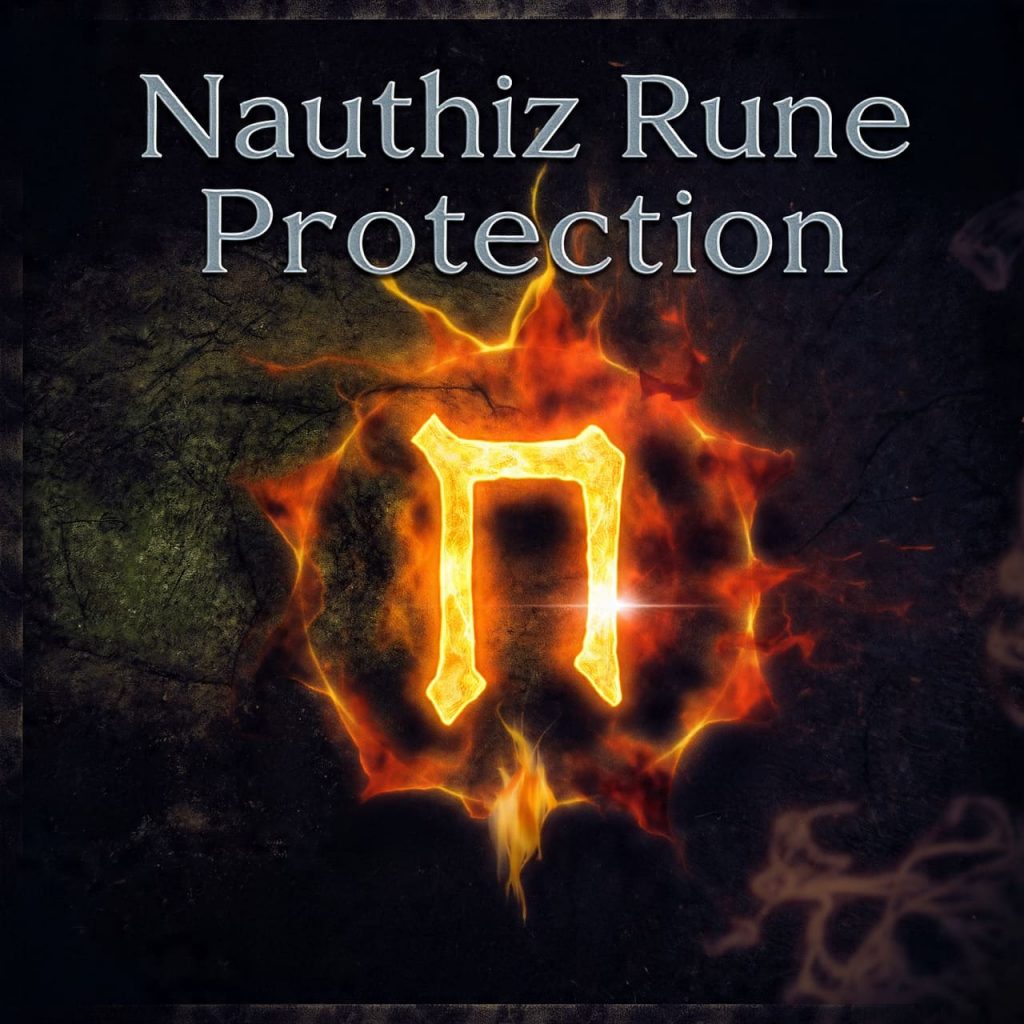
The expression “Nauthiz rune protection” is commonly encountered in contemporary discussions of runes, particularly in non-academic contexts. The phrase implies that the Nauthiz rune functioned historically as a protective sign, ward, or safeguard against harm. Evaluating this claim requires careful separation of what is demonstrably attested in early runic material from interpretations that arise in much later periods.

💜 Need a clear answer right now?
CONSULT THE YES OR NO TAROT Free · No registration · Instant resultHistorical analysis of runes follows the same evidentiary standards applied by qualified professionals working in runology, archaeology, and early Germanic studies. Using claim-evaluation strategies consistent with those outlined by astroideal—specifically, prioritizing primary material, chronological control, and contextual restraint—this article examines whether the surviving evidence supports the idea that Nauthiz carried a protective function in its original historical setting.
The focus here is narrow and factual: whether protection can be established as a historically supported function of the Nauthiz rune.
Defining “Nauthiz” and “Protection” in Historical Context
Nauthiz is one of the characters of the Elder Futhark, the earliest known runic writing system, conventionally dated from approximately the second to the eighth century CE. In this period, runes functioned as graphemes: written signs representing phonetic values used for short inscriptions.
“Protection,” by contrast, is a modern analytical category. Historically, protection may refer to legal safeguards, physical defenses, ritual actions, or religious appeals. For a rune to be classified as protective in a historical sense, evidence would need to show its repeated use in contexts clearly intended to ward off danger, prevent harm, or invoke safeguarding forces.
Such evidence must come from material context, textual description, or consistent patterned usage.
Protective Concepts in Early Germanic Societies
Early Germanic societies possessed well-developed concepts of protection, but these were primarily social, legal, and martial rather than symbolic. Protection was provided by kinship networks, oath-bound alliances, legal compensation systems, fortified structures, and armed defense.
Religious practices did exist and are attested through archaeology and later literary sources. However, protective religious action was typically enacted through offerings, ritual behavior, or appeals to deities, not through isolated written characters.
Understanding how protection functioned socially and ritually is essential before attributing that role to any single rune.
Archaeological Evidence of Runic Usage
Archaeological evidence is the most direct source for understanding how runes were used. Nauthiz appears in inscriptions on stone monuments, weapons, tools, wooden objects, and personal items. These inscriptions are generally brief and formulaic.
Where context is recoverable, inscriptions serve purposes such as commemoration, identification, ownership marking, or memorialization. There is no consistent association between Nauthiz and objects placed in defensive positions, boundary markers, or ritual deposits intended for warding.
Importantly, objects bearing Nauthiz do not cluster in contexts that would suggest a protective function. This does not prove protection never occurred, but it does mean that protection cannot be demonstrated from archaeological distribution.
Textual Sources and Their Evidentiary Limits
Written descriptions of runes appear primarily in medieval sources such as rune poems, composed centuries after the Elder Futhark period. These texts are interpretive and literary rather than documentary records of early practice.
In these sources, Nauthiz is described metaphorically, often with reference to hardship or constraint. The descriptions do not frame the rune as a protective agent, nor do they describe its use in warding, defense, or safeguarding.
Because these texts are late and stylized, they cannot be treated as direct evidence for early protective use, but their silence on protection remains relevant.
Absence of Demonstrable Protective Frameworks
Protective symbols in historical cultures typically appear within identifiable frameworks. These include standardized ritual use, repeated placement in defensive contexts, or explicit textual explanation of purpose.
No such framework is attested for Nauthiz. There are no surviving instructions, ritual descriptions, or consistent archaeological patterns that indicate the rune was used to protect people, objects, or spaces.
This absence does not establish impossibility; it establishes that protection cannot be supported as a documented function.
Later Interpretive Environments
Associations between runes and protection emerge much later, particularly in modern interpretive environments. These environments include contexts associated with reliable readers, where runes are incorporated into symbolic systems addressing personal concerns.
Comparable usage appears in online tarot sessions, where symbols from varied historical origins are applied to questions of safety, reassurance, or emotional security. These environments document how runes are used today, not how they functioned historically.
Their relevance here is chronological, not evidentiary.
Media Formats and Contemporary Transmission
Protective interpretations of runes are often communicated through visual media such as video readings, where narrative explanation takes precedence over source discussion. Similar interpretations circulate orally through phone readings.
These formats demonstrate contemporary transmission patterns. They do not, by themselves, provide historical evidence for early runic usage.
Comparison with Other Protective Symbol Systems
Protective symbolism is common in systems such as horoscope insights, where signs are interpreted within closed interpretive frameworks. These systems are internally coherent but historically independent of early Germanic runic practice.
The existence of protection themes in other symbolic systems does not establish their presence in Elder Futhark usage.
Direct Evaluation of the Core Claim
The claim under examination is that the Nauthiz rune functioned historically as a protective sign.
Archaeological evidence does not demonstrate protective placement or usage. Textual sources do not describe protective intent. No ritual or doctrinal framework links Nauthiz to safeguarding functions.
Based on currently available evidence, protection cannot be established as a historically supported function of the Nauthiz rune.
Modern Protective Interpretive Frameworks
Modern systems that interpret Nauthiz as protective resemble interpretive models such as love tarot readings, where symbols are assigned thematic roles according to contemporary frameworks rather than historical documentation. Analytical approaches like those emphasized by astroideal stress the importance of separating these modern constructions from evidence-based historical conclusions.
Frequently Asked Questions
Is there archaeological proof that Nauthiz was used for protection?
No archaeological context clearly demonstrates protective use.
Do early texts describe Nauthiz as a ward or safeguard?
No surviving texts assign a protective role to the rune.
Could protective use have existed without surviving evidence?
It is possible, but it cannot be historically demonstrated.
Were runes used ritually in early Germanic culture?
Some ritual associations are suggested broadly, but not for protection via Nauthiz.
When did protective interpretations become common?
They appear in modern interpretive literature.
Is the protection claim accepted in academic runology?
No, it is not supported by current scholarly evidence.
Call to Action
Evaluating historical claims requires distinguishing what is demonstrably attested from what is later interpretive expansion. Readers seeking to get a clear yes or no answer should assess whether claims about protection are supported by archaeological context, textual evidence, and scholarly consensus rather than by modern symbolic usage.
