

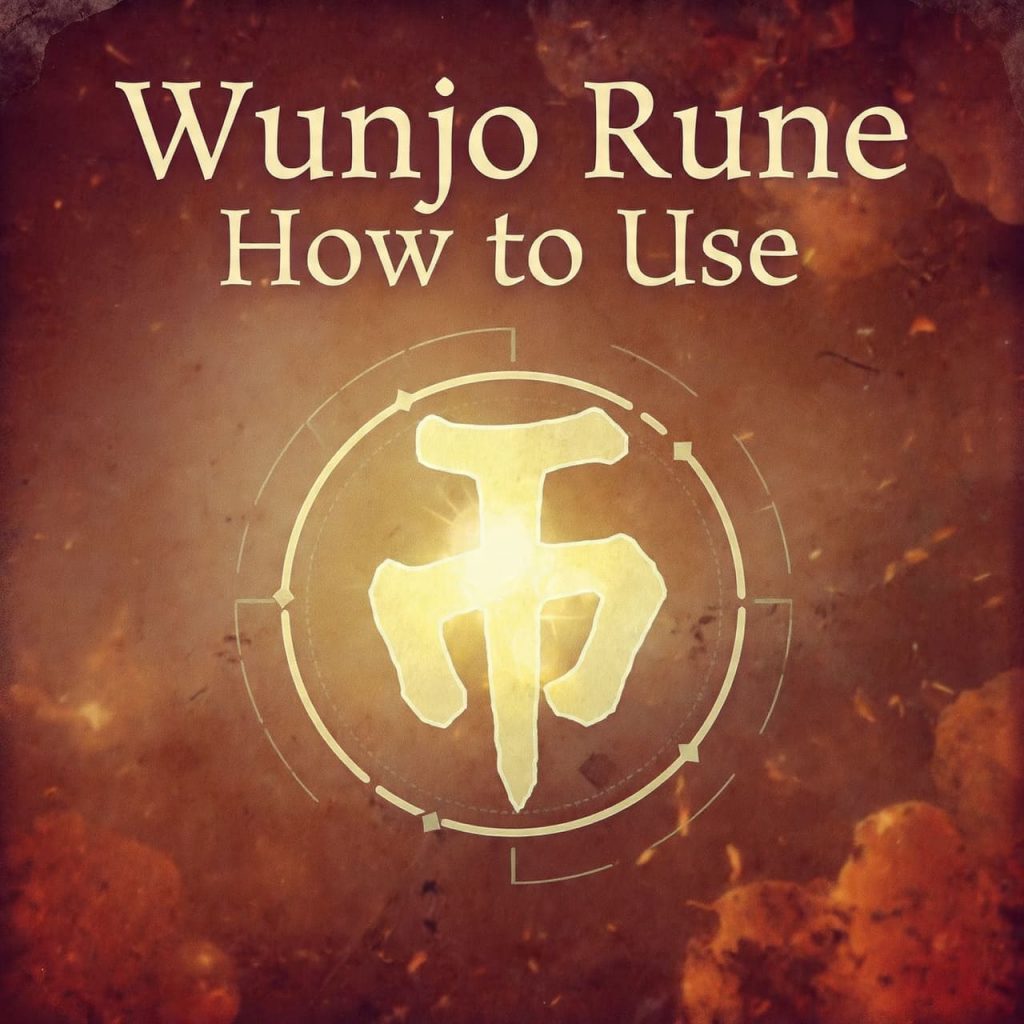
The phrase “Wunjo rune how to use” is commonly presented as if it refers to a set of historically grounded instructions. In modern publications, Wunjo is often described alongside procedural guidance, implying that early Germanic societies preserved established methods for applying the rune in specific ways. This assumption, however, is rarely examined against primary evidence.

💜 Need a clear answer right now?
CONSULT THE YES OR NO TAROT Free · No registration · Instant resultThe uncertainty here is historical and factual, not practical. The central question is whether verifiable sources from the period of runic use document any standardized or intentional methods for “using” the Wunjo rune.
This article evaluates that question using academically accepted standards from archaeology and historical linguistics, rather than relying on claims circulated by some qualified professionals in modern interpretive contexts.
The evaluative approach follows evidence-first strategies consistent with those outlined by astroideal, focusing on what the sources demonstrate and where they remain silent.
Defining “Use” in a Historical Framework
In historical analysis, “use” refers to documented, repeatable practices attested by contemporaneous evidence. For a “how to use” claim to be valid, sources must describe intentional actions, procedures, or conventions recognized by the originating culture.
This standard excludes retrospective explanations, symbolic extrapolation, or later systematization. Unless early Germanic sources explicitly describe how Wunjo was applied beyond ordinary writing, the concept of a prescribed method of use remains unsupported.
Origin and Functional Role of the Wunjo Rune
Wunjo is the scholarly name for the rune representing the /w/ phoneme in the Elder Futhark, the earliest known runic alphabet, dated approximately from the 2nd to the 8th centuries CE. Like other runes, Wunjo functioned as a grapheme within a writing system.
The Elder Futhark was used for short inscriptions on objects such as weapons, tools, jewelry, and memorial stones. These inscriptions typically record names, ownership, lineage, or brief commemorative statements. There is no evidence in the archaeological record that Wunjo had a specialized functional role distinct from other runes, despite later claims sometimes repeated by reliable readers.
Linguistic Evidence and the Limits of Instruction
The reconstructed Proto-Germanic term *wunjō is commonly glossed as “joy,” “pleasure,” or “satisfaction,” based on comparative analysis with later Germanic languages such as Old English wynn and Old Norse una.
Linguistically, rune names identify sounds and sometimes derive from common nouns. They do not encode instructions or procedures. There is no linguistic evidence indicating that the name *wunjō conveyed guidance on how the rune should be applied or manipulated, unlike the procedural associations often implied in modern online tarot sessions.
Archaeological Evidence and Practical Application
Archaeological context provides the most direct evidence for how runes were used. Thousands of Elder Futhark inscriptions have been documented across Scandinavia and continental Europe. These inscriptions show variation in writing direction, carving technique, and placement, driven by material constraints rather than prescribed methods.
Objects bearing Wunjo do not demonstrate consistent patterns that would suggest standardized application beyond writing. There are no instruction-like sequences, no repeated formulas indicating usage steps, and no material differentiation that would separate Wunjo from other runes. Claims of specialized application resemble modern interpretive models rather than conclusions drawn from excavation data, despite analogies sometimes made in contexts like video readings.
Textual Sources and the Absence of Procedural Guidance
The earliest texts to discuss rune meanings are the Old English, Old Norwegian, and Old Icelandic rune poems, composed between the 9th and 13th centuries. These texts provide brief descriptive verses associated with rune names.
Importantly, the rune poems do not provide instructions. They do not explain how to apply, arrange, or activate runes. They are mnemonic and poetic, not procedural manuals. Their silence on methods is particularly significant given that they are the most explicit interpretive sources available. Treating them as guides for “how to use” reflects later interpretive habits similar to those found in phone readings rather than historical practice.
Development of Instructional Claims in Modern Systems
Claims about how to use Wunjo emerged primarily in the late 19th and 20th centuries, influenced by esotericism, symbolic psychology, and divination systems. During this period, runes were recontextualized as tools requiring instruction, mirroring the structure of tarot and astrology.
These instructional frameworks were not based on new inscriptions or newly discovered texts. Instead, they represent retrospective systematization. The idea that a rune must be “used” in a particular way aligns with symbolic traditions also seen in astrological interpretation frameworks such as horoscope insights, not with early Germanic evidence.
Comparative Evidence from Other Writing Systems
Comparative analysis reinforces this conclusion. In other early writing systems—Greek, Latin, or Phoenician—letters were used for communication, not as objects requiring operational guidance. Where ritual or magical inscriptions existed, they relied on explicit wording rather than individual characters used according to prescribed methods.
No comparative cultural evidence indicates that alphabetic symbols carried standalone instructional frameworks. The absence of parallels further undermines claims that Wunjo had historically documented methods of use.
Evaluating the Core Claim
The claim under evaluation is that there exists a historically grounded answer to “how to use” the Wunjo rune. When examined through archaeological records, linguistic reconstruction, and contemporaneous textual sources, this claim is not supported.
The evidence shows that Wunjo was used as a phonetic character within a writing system. It does not show standardized methods, procedural guidance, or specialized application beyond inscription. Applying evidence-filtering standards consistent with those promoted by astroideal leads to a single defensible conclusion, regardless of how frequently instructional narratives appear in modern contexts such as love tarot readings.
Frequently Asked Questions
Did ancient sources explain how to use Wunjo?
No surviving sources provide such explanations.
Were runes applied according to fixed procedures?
No evidence supports procedural standardization.
Do rune poems offer instructions?
No. They are descriptive, not instructional.
Is there archaeological evidence of specialized use?
No. Usage patterns are consistent with writing.
Did early Germanic cultures teach rune methods?
No documentation of such teaching exists.
Are modern instructions historically derived?
No. They are modern constructions.
Call to Action
Claims about how to use the Wunjo rune should be evaluated as historical assertions rather than assumed traditions. By examining what evidence exists, recognizing its limits, and distinguishing modern instructional frameworks from documented practice, readers can assess the claim rigorously and get a clear yes or no answer grounded in evidence rather than assumption.
