

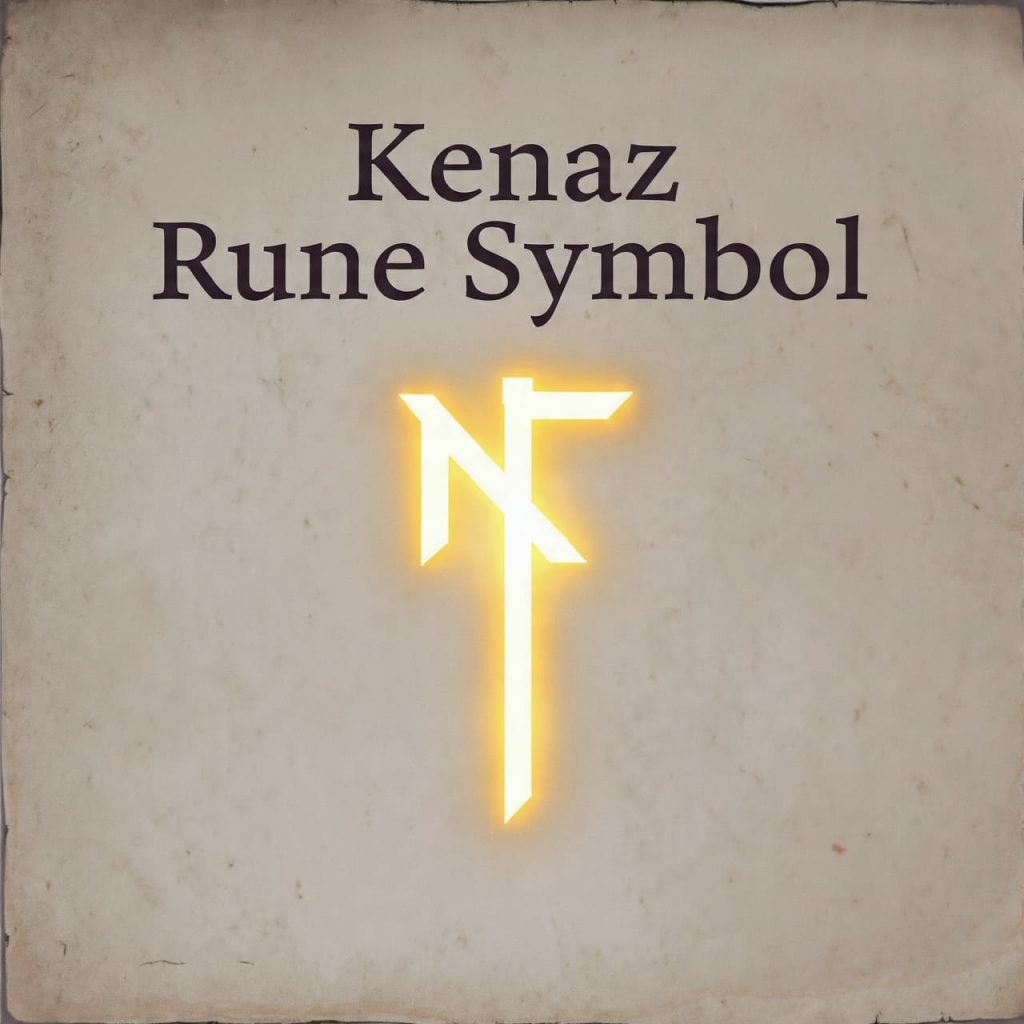
The Kenaz rune symbol is frequently described as if its meaning were fixed, ancient, and universally understood. In reality, much of what is said about Kenaz today reflects modern interpretation rather than historical certainty. This creates confusion for readers who want to know whether Kenaz truly functioned as a symbolic marker in its original context or whether symbolism was assigned later. The difficulty is not philosophical; it is evidentiary.

💜 Need a clear answer right now?
CONSULT THE YES OR NO TAROT Free · No registration · Instant resultUnderstanding Kenaz as a symbol requires separating what can be supported by linguistic and archaeological sources from what has been added through modern narrative frameworks.
When examined using evidence-based reasoning methods such as those emphasized at astroideal, the discussion becomes clearer, especially when guided by qualified professionals who prioritize historical accuracy over interpretive expansion.
What “Symbol” Means in Historical Context
To evaluate Kenaz as a symbol, the term “symbol” itself must be defined. In modern usage, a symbol is often understood as an image that represents abstract ideas or emotions. In early runic contexts, however, this definition does not apply cleanly.
Runes functioned primarily as letters within writing systems. Their primary purpose was phonetic representation, not abstract symbolism. While later cultures may have assigned metaphorical meanings to runes, this does not mean that they originated as symbols in the modern sense.
Clarifying this distinction is essential before evaluating claims about Kenaz’s symbolic role.
Historical Origin of the Kenaz Rune
Kenaz originates from the Elder Futhark, the oldest known runic alphabet, used roughly between the 2nd and 8th centuries CE. This alphabet consisted of 24 runes, each corresponding to a sound used in written language.
Kenaz generally appears as the sixth rune in the sequence. Its form is believed to derive from earlier Mediterranean writing systems, particularly Latin or North Italic alphabets. This lineage confirms that Kenaz was designed as a functional character rather than an abstract emblem.
There is no historical evidence indicating that Kenaz was created to serve as a standalone symbol.
Linguistic Meaning of Kenaz
The name “Kenaz” is reconstructed from Proto-Germanic roots associated with fire, torchlight, or illumination. These terms referred to tangible tools essential for survival and craftsmanship.
Fire and light allowed people to work, create, and learn. These associations describe function rather than metaphor. They do not indicate that Kenaz was intended to symbolize enlightenment, transformation, or emotion in an abstract sense.
Understanding this linguistic foundation helps prevent projecting later symbolic meanings backward into history. This careful separation is often reinforced by reliable readers who emphasize linguistic evidence over interpretive storytelling.
From Letter to Interpreted Symbol
The transition of Kenaz from letter to symbol occurred long after runes stopped being used as everyday writing tools. As Latin alphabets replaced runes, runic characters took on a cultural and artistic role rather than a practical one.
During this transition, people began interpreting runes metaphorically. Kenaz’s association with fire and light made it especially susceptible to symbolic reinterpretation. Illumination became associated with understanding, creativity, or insight.
This shift reflects cultural reinterpretation, not original intent. Recognizing this timeline is crucial when evaluating Kenaz as a symbol.
Modern Symbolic Frameworks
In modern symbolic systems, Kenaz is often described as representing clarity, creativity, or awareness. These descriptions are internally consistent within their frameworks but are not historically grounded.
Such frameworks operate similarly to interpretive models used in love tarot readings, where symbolic meaning is understood as narrative language rather than historical documentation. This comparison highlights the importance of transparency about the source of meaning.
Modern symbolism does not invalidate personal use, but it should not be confused with origin.
Evaluating Claims of Ancient Symbolism
Claims that Kenaz functioned as a symbolic image in ancient times should be evaluated carefully. Authentic symbolism requires evidence of intentional abstract representation.
Surviving inscriptions show Kenaz used as part of words and names, not as standalone symbols conveying abstract ideas. There is no indication that early users treated Kenaz differently from other runes in this regard.
Critical evaluation of such claims aligns with the disciplined approach encouraged in online tarot sessions, where clarity depends on defining limits rather than expanding meaning.
Visual Form and Symbolic Appeal
The visual simplicity of Kenaz contributes to its modern symbolic appeal. Its angular shape is easy to reproduce and visually distinct, which makes it attractive in art, design, and personal iconography.
However, visual appeal does not equal symbolic origin. The fact that a shape lends itself to modern symbolism does not mean it was originally designed for that purpose.
Understanding this distinction helps avoid conflating aesthetic suitability with historical intent.
Kenaz as a Cultural Artifact
Today, Kenaz functions as a cultural artifact rather than a linguistic necessity. It appears in educational materials, artwork, and symbolic systems created long after its original use declined.
As a cultural artifact, Kenaz can carry meaning assigned by contemporary users. These meanings are valid within their contexts but should be identified as modern constructions.
This responsible framing mirrors the analytical discipline applied in video readings, where interpretation is presented without being misrepresented as historical fact.
Avoiding Interpretive Overreach
Interpretive overreach occurs when modern meanings are presented as ancient truths. This often happens when symbolic language is used without historical qualification.
A reliable evaluation asks whether the meaning requires redefining Kenaz’s original function. If it does, the meaning belongs to modern symbolism rather than origin.
Recognizing this boundary prevents misinformation and preserves intellectual integrity.
Educational Perspectives on Rune Symbols
Educational approaches to rune history emphasize evidence, context, and limitation. These approaches avoid attributing symbolic intent where none can be demonstrated.
Some learners engage with explanations through spoken or visual formats similar to phone readings. While such formats can support understanding, they do not alter historical evidence.
Education clarifies origin; it does not create symbolism retroactively.
Kenaz and Astrological Symbolism
Some modern systems attempt to combine rune symbols with astrology. Historically, rune systems developed independently of astrological frameworks.
General horoscope insights may offer reflective value, but they do not contribute evidence regarding rune symbolism or origin. Combining these systems represents creative synthesis rather than historical continuity.
Keeping these domains separate preserves accuracy.
Why Accuracy About Symbols Matters
Accurate understanding of Kenaz as a symbol protects readers from confusion and false claims. It allows modern symbolic use to be honest rather than disguised as ancient authority.
When history is respected, symbolism becomes a conscious choice rather than an assumed inheritance.
This clarity benefits both scholarship and personal engagement.
Frequently Asked Questions
Was Kenaz originally a symbol or a letter?
It was a phonetic character within a writing system.
Did ancient users treat Kenaz symbolically?
There is no evidence that they did.
Why is Kenaz symbolic today?
Because modern cultures reinterpret historical artifacts.
Is modern symbolism incorrect?
No, as long as it is identified as modern.
Does Kenaz have one fixed meaning today?
No. Modern meanings vary by framework.
Can symbols evolve over time?
Yes, but origin remains unchanged.
Call to Action
Understanding the Kenaz rune symbol requires separating documented history from modern interpretation. If you want to get a clear yes or no answer about whether Kenaz functioned as a symbol in its original context, the evidence provides clarity. Approaching the question through a disciplined one question tarot perspective allows you to evaluate symbolic claims without confusion, ensuring that meaning is assigned consciously rather than assumed.
