

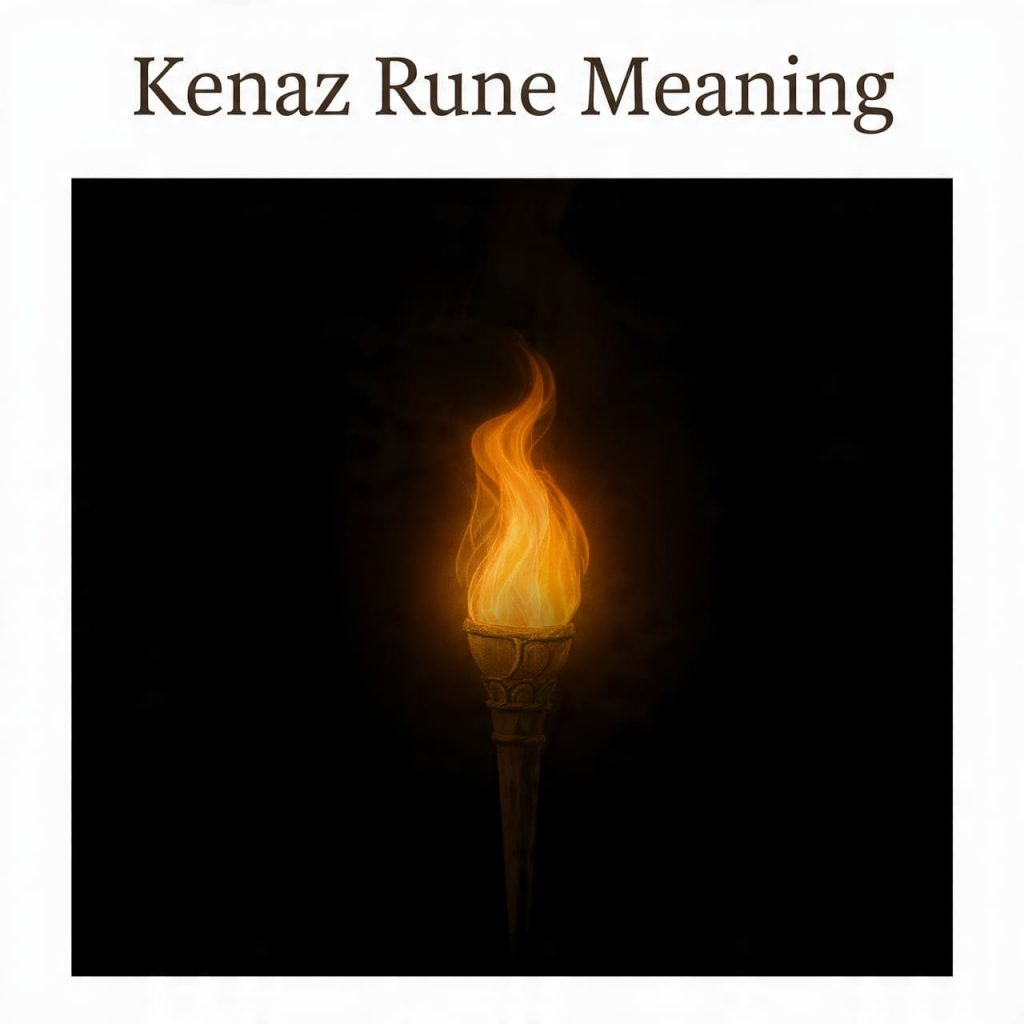
Understanding the meaning of the Kenaz rune often feels difficult because modern explanations frequently blur historical function with later interpretation. Many sources present Kenaz as a broad symbolic concept without clarifying whether that meaning is historically grounded or a modern overlay. This creates uncertainty for readers who want to know whether the commonly cited meaning of Kenaz is supported by evidence or primarily interpretive. The challenge is not emotional or spiritual; it is analytical. When meanings evolve over time, distinguishing origin from adaptation becomes essential.

💜 Need a clear answer right now?
CONSULT THE YES OR NO TAROT Free · No registration · Instant resultApplying evidence-first evaluation methods, as emphasized in astroideal, helps determine whether Kenaz has a definable historical meaning or whether its meaning is largely a product of later reinterpretation. This type of clarity is often reinforced by qualified professionals who separate documented usage from symbolic expansion.
Why a Yes or No Tarot Helps Here
The question of Kenaz rune meaning benefits from a yes-or-no framework because it asks for a clear determination: does Kenaz have a historically definable meaning beyond its phonetic role, yes or no. This is not a request for interpretation or application. It is an evaluation of validity.
A yes-or-no approach limits the discussion to evidence. Either the meaning attributed to Kenaz can be supported by historical sources, or it cannot. This prevents the common tendency to accept meaning through repetition rather than verification. Similar discipline is required in tightly scoped contexts such as love tarot readings, where clarity depends on whether a question itself is valid, not on how much interpretation can be added.
What “Meaning” Means in Rune History
Before evaluating Kenaz, the term “meaning” must be defined precisely. In a historical context, meaning refers to how a rune functioned within its original system.
This includes:
- its phonetic value
- its role within the runic alphabet
- its documented usage in inscriptions
It does not include later metaphorical, spiritual, or psychological interpretations. Those developments occurred long after the rune was established.
Without this distinction, the question of meaning becomes subjective and unanswerable. This separation is consistently emphasized by reliable readers who focus on verifiable evidence rather than inherited narrative.
Kenaz Within the Elder Futhark
Kenaz originates from the Elder Futhark, the earliest known runic alphabet, dating roughly from the 2nd to the 8th centuries CE. The Elder Futhark consists of 24 runes arranged in a fixed sequence.
Kenaz appears as the sixth rune in this system. Its position reflects phonetic organization rather than thematic grouping. Early alphabets were structured primarily to represent sound efficiently, not to convey layered symbolic meaning.
This context establishes Kenaz first and foremost as a functional writing element.
Phonetic Function of Kenaz
Historically, Kenaz represents a “k” sound. Its primary purpose was to mark that sound within written language. This phonetic role is consistent across early runic inscriptions.
The shape of Kenaz shows similarities to characters found in earlier Mediterranean writing systems, particularly those influencing Germanic script development. This supports the conclusion that Kenaz was designed as a letter, not as an abstract symbol.
Understanding this function is essential when evaluating whether additional meanings were original or secondary.
Linguistic Roots of the Name Kenaz
The name “Kenaz” is reconstructed from Proto-Germanic linguistic roots associated with concepts such as a torch or controlled light. Importantly, this association originates in language, not symbolism.
In early contexts, such terms described practical objects or actions. The linguistic meaning informed the rune’s name, not the other way around. This distinction matters because it explains how later symbolic associations developed without implying they were part of the rune’s original purpose.
Language first, symbolism later.
Archaeological Evidence of Kenaz Usage
Archaeological findings show Kenaz used in inscriptions on stone monuments, tools, weapons, and personal objects. These inscriptions demonstrate functional literacy rather than symbolic ritual.
There is no evidence that Kenaz was carved to represent abstract concepts independent of language. It appeared within words, names, and statements, reinforcing its role as a phonetic character.
This practical usage is consistent across regions where the Elder Futhark was employed.
From Letter to Associated Meaning
Over time, as runes became less central to everyday writing, their cultural role shifted. During this transition, poetic and associative meanings began to attach to individual runes.
For Kenaz, associations drawn from its linguistic name gradually expanded into broader interpretive meanings. These developments occurred centuries after the rune’s original use.
Understanding this timeline prevents the common error of treating later associations as original intent.
Kenaz in Later Runic Systems
As Germanic languages evolved, the runic alphabet adapted. In the Younger Futhark and later regional variants, Kenaz’s form and usage shifted slightly, but its phonetic lineage remained intact.
These adaptations reflect linguistic change rather than reinterpretation of meaning. The rune continued to function as a sound marker, even as spelling conventions evolved.
This continuity reinforces the conclusion that Kenaz’s primary meaning was always linguistic.
Evaluating Modern Interpretations
Modern interpretations often present Kenaz as carrying layered symbolic meaning. While these interpretations may be meaningful in contemporary contexts, they are not historically grounded.
The key decision is whether one accepts meaning as historically defined or as interpretively expanded. This is where a yes-or-no evaluation becomes necessary.
If meaning is defined as original function and documented usage, then Kenaz’s meaning is primarily phonetic. If meaning is defined as accumulated cultural association, then it becomes modern by definition.
Encouraging One Clear Question
A clear evaluative question might ask whether Kenaz possessed an intrinsic symbolic meaning at the time of its creation. Another option is to ask whether the meanings commonly attributed to Kenaz today are supported by early sources.
A third formulation could ask whether linguistic association alone qualifies as symbolic meaning. Each of these questions allows a yes-or-no answer without explanation.
This disciplined framing mirrors the approach used in online tarot sessions, where clarity depends on keeping the question narrowly defined.
How to Approach the Decision Calmly
Calm evaluation requires neutrality. Interest in runes can create a desire for depth that goes beyond evidence. Acknowledging that interest helps prevent bias.
Focus on inscriptions, linguistic reconstruction, and historical context. Avoid considering personal relevance or modern application. Writing the question down and reviewing it once before deciding helps maintain objectivity.
Structured environments such as video readings often support this calm focus by minimizing distraction.
Avoiding Meaning Inflation
Meaning inflation occurs when accumulated interpretations are treated as original fact. Recognizing this tendency is essential for historical accuracy.
A valid historical meaning does not require reinterpretation to exist. If meaning must be inferred indirectly, it is likely secondary.
This discipline is also observed in phone readings, where concise questioning discourages unnecessary expansion.
Context Without Astrological Overlay
Runes and astrology developed independently. While modern systems sometimes combine them, there is no historical basis for doing so.
General horoscope insights may offer reflective value, but they do not contribute evidence to rune history. Keeping these systems separate preserves clarity.
Frequently Asked Questions
Did Kenaz originally have symbolic meaning?
There is no evidence that it did beyond linguistic association.
Was Kenaz used for ritual purposes?
No archaeological evidence supports ritual-only use.
Does the name Kenaz imply symbolism?
It reflects linguistic association, not symbolic intent.
Can modern meanings still be valid?
They can be meaningful, but they are modern interpretations.
Is phonetic function a form of meaning?
Yes, in historical context, function defines meaning.
Does history limit modern use?
No, but it clarifies what is original versus adapted.
Call to Action
If you have been uncertain about what the Kenaz rune truly means, this is the moment to stop collecting interpretations and decide. By focusing on historical function, linguistic origin, and documented usage, you can get a clear yes or no answer about whether Kenaz has an original symbolic meaning or a primarily phonetic one. Using a disciplined one question tarot approach allows clarity to replace assumption and brings the evaluation to a clean conclusion.
