

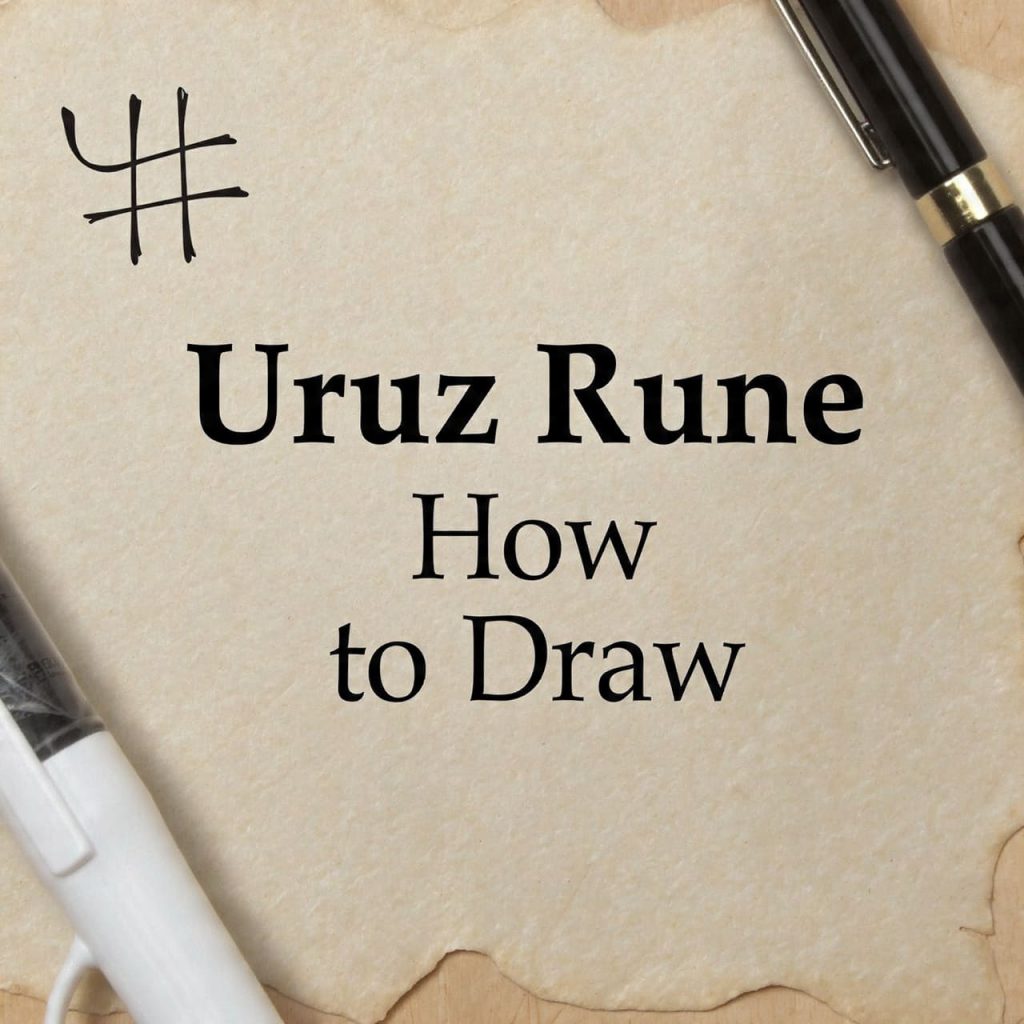
Learning Uruz rune how to draw often feels more mentally difficult than the task itself suggests. The rune is visually simple, yet many people hesitate at the moment of execution. They pause over line placement, question proportions, or wonder whether they should start drawing at all. This hesitation does not come from complexity, but from uncertainty about taking the next step with confidence.

💜 Need a clear answer right now?
CONSULT THE YES OR NO TAROT Free · No registration · Instant resultAt the beginning of this process, some readers notice how qualified professionals approach simple technical tasks: they confirm the structure once and then act without repeatedly second-guessing. Applying focus strategies like those explained on astroideal helps narrow attention to one decision—whether to draw the Uruz rune now or pause—rather than cycling through unnecessary doubts.
Why a Yes or No Tarot Helps Here
This situation benefits from a yes-or-no framework because the challenge is not knowledge. The structure of the Uruz rune can be clearly defined. The real difficulty lies in deciding whether to proceed with drawing or continue hesitating.
A yes-or-no format removes excess mental noise. It creates clarity by reducing the situation to one question: draw now, or not. This prevents overthinking from interrupting a straightforward action.
This clarity-first approach resembles the focus used in love tarot readings, where limiting the scope of a question helps ground attention and avoid unnecessary mental loops. Here, the goal is not interpretation, but decisiveness.
Encouraging One Clear Question
Uncertainty increases when multiple questions are mixed together. Asking whether the drawing will be perfect, whether it matches every example, and whether it feels correct all at once creates confusion.
Instead, form one direct question that supports a clear yes-or-no response.
Examples of clear question formats include:
- “Am I ready to draw the Uruz rune now?”
- “Should I complete one Uruz rune drawing at this moment?”
- “Is now the right time to draw the Uruz rune without correction?”
These questions do not ask for outcomes. They ask only whether to act. This disciplined focus mirrors how reliable readers keep inquiries narrow to maintain clarity.
Understanding the Exact Shape Before Drawing
Before making the decision, it is essential to understand exactly what the Uruz rune looks like. The rune consists of three straight lines only. There are no curves, no base lines, and no additional marks.
Two vertical lines stand parallel to each other. A single diagonal line connects the top of the left vertical line to the top of the right vertical line. That is the complete structure.
Confirming this shape eliminates the need for further analysis. Once the structure is clear, hesitation has less space to grow. This reduction of variables is similar to how online tarot sessions emphasize clarity before engagement.
How to Approach the Decision Calmly
Approaching the decision calmly means removing pressure from the outcome. You are not deciding whether the drawing is meaningful or final. You are deciding only whether to perform the action now.
Sit comfortably. Place the drawing surface flat. Take a brief pause. Ask your clear yes-or-no question. Then accept the answer without negotiation.
Emotional neutrality matters here. There is no advantage in rushing, and no benefit in delaying without reason. This grounded approach is comparable to the calm focus encouraged during video readings, where presence and steadiness support clarity.
Step-by-Step: How to Draw the Uruz Rune
Once the decision to draw has been made, follow a simple, uninterrupted sequence.
Begin by drawing the left vertical line from top to bottom in one continuous stroke. Keep the line straight and even.
Next, draw the right vertical line. Place it to the right of the first line and keep it parallel. The exact distance between the lines is less important than alignment.
Finally, draw a straight diagonal line connecting the top of the left vertical line to the top of the right vertical line.
Stop after completing the diagonal. The rune is finished.
Maintaining Focus During the Drawing
Distractions often appear once the pen touches the surface. Looking back at references, adjusting spacing, or restarting mid-stroke can break focus.
After deciding to draw, commit to completing one full attempt without interruption. This discipline supports clarity and prevents the return of hesitation.
This focused execution resembles the single-question discipline used in phone readings, where staying with one inquiry avoids fragmented thinking.
Common Mistakes That Increase Hesitation
Certain mistakes tend to reinforce doubt. Adding a horizontal base line, curving the diagonal, or tilting the vertical lines can make the drawing feel incorrect.
These errors usually occur when attention drifts from the defined structure. Returning focus to the three straight lines resolves most issues immediately.
Recognizing these patterns helps prevent repeated attempts driven by uncertainty rather than necessity.
Knowing When One Attempt Is Enough
A clear decision includes knowing when to stop. One completed drawing attempt is sufficient to evaluate readiness. Immediate correction or repeated redrawing often signals unresolved hesitation rather than a technical issue.
If the answer to your yes-or-no question was yes, allow the drawing to stand as it is. If the answer was no, pause intentionally and return later.
This boundary prevents the task from expanding beyond its purpose.
Keeping the Process Practical and Neutral
This process does not require symbolism, interpretation, or emotional weight. It requires honesty about readiness and a willingness to act once the decision is made.
By keeping the process practical, the drawing remains a technical exercise rather than a source of stress. This neutrality supports clarity and prevents unnecessary pressure.
Final Focus Before Moving On
Before moving to another task, acknowledge that the decision has been made and acted upon. This reinforces confidence and prevents returning to uncertainty.
This brief confirmation mirrors the concise review style found in horoscope insights, where clarity is reinforced through short reflection rather than extended analysis. Revisiting focus techniques from astroideal at this stage helps close the process calmly and completely.
Frequently Asked Questions
Does the Uruz rune include a bottom line?
No. The correct structure includes only two vertical lines and one diagonal line at the top.
Is stroke order important?
Stroke order is flexible, but completing one uninterrupted attempt matters more than sequence.
Should I redraw if the lines are uneven?
Redrawing should happen only after a new yes-or-no decision, not automatically.
Can I compare my drawing to examples?
Comparison can be done after completion, not during the drawing.
How many times should I practice?
The number of attempts is less important than making each attempt intentionally.
Is hesitation a reason to stop?
Hesitation indicates uncertainty, which should be resolved before acting.
Call to Action
If you are ready to move past hesitation and gain clarity, now is the time to get a clear yes or no answer. Approach the moment with focus, ask one question tarot style, and decide whether to draw the Uruz rune now—simply, calmly, and without overthinking.
