

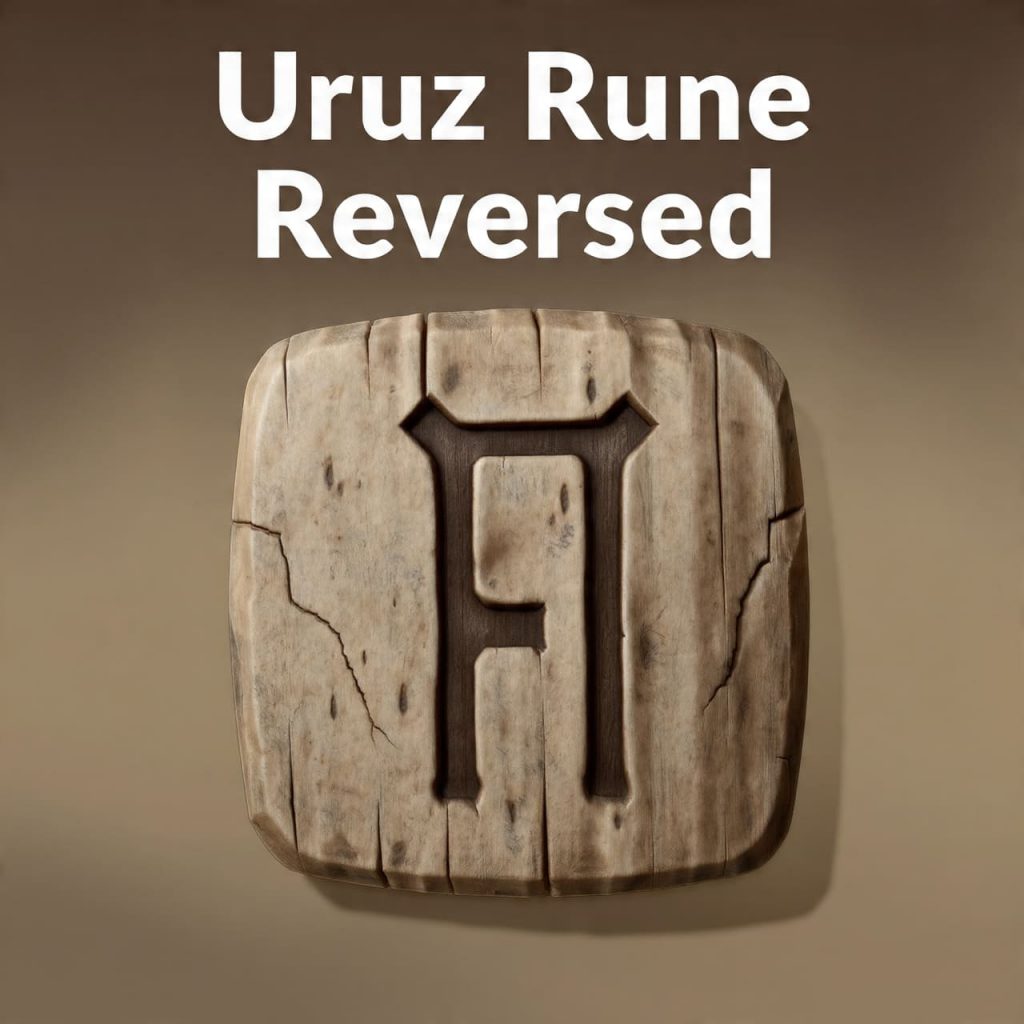
The Uruz rune reversed often feels difficult to interpret because it points to an absence rather than a presence. Where upright Uruz reflects raw strength and pressure, reversed Uruz highlights a lack of force, depleted capacity, or resistance to exertion. This absence can be unsettling, especially when something still demands effort.

💜 Need a clear answer right now?
CONSULT THE YES OR NO TAROT Free · No registration · Instant resultThe confusion usually comes from not knowing whether the issue is weakness, exhaustion, or simply poor timing. When energy feels low or unreliable, deciding how to respond becomes harder. The central question is not how to push harder, but whether engagement is appropriate at all.
Approaches discussed in astroideal often frame this situation as a decision about sustainability rather than courage. The focus is on whether strength can be restored through restraint, not whether it should be forced. Some people also consult qualified professionals to keep this decision grounded in reality instead of guilt or expectation.
Why a Yes or No Tarot Helps Here
Reversed Uruz situations tend to produce internal conflict. People feel pressure to act while sensing they lack the strength to do so. This creates cycles of hesitation, self-criticism, and second-guessing.
A yes-or-no tarot format helps because it removes moral judgment from the decision. It does not ask whether you should be stronger. It asks whether engagement is appropriate given current capacity.
Clarity matters because pushing forward without strength often causes deeper depletion. Some people use structured formats such as love tarot readings not for emotional insight, but because the binary structure prevents prolonged self-negotiation.
The Core Meaning of Uruz Reversed
Uruz reversed represents diminished force. This does not mean permanent weakness. It indicates that strength is currently inaccessible, inconsistent, or being blocked.
The reversal highlights:
- Fatigue or exhaustion
- Loss of momentum
- Resistance to effort
- Mismatch between demand and capacity
Unlike upright Uruz, which confronts challenge directly, reversed Uruz asks whether the challenge can realistically be met right now.
This distinction is crucial. Reversed Uruz is not a failure state. It is an informational state.
Strength Versus Capacity
One of the most common misunderstandings of Uruz reversed is equating it with weakness. In reality, it reflects limited capacity, not lack of character.
Capacity fluctuates. Strength depends on rest, resources, and conditions. When Uruz is reversed, it suggests that these supporting factors are insufficient.
Recognizing this difference prevents self-blame. The issue is not who you are, but what is available to you at this moment.
Encouraging One Clear Question
Confusion with Uruz reversed often comes from asking outcome-based questions. People ask whether things will improve or whether effort will pay off.
A clearer question focuses on engagement:
- “Should I push forward despite low capacity, yes or no?”
- “Is withdrawal or rest the correct response right now?”
- “Is this demand realistic given current strength?”
Keeping the question practical prevents emotional pressure from driving the decision. Some people consult reliable readers to help keep the focus on choice rather than self-evaluation.
How to Approach Uruz Reversed Calmly
Calmness under Uruz reversed means honesty. It requires acknowledging limits without dramatizing them.
Practically, this involves assessing energy without comparing it to past capacity or external expectations. What matters is what is available now.
Some people prefer online tarot sessions in these situations because the neutral structure supports realism instead of guilt-driven action.
What Engagement Looks Like Under Uruz Reversed
Engaging with Uruz reversed does not usually mean applying force. It means managing depletion.
This might involve reducing demands, setting boundaries, or delaying effort until strength stabilizes. Engagement becomes strategic rather than direct.
This approach respects the rune’s message. Forcing strength under reversed Uruz often leads to collapse rather than progress.
When Stepping Back Is the Correct Choice
Uruz reversed frequently indicates that stepping back is not avoidance, but necessity. Rest, withdrawal, or pause can be the most effective response.
Stepping back preserves future capacity. It prevents small drains from becoming long-term exhaustion.
This is why the yes-or-no decision is essential. Without it, people often oscillate between pushing and retreating, wasting energy in the process.
Why Reversed Uruz Can Feel Frustrating
Reversed Uruz is frustrating because demands may still exist even when strength does not. This creates tension between expectation and reality.
The rune does not remove responsibility. It clarifies limitation. This can feel uncomfortable in cultures that value constant output.
Understanding this helps reframe frustration as information rather than failure.
Accepting the Answer Without Self-Criticism
If the answer is no, acceptance matters. Choosing rest does not require justification. Reversed Uruz validates conservation of strength.
If the answer is yes, engagement should be limited and carefully paced. Overcommitment under reversed Uruz quickly leads to deeper depletion.
Re-asking the question usually indicates discomfort with limits rather than lack of clarity. Some people prefer phone readings because the direct format discourages reinterpretation.
The Difference Between Recovery and Avoidance
A key distinction with Uruz reversed is between recovery and avoidance. Recovery restores capacity. Avoidance delays engagement without restoring strength.
Reversed Uruz supports recovery, not indefinite withdrawal. The goal is restoration, not escape.
Recognizing this distinction prevents misuse of the rune as justification for disengagement.
How Reversed Uruz Resolves Over Time
Uruz reversed is temporary. Strength returns when conditions support it. Ignoring the message delays recovery; respecting it shortens the cycle.
Integration involves noticing when capacity begins to stabilize and reassessing engagement at that point.
Decision approaches discussed in astroideal often emphasize respecting low-energy phases so that high-energy phases remain sustainable. Some people also use horoscope insights reflectively to observe patterns of exertion and recovery over time.
Frequently Asked Questions
Does Uruz reversed mean weakness?
No. It reflects limited or unavailable capacity.
Is rest always the answer with Uruz reversed?
Not always, but pacing and reduction are often necessary.
Can effort still be applied?
Yes, but carefully and selectively.
Does reversed Uruz mean failure?
No. It signals information, not judgment.
Can capacity be rebuilt?
Yes, when limits are respected.
Is outside input necessary?
It is optional, but can support objectivity.
How do I know when strength is returning?
When effort feels sustainable rather than draining.
Call to Action
If effort feels heavy and strength feels unreliable, it may be time to get a clear yes or no answer about whether to engage or conserve energy right now. A grounded one question tarot approach can help you decide whether to push forward or allow recovery without guilt.
