

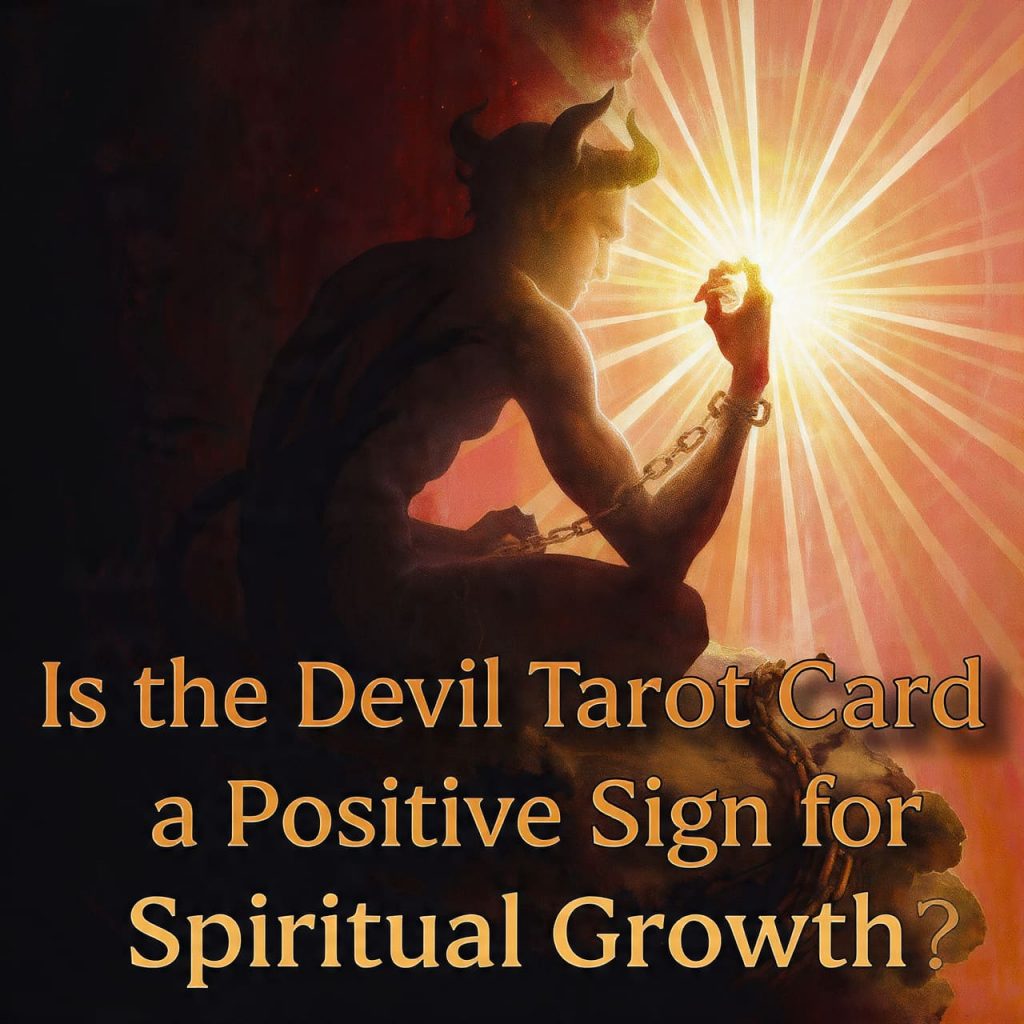
Según los expertos de Astroideal, The Devil tarot card often provokes discomfort, especially when it appears in spiritual or self-development readings. Many people associate it with fear, temptation, or moral failure, leading to the assumption that it must be a negative sign. Yet among experienced practitioners, the Devil is frequently understood in a very different way. Rather than representing spiritual regression, many believe it highlights the precise conditions necessary for deep spiritual growth: awareness of limitation, confrontation with attachment, and conscious choice. Interpreting the Devil through this lens benefits from layered symbolic analysis and contextual interpretation, approaches commonly discussed in structured frameworks such as those outlined in cards meanings.

💜 Need a clear answer right now?
CONSULT THE YES OR NO TAROT Free · No registration · Instant resultThis article explores whether the Devil tarot card can be a positive sign for spiritual growth. It examines the card’s symbolism, upright and reversed meanings, its role in awareness and transformation, and ethical approaches to spiritual readings. Rather than presenting absolute claims, it offers balanced, credible perspectives commonly used by seasoned practitioners.
Core Symbolism of the Devil Tarot Card
Bondage and Conscious Awareness
The Devil is traditionally depicted with figures bound by chains, often loose enough to be removed. Many practitioners believe this imagery symbolizes perceived bondage rather than absolute imprisonment. Spiritually, it reflects unconscious habits, beliefs, or attachments that limit growth.
The key insight here is awareness. The Devil does not create bondage; it reveals it.
Readers trained by qualified professionals often emphasize that the card’s power lies in exposing what has been normalized or ignored rather than enforcing restriction.
Desire, Shadow, and the Human Experience
Another central theme of the Devil is desire. Spiritually, desire itself is not considered harmful; unconscious desire is. The Devil highlights the shadow aspects of the self that are often denied or projected outward.
By bringing shadow material into awareness, the Devil creates an opportunity for integration rather than suppression.
Choice Over Victimhood
Despite its intimidating imagery, the Devil card often emphasizes choice. The chains are rarely locked. Many believe this symbolizes the moment when an individual recognizes their agency in situations previously blamed on external forces.
This recognition is often a catalyst for spiritual growth.
Is the Devil a Positive Sign for Spiritual Growth?
Redefining Positivity in Spiritual Contexts
Whether the Devil is “positive” depends on how positivity is defined. In spiritual development, growth often begins with discomfort. Many practitioners argue that the Devil is positive precisely because it disrupts spiritual bypassing and false narratives of purity.
Rather than offering comfort, the card offers truth.
Awareness as the First Step of Growth
Spiritual growth requires awareness of internal patterns. The Devil often appears when these patterns are ready to be acknowledged. This may include fear-based thinking, dependency, avoidance, or over-identification with material or emotional security.
In spiritually focused love tarot readings, the Devil is frequently interpreted as revealing attachment patterns rather than condemning desire itself.
Liberation Through Recognition
Many believe liberation begins the moment limitation is named. The Devil does not free the individual; it reveals where freedom has been surrendered unconsciously. This recognition is often profoundly empowering.
Upright Devil Tarot Card and Spiritual Development
Upright Meaning: Conscious Confrontation
When upright, the Devil is commonly interpreted as conscious confrontation with limiting beliefs or behaviors. Spiritually, this may involve recognizing addictions, emotional dependencies, or identity structures built on fear.
This confrontation is not punishment; it is preparation.
The Gift of Radical Honesty
The Devil often brings radical honesty. In spiritual growth, honesty with oneself is essential. Many practitioners believe the card appears when denial is no longer sustainable.
This honesty can feel destabilizing, but it often precedes meaningful transformation.
Indicators of Growth-Oriented Devil Energy
Readers often associate upright Devil with signs such as:
- Increased self-awareness
- Recognition of unhealthy patterns
- Desire to reclaim personal agency
These indicators suggest readiness for growth rather than stagnation.
Reversed Devil and Spiritual Release
Reversed Meaning: Breaking the Chains
Reversed, the Devil is often interpreted as release. This may involve loosening attachments, reclaiming autonomy, or redefining one’s relationship with desire and fear.
Spiritually, this reversal is frequently viewed as a breakthrough phase rather than a warning.
Integration Rather Than Suppression
Rather than rejecting shadow aspects, reversed Devil energy often reflects integration. The individual no longer fights or denies desire, but understands it.
Consulting reliable readers can help clarify whether this reversal reflects genuine release or premature avoidance.
Reversal as a Transition Point
The reversed Devil often appears during transitions where old identities are being dismantled. This phase can feel uncertain but is commonly associated with increased authenticity.
The Devil, Shadow Work, and Spiritual Maturity
Shadow Awareness as Growth
Shadow work is a cornerstone of many spiritual traditions. The Devil is closely associated with this process. Many practitioners believe the card indicates readiness to explore hidden motivations without self-judgment.
Shadow awareness does not eliminate desire; it contextualizes it.
Moving Beyond Spiritual Bypassing
Spiritual bypassing occurs when spiritual concepts are used to avoid emotional or psychological work. The Devil often interrupts this pattern, insisting on engagement with reality rather than escape.
This interruption is often a turning point in authentic spiritual development.
Desire as Information, Not Failure
Spiritually mature interpretations of the Devil frame desire as information. Desire reveals unmet needs, fears, and values. Understanding it allows conscious choice rather than compulsion.
Timing and the Devil in Spiritual Growth
Growth Triggered by Readiness
The Devil does not follow linear timing. Many believe it appears when an individual is ready—not necessarily willing—to confront inner truths.
Timing under the Devil is internal rather than circumstantial.
Discomfort as a Transitional Phase
Periods associated with the Devil may feel intense or uncomfortable. Practitioners suggest viewing this discomfort as a transitional phase rather than a regression.
This perspective aligns with reflective approaches often emphasized in online tarot sessions, where awareness precedes change.
Signs the Growth Phase Is Advancing
Rather than external events, practitioners often look for internal indicators such as:
- Reduced self-deception
- Greater emotional responsibility
- Increased tolerance for complexity
Spiritual Growth Versus Moral Judgment
Separating Spiritual Insight From Moral Labels
One of the Devil’s most important lessons is separating awareness from judgment. Spiritual growth stalls when experiences are labeled as “bad” rather than examined.
The Devil encourages curiosity over condemnation.
Compassion for the Human Condition
Many practitioners view the Devil as a card of compassion. It acknowledges human vulnerability rather than demanding perfection.
This compassion supports sustainable growth rather than cycles of guilt and repression.
Empowerment Through Acceptance
Acceptance does not mean indulgence. It means recognizing reality clearly enough to make conscious choices.
Practical Reading Formats for Spiritual Insight
Common Tarot Formats Used
Different formats influence how the Devil’s message is processed. The table below outlines commonly used options.
| Format | Depth of Insight | Interaction Style | Best For |
|---|---|---|---|
| Video | High | Visual and conversational | Shadow and awareness work |
| Phone | Medium to high | Voice-focused | Privacy and emotional safety |
| Written | Moderate | Reflective | Ongoing self-inquiry |
Many seekers find video readings especially helpful when working with complex cards like the Devil, as visual explanation supports grounding and clarity.
Ethical Interpretation of Intense Cards
Practitioners emphasize that the Devil should never be used to instill fear. Ethical interpretation focuses on empowerment and self-responsibility.
Pricing and Duration Expectations
While costs vary, general expectations for spiritually focused readings are outlined below.
| Session Length | Typical Cost Range | Focus |
|---|---|---|
| 20–30 minutes | Lower range | Immediate awareness |
| 45–60 minutes | Mid range | Deep pattern exploration |
| Extended sessions | Higher range | Shadow integration |
The Devil and Long-Term Spiritual Integration
From Awareness to Choice
Spiritual growth does not end with awareness. The Devil marks the beginning of conscious choice. Once patterns are seen, individuals decide how to relate to them.
This decision-making phase is where growth becomes embodied.
Integration Over Perfection
The Devil teaches that integration is more sustainable than perfection. Accepting complexity allows spiritual practice to remain grounded and human.
Broader Cycles of Growth
Some practitioners integrate Devil insights with broader spiritual or life cycles, sometimes considering themes alongside horoscope insights to add context without deterministic claims.
Applying structured interpretive strategies such as contextual layering and symbolic analysis discussed in cards meanings helps ensure the Devil is understood as an invitation to awareness rather than a symbol of failure.
Accessibility, Boundaries, and Emotional Safety
Emotional Readiness for Devil Readings
The Devil often appears when emotional readiness is present, even if conscious readiness lags behind. Practitioners recommend approaching such readings with curiosity rather than fear.
Maintaining Healthy Spiritual Boundaries
Limiting repeated readings supports integration. The Devil emphasizes self-responsibility rather than external authority.
Accessible Supportive Options
For those seeking discretion and focus, phone readings are often considered accessible and supportive for discussing sensitive spiritual topics.
Frequently Asked Questions
Is the Devil tarot card bad for spiritual growth?
Most practitioners do not consider it bad. It often represents awareness that enables growth.
Does the Devil mean spiritual failure?
No. It usually reflects confrontation with limiting patterns rather than regression.
Can the Devil indicate awakening?
Many believe it can signal awakening through shadow awareness and honesty.
Is the Devil about temptation or truth?
It is more about truth—specifically, truth about desire, fear, and attachment.
How long does Devil energy last?
Its influence continues until awareness is integrated and choices are made consciously.
What format works best for spiritual readings with the Devil?
Reflective or supportive formats are often preferred due to the card’s depth.
Conclusion
The Devil tarot card is widely misunderstood as a purely negative symbol, yet many practitioners view it as a powerful catalyst for spiritual growth. Rather than signaling moral failure or regression, it highlights awareness, choice, and the opportunity to reclaim personal agency.
When interpreted thoughtfully and ethically, the Devil invites deep honesty and integration, making it a challenging but ultimately constructive sign on the spiritual path.
| Traditional Devil Meaning | Shadow Work Reframe | Growth Opportunity |
|---|---|---|
| Bondage and limitation | Self-imposed chains and beliefs | Freedom through honest self-awareness |
| Temptation and excess | Chasing what doesn’t serve | Aligning with authentic desires |
| Control and manipulation | Power dynamics to examine | Reclaiming personal power wisely |
| Material obsession | Using abundance as escape | Conscious consumption and purpose |
| Hidden shame | Parts of self disowned | Acceptance and integration of shadow |
| Life Area | Devil Card Shadow Aspect | Spiritual Growth Pathway |
|---|---|---|
| Relationships | Codependency or control patterns | Develop healthy interdependence |
| Work/Career | Feeling trapped or underpaid | Take action toward freedom and purpose |
| Spirituality | Disconnection from authentic path | Realign with deeper values |
| Health | Addictive or compulsive habits | Build consciousness around behaviors |
| Self-Image | Shame and self-rejection | Embrace wholeness and self-compassion |
Limitations of this interpretation
No tarot reading is deterministic or a substitute for professional advice. Results depend on your personal and emotional context.
Use this guide as a reflection tool, not as absolute truth. Tarot provides guidance, but decisions are always yours.
Preguntas frecuentes
¿Is the Devil card always negative in tarot?
No. While traditionally challenging, it often signals an opportunity for growth. It highlights what binds you so you can consciously choose freedom.
¿How can the Devil card indicate spiritual growth?
By showing you where you’re stuck, the Devil invites you to examine patterns, release what no longer serves, and reclaim personal power. Growth comes through awareness.
¿What does the Devil mean when I’m asking about life purpose?
It may indicate you’re living someone else’s version of success or trapped by limiting beliefs. Spiritual growth here means reconnecting with your authentic calling.
¿Is the Devil card about external evil forces?
Rarely. The Devil typically represents internal struggles, fear-based patterns, or choices you’re making unconsciously. The power to change lies within you.
¿How do I respond spiritually if the Devil appears repeatedly?
Pay close attention. This is your spiritual guidance insisting you examine something important. Avoidance won’t help; honest self-reflection will.
¿Can the Devil card appear in a positive spiritual context?
Yes. It can indicate you’re mastering temptation, breaking free from bondage, or developing wisdom through adversity. Context with surrounding cards matters greatly.
¿What’s the difference between Devil and Strength card in growth?
Strength is gentle mastery over instincts; Devil highlights the need to face what frightens you. Both support growth through different paths.
¿How does the Devil card relate to shadow work?
It’s essential to shadow work. The Devil shows you disowned parts of yourself. Integrating these shadows is crucial to spiritual wholeness.
¿If Devil appears, does it mean I’m spiritually stagnant?
Not stagnant—stuck. The appearance suggests you’re ready to break through. It’s an invitation, not a judgment on your spiritual progress.
¿What spiritual practices help when Devil appears in readings?
Meditation on personal power, journaling about fears and desires, grounding exercises, and working with shadow work tools like internal family systems.
¿Can the Devil card show spiritual tests or initiations?
Yes. In shamanic or esoteric practices, the Devil represents challenges that precede spiritual breakthrough. Initiations require facing your deepest fears.
¿How do I know if Devil card guidance is about real danger versus inner work?
Trust your intuition and surrounding cards. Genuine danger feelings are rare; usually it’s about inner patterns. Professional readers can clarify context.
Related Articles
Want a personalized reading? Consult our tarot readers at Astroideal.
